Owner’s manual


What year was the KitchenAid K5SS made?
The KitchenAid K5SS stand mixer was produced over a multi-year run (not a single year). Most K5SS mixers you’ll see in homes date to the late 1970s through the mid 1980s; the most reliable way to narrow it down is by using the model/serial information and identification details in the K5SS owner's manual.
How to narrow down the year for a K5SS
We recommend using a few quick checks together; any one clue by itself can be misleading.
- Check the model/serial label location and format on the mixer
- Compare the control plate and speed lever style to known K5SS variations
- Look for casting marks or stamped codes on the gearcase or pedestal base
- Note whether the unit is labeled “Hobart” era or later branding (if present)
- Match your observations to the identification guidance in the K5SS owner's manual
Quick identification checklist
Use this as a practical “what to write down” list before you start shopping parts or planning a repair.
| What to check | Where to look | Why it helps |
|---|---|---|
| Model number | Rating/model tag | Confirms you truly have K5SS |
| Serial number (if present) | Same tag | Often the best clue for date range |
| Gearcase condition | Under the top cover | Heavy wear can hint at age and maintenance |
| Speed control behavior | Speed lever and motor response | Helps decide if a control part is needed |
Why it matters
Knowing the approximate production era helps us match the right parts and service approach for your KitchenAid K5SS, especially for drivetrain and speed-control repairs where small design changes can affect fit.
Parts that commonly come up during age-related repairs
If your mixer is noisy, slips under load, or leaks grease, these model-matched parts are often involved:
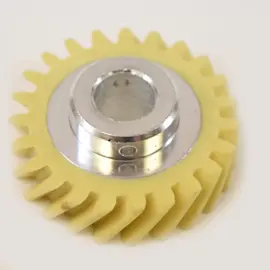
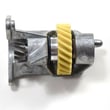
- Gear WPW10112253 (worm gear)
- Grease W11200218 (gearcase lubricant)
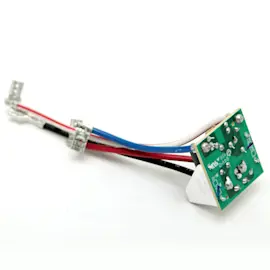
- Plate-ctrl WPW10119326 (speed control board)
Last updated: January 2026
What is a KitchenAid K5SS?
The KitchenAid K5SS is a KitchenAid stand mixer model (a bowl-lift style mixer) used for everyday mixing tasks like dough, batter, and whipped ingredients. When you need repair help or replacement parts, the model number K5SS is what we use to match the correct gears, controls, and seals.
What the model number tells you
The model number is the key to getting parts that fit and function correctly on your specific mixer.
- Confirms the correct parts list for your KitchenAid stand mixer
- Helps match internal drive parts like gears and shafts
- Helps match electrical parts like speed control components
- Helps identify diagrams and service steps in the K5SS owner's manual
Common K5SS parts people replace
If your K5SS is noisy, slips under load, leaks grease, or has speed issues, these are common repair areas.
- Drive gear wear or stripping (often shows up as grinding or no mixing under load)
- Old or separated gearcase grease
- Speed control issues (surging, only one speed, or erratic speeds)
- Leaks around seals or the drip ring
Examples of model-matched parts
| Symptom | Likely area | Example part for K5SS |
|---|---|---|
| Grinding, won’t mix under load | Worm gear/drive train | Gear WPW10112253 |
| Grease leaking or dried out | Gearcase lubrication | Grease W11200218 |
| Speeds surge or won’t change | Speed control | Plate-ctrl WPW10119326 |
Why it matters
KitchenAid stand mixers share similar designs across years, but small changes in the transmission, speed control, and housing can affect fit. Using K5SS ensures you get the right replacement part the first time and follow the correct service steps.
Last updated: January 2026
How many quarts is a KitchenAid K5SS?
The KitchenAid K5SS is a 5-quart stand mixer. That 5-qt bowl size is a common “heavy-duty” capacity that works well for everyday mixing plus larger batches like cookie dough and bread dough; confirm bowl details in the K5SS owner's manual.
What 5 quarts means in real use
A 5-qt KitchenAid bowl is a practical middle ground: big enough for most family baking, but still manageable for smaller mixes.
- Handles typical cake batters and cookie dough batches comfortably
- Works well for kneading dough (use lower speeds for dough)
- Helps reduce splatter compared with smaller, shallower bowls
- Supports common KitchenAid attachments designed for 5-qt platforms
Quick capacity guide
| Bowl size | Best for | Typical limitation |
|---|---|---|
| 4 qt | Smaller batches, lighter mixing | Less headroom for big doughs |
| 5 qt (K5SS) | Everyday baking plus larger batches | Can still be overfilled with very large dough loads |
| 6 qt | Frequent large batches, heavier dough work | Larger footprint and more bowl volume than many users need |
Tips to avoid overfilling and strain
- Keep ingredients below the bowl’s top edge before starting the mixer
- Start on low speed, then increase gradually
- For stiff dough, mix in shorter intervals to limit heat and gear stress
- If you hear grinding or the beater stalls, stop and reduce the load
Why it matters
Using the correct bowl capacity helps protect internal drive parts and keeps mixing performance consistent. Overloading can accelerate wear on gears and the drivetrain; if you ever service the gearcase, parts like the gear WPW10112253 are commonly involved in power transfer.
Last updated: January 2026