 Owner’s manual
 Error Codes



How much freezer space is in a side-by-side?
Most side-by-side refrigerators have about 7.5 to 10 cubic feet of freezer space (within a typical 22.5 to 31 cubic feet total capacity). For your GE ZIS36NYA built-in side-by-side, the exact freezer capacity is listed in the ZIS36NYA owner's manual.
Typical freezer space you can expect
Side-by-side designs split the cabinet vertically, so the freezer is usually a smaller share of the total volume.
- Typical total capacity: 22.5 to 31 cu. ft.
- Typical freezer capacity: 7.5 to 10 cu. ft.
- Typical fresh food capacity: about 14.5 to 21 cu. ft.
- Usable space depends on shelves, bins, and ice maker hardware
- Built-in models (like Monogram-style units) often prioritize storage layout and access over maximum open-bin volume
Quick comparison: side-by-side vs other common styles
| Refrigerator style | Typical freezer share | What it feels like day to day |
|---|---|---|
| Side-by-side | ~30% to 40% | Narrower freezer shelves, easy access to frozen items at eye level |
| Top freezer | ~30% to 40% | Larger open freezer cavity, less convenient access |
| Bottom freezer | ~30% to 40% | Deeper freezer drawer, good for bulk bags and boxes |
Why it matters
Freezer capacity affects how many frozen meals, pizza boxes, and bulk items you can store without blocking airflow. Overpacking can also make temperatures less even, which can lead to frost and longer run times.
Tips to maximize usable freezer space
- Keep air vents clear so cold air can circulate
- Use baskets and bins to prevent small items from falling behind shelves
- Avoid stacking items against the back wall where airflow is strongest
- If ice production is a priority, confirm your ice maker setup and bin space
- Recheck door closure and gasket seal if you notice frost buildup
Last updated: February 2026
What is the most common problem with GE refrigerators ice maker?
The most common GE refrigerator ice maker problem is no ice or slow ice production. On the GE ZIS36NYA, the most frequent causes are the icemaker being turned off (feeler arm in STOP/up), the water supply being off or restricted, or the freezer temperature being too warm for the icemaker to cycle properly (see the ZIS36NYA owner's manual).
Quick checks we recommend first
- Confirm the feeler arm is in the ON (down) position; STOP (up) prevents ice making.
- Verify the household water supply valve to the refrigerator is fully open.
- Make sure the freezer is cold enough; a warm freezer slows or stops ice production.
- Look for a frozen or blocked fill path; clear any visible ice obstruction.
- Discard the first few batches after restoring water or installing the refrigerator to flush the line.
What “normal” looks like on this model
A newly installed ZIS36NYA can take 8 to 12 hours to start making ice. Under typical conditions, the icemaker makes about 8 cubes per cycle and around 100 cubes in 24 hours, depending on freezer temperature and door openings.
| Symptom | Most likely cause | What to do next |
|---|---|---|
| No ice at all | Feeler arm in STOP (up) | Move arm to ON (down) and wait several hours |
| No ice at all | Water supply off or not connected | Open supply valve, confirm line connection |
| Small cubes | Clogged shutoff valve or restricted water flow | Check for restriction; consider replacing the water inlet valve WR57X10033 |
| Slow ice | Freezer too warm, frequent door openings | Lower freezer setting, reduce door openings |
When a part is usually involved
If the feeler arm is down, the freezer is cold, and water flow is good, the issue is often in one of these areas:
- Water delivery to the icemaker (valve not opening fully)
- Icemaker mechanism wear (gears, ejector, internal switch)
- Fill tube icing or blockage
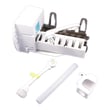
For a complete icemaker replacement on this model, we use the refrigerator ice maker WR30X10093.
Why it matters
An icemaker depends on two things: cold enough freezer temperatures and steady water flow. If either is marginal, you will see slow production, hollow cubes, or no ice, and the problem often gets worse over time.
Last updated: February 2026
What should I do if my side by side refrigerator freezer has ice on the bottom?
Ice on the bottom of the freezer in your GE ZIS36NYA almost always means defrost water is not draining correctly, so it refreezes on the freezer floor. We recommend safely defrosting the ice, clearing the drain path, and then checking door sealing and temperature to prevent it from coming back.
Quick fix steps (start here)
- Move food to a cooler, then unplug the refrigerator (or switch off power at the breaker) before working inside the freezer.
- Melt the ice sheet with the door open; use towels to catch water (do not chip ice with sharp tools).
- Locate the drain opening under/behind the evaporator cover area and flush it with hot water using a turkey baster.
- If water backs up, clear the drain tube with a flexible plastic tube or pipe cleaner (gentle pressure only).
- Clean and dry the freezer floor, then restore power and monitor for 24 hours.
Parts that commonly cause ice on the freezer floor
If the drain keeps freezing or water keeps pooling, these model-relevant parts are common suspects:
| Symptom | Most likely cause | What to check next |
|---|---|---|
| Ice sheet returns every few days | Drain line icing or restriction | Inspect/clean drain path; confirm defrost water flows to the pan |
| Water leaks, then freezes | Cracked or mispositioned drain pan | Inspect/replace the refrigerator drain pan WR49X10021 |
| Heavy frost plus ice buildup | Defrost system issue | Check for abnormal frost patterns; consider the refrigerator defrost heater WR51X322 |
| Moisture intrusion | Door not sealing | Inspect gasket for gaps/tears; warm and reshape if needed |
Checks that prevent repeat icing
- Door seal: Look for gaps, rips, or areas not contacting the cabinet; a poor seal pulls humid air in and increases frost and meltwater.
- Door left ajar: Make sure packages are not holding the door open (the manual notes this can cause frost/ice issues).
- Temperature: Keep the freezer cold enough for normal operation; a warm freezer can worsen icemaker and frost symptoms.
Why it matters
A blocked drain turns normal defrost meltwater into a recurring ice dam. Fixing the drain and sealing issues prevents water leaks, reduces frost, and helps the GE ZIS36NYA cool efficiently.
For safety and model-specific access details, follow the ZIS36NYA owner’s manual.
Last updated: February 2026
What's better, a side-by-side or a French door refrigerator?
A French door refrigerator is usually better for wide fresh-food storage and fitting large platters, while a side-by-side like the GE ZIS36NYA is usually better for freezer organization and fitting in tighter aisle or kitchen layouts. The “better” choice depends on how you use fresh-food space, freezer space, and door swing clearance.
Quick comparison
| Feature | Side-by-side (like ZIS36NYA) | French door |
|---|---|---|
| Fresh-food storage | Narrower shelves; tall items fit well | Wide shelves; best for trays and platters |
| Freezer access | Eye-level shelves; easy sorting | Pull-out drawer; can bury items |
| Space in front of fridge | Often needs less wide door swing | Often needs more door swing plus drawer clearance |
| Large frozen items | Can be tight for pizza boxes | Usually easier in a wide drawer |
| Typical price | Often lower for similar capacity | Often higher for similar capacity |
Choose side-by-side if you want
- Better freezer organization with shelves and bins at eye level
- Easier access to frozen foods without bending as much
- A layout that can work well in narrower kitchen walkways
- A built-in look and consistent compartment separation
- A design that pairs well with door bins for frequently used items
Choose French door if you want
- Wide, flexible fresh-food shelving for party trays and meal prep
- More convenient storage for large deli trays, sheet pans, and wide containers
- A modern layout that keeps fresh food at eye level
- A freezer drawer that can hold bulky items more easily
Why it matters
Your day-to-day satisfaction usually comes down to what you reach for most. If you use the freezer heavily, side-by-side shelving can feel more organized. If you cook often and store wide items, French door fresh-food space is typically more practical.
Model-specific tip for GE ZIS36NYA owners
If you are comparing layouts because of usability issues (door alarms, dispenser access, or cooling behavior), start with the ZIS36NYA owner’s manual for operating features and normal performance notes.
Last updated: February 2026
Where to find model number on GE side by side refrigerator?
On the GE ZIS36NYA built-in side-by-side refrigerator, we find the model and serial number on a label above the freezer compartment, behind the top panel. Write both numbers down; you will use them to order parts and schedule service.
Where to look (most common spot)
- Open the freezer door.
- Look above the freezer compartment.
- Check behind the top panel (the label is typically tucked up high).
- Copy both the model number and serial number exactly as shown.
- Keep the numbers with your paperwork or in your phone notes.
Quick checklist before you order parts
Use this checklist so you match parts to your exact unit:
- Confirm the model reads ZIS36NYA (not a similar-looking series).
- Record the full serial number; it can affect part revisions.
- Compare your notes to the identification section in the ZIS36NYA owner's manual.
- If you are troubleshooting ice production, match the model first, then look up the correct ice maker.
Why it matters
GE built-in refrigerators can have multiple configurations within the same product family. Using the exact model and serial number helps us ensure the right fit for items like a door gasket, water inlet valve, or ice maker.
Common examples of model-matched parts
| Part type | Example part for this model page | What it affects |
|---|---|---|
| Ice maker | Refrigerator ice maker WR30X10093 | Ice production and harvesting |
| Water inlet valve | Water inlet valve WR57X10033 | Water flow to ice maker and dispenser |
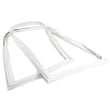
| Door gasket | Refrigerator gasket WR78X20989 | Sealing, temperature stability, frost |
Last updated: February 2026





