Owner’s manual


What is the average lifespan of a Whirlpool dryer?
A Whirlpool electric dryer typically lasts 10 years. With consistent maintenance (especially lint and vent cleaning) and timely replacement of wear parts, many Whirlpool dryers reach 12 to 15 years of service in normal household use; see your WED6620HC2 owner's manual for model-specific care steps.
- Airflow and venting: restricted venting makes the dryer run hotter and longer.
- Lint buildup: lint inside the cabinet and vent increases heat stress.
- Load size and frequency: frequent heavy loads wear the drum support system and drive parts faster.
- Heat management: overheating can shorten the life of thermostats, fuses, and the heater.
- Wear parts condition: rollers, idler pulley, and blower wheel condition directly impacts strain on the motor.
The WED6620HC2 manual calls out routine lint and vent care that directly supports longer life.
- Every load: clean the lint screen (dry lint only; do not wash it).
- Every 2 years (or more often with heavy use): remove lint from the exhaust vent.
- Every 2 years (or more often with heavy use): have lint removed from inside the dryer cabinet by a qualified service.
- Anytime drying slows down: re-check vent routing, elbows, and crushed flex vent.
| Symptom | What it often points to | Example part for WED6620HC2 |
|---|---|---|
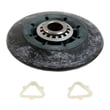
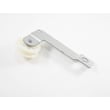
| Squealing, thumping, rumbling | Drum support wear | Dryer drum support roller WPW10314173 |
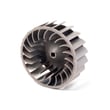
| Dryer runs but takes too long | Airflow restriction or blower issue | Dryer blower wheel WP697772 |
| No heat or overheating shutdown | Heating circuit safety parts | Thermal fuse W10909685 |
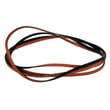
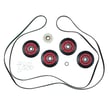
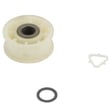
| Belt slips, squeaks, or won’t keep tension | Idler system wear | Dryer idler pulley W10837240 |
A dryer that maintains good airflow dries faster, runs cooler, and puts less stress on the heater, motor, and safety thermostats. That combination is what most often separates a 10-year dryer from a 15-year dryer.
Last updated: February 2026
Are generic Whirlpool parts ok to use?
For your Whirlpool WED6620HC2 dryer, we recommend using OEM-equivalent parts that match the model’s specifications. The dryer’s safety instructions specifically warn against using replacement parts that are not manufacturer-recommended, because incorrect parts can affect heating control, airflow, and overall safety (see the WED6620HC2 owner's manual).
Not all non-OEM parts are the same. The key is whether the part is built and tested to the same fit, temperature rating, and electrical specs your dryer requires.
- Match the dryer model number WED6620HC2 when selecting parts
- Match electrical ratings (voltage, wattage, connector style) for heating and control parts
- Match temperature cutoffs for safety devices (thermal fuse, high-limit thermostat)
- Match dimensions and materials for moving parts (rollers, idler pulley, blower wheel)
- Avoid “universal” parts that require modifying wiring, brackets, or mounting holes
These parts directly affect heat regulation and fire prevention; use the correct model-matched replacement.
| Part type | Why it’s sensitive | Example part on this model page |
|---|---|---|
| Thermal safety devices | Wrong cutoff can cause overheating or nuisance trips | Thermal fuse W10909685 |
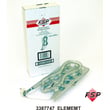
| Heating circuit parts | Incorrect wattage/fit can cause poor heat or wiring damage | Element, heater 5400w WP3387747 |
| Temperature sensing | Wrong resistance curve can cause overheating or long dry times | Dryer thermistor WP8577274 |
Your dryer depends on correct airflow and precise temperature control. A part that does not fit correctly or does not meet the right temperature rating can lead to long dry times, repeated shutdowns, or overheating. The manual also emphasizes routine lint and vent maintenance, which works together with the correct parts to keep temperatures in a safe range.
- Confirm the full model number: WED6620HC2
- Choose the exact part listed for your model when possible
- Replace related wear items together when appropriate (for example, rollers and idler components)
- After any repair, verify strong airflow at the outside exhaust hood and clean the lint screen every load
Last updated: February 2026
What are common dryer part failures?
On the Whirlpool WED6620HC2 dryer, the most common part failures are heat-related safeties (thermal fuse, high-limit thermostat), the heating circuit (heating element), and airflow components (blower wheel, venting). Wear items in the drum drive system (rollers, idler pulley) also commonly cause noise and poor tumbling. See the WED6620HC2 owner's manual for maintenance and airflow guidance.
- No heat or weak heat: heating element, thermal fuse, high-limit thermostat, thermistor
- Long dry times: restricted venting, lint buildup, blower wheel issues
- Squealing, thumping, or rumbling: drum support rollers, idler pulley, belt-related wear
- Won’t start: door not closed, power supply issue, control or safety circuit problem
- Overheating or burning smell: blocked airflow, failed thermostat, lint accumulation
- Confirm airflow: use a heavy metal vent (no plastic or foil) and make sure the vent is not crushed or blocked.
- Clean the lint screen every load and clear laundry piles away from the dryer so intake airflow is not blocked.
- Verify power: many electric dryers use two fuses or two breakers; if one trips/blows, the dryer can run but not heat.
- After 5 minutes of running, open the door and feel for heat; this helps separate airflow issues from heating failures.
| Symptom | Likely part | Example part on this page |
|---|---|---|
| No heat | Heating element | Element, heater 5400w WP3387747 |
| Runs but won’t heat (often airflow-related) | Thermal fuse | Thermal fuse W10909685 |
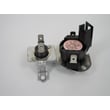
| Overheats or cycles heat oddly | High-limit thermostat | Dryer high-limit thermostat WP8557403 |
| Squeals or thumps | Drum support roller | Dryer drum support roller WPW10314173 |
| Squeals, poor belt tension | Idler pulley | Dryer idler pulley W10837240 |
Most “dryer problems” trace back to airflow. Poor venting makes the dryer run hotter and longer, which can repeatedly blow a thermal fuse and shorten the life of the heating element and thermostats.
Last updated: February 2026
What are the common problems with Whirlpool dryers?
Common problems we see with Whirlpool dryers like model WED6620HC2 include a dryer that will not start, no heat, long dry times from poor airflow, and noises or no tumbling from worn drum support parts. Many issues trace back to power, venting, or normal wear items; use the WED6620HC2 owner's manual for model-specific checks.
- Won’t start: door not fully closed, Start not pressed firmly, or a tripped breaker or blown fuse
- Runs but no heat: one leg of power missing (electric dryers often use two breakers), or a heating circuit problem
- Takes too long to dry: restricted venting, crushed duct, lint buildup, or too many elbows in the vent run
- Not tumbling or squealing/thumping: worn belt path components such as rollers or idler pulley
- Overheating or shutting off: airflow restriction, lint buildup, or a safety thermostat or fuse opening
- Confirm the dryer is plugged in and the door is fully closed.
- Press Start firmly and verify the controls are set to a running cycle.
- Check the home electrical panel; many electric dryers use two breakers/fuses.
- Clean the lint screen before each load.
- Inspect the vent behind the dryer for kinks, crushing, or lint blockage.
If troubleshooting points to a worn or failed component, these are common replacements for WED6620HC2:
| Symptom | Common part to check | Example part on this model page |
|---|---|---|
| Squealing, rumbling, thumping | Drum support rollers | Dryer drum support roller WPW10314173 |
| Squeal, belt slips, drum won’t turn | Idler pulley | Dryer idler pulley W10837240 |
| No heat (after power and vent checks) | Heating element | Element, heater 5400w WP3387747 |
| Dryer stops heating or won’t run (safety open) | Thermal fuse or cut-off | Thermal fuse W10909685 |
Your dryer needs strong airflow to dry efficiently. Blocked or improper venting increases dry time, wastes energy, and can trigger overheating safeties. We recommend using a 4-inch heavy metal vent, keeping the run short, limiting elbows, and cleaning the full vent path at least every 2 years.
If the display shows an error code, match it to the Whirlpool family guide and follow the recommended checks: Whirlpool duet dryer error codes.
Last updated: February 2026