Owner’s manual
 Error Codes


What is the most common problem with Samsung refrigerators?
The most common issues we see on Samsung refrigerators like the RF28JBEDBSG are cooling-related problems, often tied to airflow restrictions from frost or ice buildup, plus ice maker and water-leak complaints. When airflow is blocked, temperatures rise, the unit may get noisy, and food can spoil.
What “most common” usually means in real-world service
Across Samsung bottom-mount and French door designs, the repeat offenders tend to fall into a few buckets:
- Not cooling or weak cooling (fresh food warm, freezer struggling)
- Frost or ice buildup around the evaporator area that restricts airflow
- Ice maker problems (slow production, clumping, freezing up)
- Water leaks (often from a clogged defrost drain or water line connection)
- Unusual noises (fan hitting ice, rattling panels, normal refrigerant flow sounds)
For model-specific operating tips and control settings, we recommend checking the RF28JBEDBSG manual.
Quick checks before assuming a failed part
These steps solve a lot of “warm fridge” calls without replacing anything:
- Confirm the unit is not in Cooling Off/Demo mode (if equipped)
- Make sure air vents are not blocked by food packages
- Verify doors seal fully and close on their own
- Clean dust from condenser coil area (where applicable)
- Set temps to typical targets: 37°F fresh food and 0°F freezer
When it points to a sealed-system or compressor issue
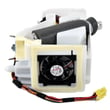
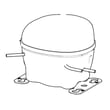
If the refrigerator runs but won’t pull temps down (and there is no heavy frost blocking airflow), the problem can be in the sealed system. On this model, a compatible compressor listed for replacement is the Samsung refrigerator compressor MKV190CL2BASH.
| Symptom | More likely cause | Less likely cause |
|---|---|---|
| Frost-packed back wall, fan noise | Defrost/airflow issue | Compressor |
| Warm both sections, runs a lot | Sealed system/compressor | Door left open |
| Freezer OK, fridge warm | Airflow/damper/fan issue | Compressor |
Why it matters
Cooling and airflow problems can snowball fast: ice buildup can stop fans, warm temps can spoil food, and long run times can stress major components. Catching the early signs helps prevent bigger repairs.
Last updated: January 2026
What are the dimensions of a 28 cubic foot refrigerator?
A 28 cu. ft. refrigerator is usually about 36 inches wide, about 70 inches tall, and roughly 34 to 36 inches deep (depth varies most by door style and whether handles are included). For the most accurate planning numbers for Samsung model RF28JBEDBSG, confirm the exact spec listing in the RF28JBEDBSG manual.
Typical 28 cu. ft. size range (what to expect)
Most 28 cu. ft. units fall into a fairly tight “36-inch class” footprint, but depth can change a lot depending on French door vs. side-by-side and handle depth.
- Width: 35 3/4 to 36 inches
- Height: 69 to 70 inches
- Depth: 34 to 36 inches (often listed without handles)
- Add clearance space for doors to swing and drawers to pull out
Measuring tips before you buy or move the fridge
Use a tape measure and write down your opening and pathway measurements.
- Measure the cabinet opening width, height, and depth
- Measure doorways, hallways, and tight turns on the delivery path
- Plan for ventilation clearance behind and above the refrigerator
- Confirm whether depth is “case only” or includes handles
- Account for door swing clearance and drawer pull-out space
Quick planning checklist (dimensions vs. clearances)
| What you measure | What it affects | What to allow for |
|---|---|---|
| Width | Fit between cabinets | Side clearance for airflow and door swing |
| Height | Fit under cabinets | Top clearance for ventilation |
| Depth | How far it sticks out | Handles, door swing, and drawer clearance |
Why it matters
A refrigerator can be “36 inches wide” on paper but still not fit comfortably if the doors cannot open fully or if the unit cannot be maneuvered through doorways. Confirming the exact RF28JBEDBSG specs helps avoid delivery issues and ensures proper airflow for cooling performance.
Last updated: January 2026
Why is ice forming in the bottom of my Samsung fridge?
Ice at the bottom of a Samsung RF28JBEDBSG refrigerator is usually caused by meltwater that cannot drain during defrost, then refreezes into a sheet of ice. The most common triggers are warm, humid air leaks at the doors, a blocked/iced defrost drain, or airflow issues in the freezer.
What to check first (fast, no tools)
- Make sure freezer drawers and bins are fully seated so the door closes squarely.
- Look for frost buildup on the back freezer panel; heavy frost often points to airflow or defrost issues.
- Inspect door gaskets for gaps, tears, or areas that do not “grab” a dollar bill.
- Confirm food packages are not blocking air vents.
- Reduce door-open time; humid air entering the freezer quickly turns into frost and ice.
Defrost drain: the most common root cause
When the refrigerator defrosts, water should flow through a drain hole to a drain pan. If the drain hole or drain tube freezes or clogs, water pools on the freezer floor and refreezes.
Safe DIY steps
- Unplug the refrigerator.
- Remove the freezer drawer(s) and the lower bin.
- Melt the ice on the freezer floor with a hair dryer on low (keep heat moving) or warm towels.
- Flush the drain hole with warm water (a turkey baster works well) until it flows freely.
- Reassemble and monitor for 24 to 48 hours.
For model-specific disassembly and panel removal guidance, use the RF28JBEDBSG manual.
Quick symptom guide
| What you see | Most likely cause | What we recommend |
|---|---|---|
| Solid ice sheet on freezer floor | Drain iced/clogged | Clear and flush drain |
| Frost around door edges | Door not sealing | Clean gasket, check alignment |
| Frost on back freezer panel | Airflow/defrost problem | Check vents; consider service if it returns |
Why it matters
Ice buildup can prevent the freezer door from sealing, reduce cooling performance, and lead to water leaks when the ice melts.
Last updated: January 2026