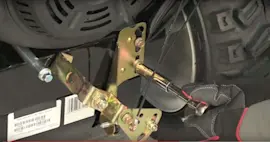
Owner’s manual
 View engine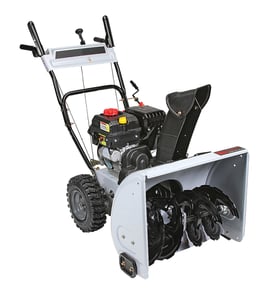

Should I spray my snowblower with WD-40?
Yes, you can spray a light coating on the discharge chute and inside the auger housing of your Craftsman 536881800 to help reduce snow sticking, but we recommend using a silicone-based spray for longer-lasting slickness. Avoid spraying any drive or friction surfaces; see the 536881800 operator's manual for safe maintenance practices.
Where it’s OK (and not OK) to spray
Use a spray only on clean, dry metal surfaces where you want snow to slide.
- OK: discharge chute interior and chute deflector
- OK: inside the auger housing (front intake area)
- OK: exterior painted metal for light moisture protection (wipe excess)
- Not OK: friction wheel, drive plate, belts, pulleys, or any traction/auger drive components
- Not OK: engine controls, electrical starter components, or areas that get hot (muffler zone)
WD-40 vs silicone spray (quick comparison)
| Product type | Best use on a snow thrower | How long it tends to last | Notes |
|---|---|---|---|
| Standard WD-40 (water-displacing spray) | Short-term moisture displacement, light rust prevention | Short | Can leave a film but usually does not stay “slick” long in snow |
| Silicone spray (non-stick) | Chute and auger housing anti-stick coating | Longer | Typically the better choice for preventing clogging |
How to apply it (simple steps)
- Shut the engine off, remove the key, and let moving parts stop.
- Brush out packed snow and ice; let surfaces dry.
- Apply a thin, even coat to the chute and auger housing; wipe drips.
- Keep spray away from belts and friction-drive parts (overspray can cause slipping).
If your snowblower still clogs
Clogging is often caused by wet snow, low engine speed, or a shear pin issue. If the auger stops turning after hitting packed snow or debris, inspect the shear pins and replace as needed with the correct kit for this model, such as kit shearbol 1501227MA.
Why it matters
A non-stick coating can reduce chute plugging and improve throwing distance, but overspray on drive components can create slipping and poor traction. Using the right product in the right place helps performance without creating new problems.
Last updated: January 2026
Should I use 87 or 91 for snowblower?
For the Craftsman 536881800 gas snow thrower, we recommend using clean, fresh unleaded gasoline with a minimum of 85 octane; that means 87 (regular) is typically the right choice, and 91 (premium) is also acceptable but usually not necessary. Fuel freshness and proper storage matter more than octane.
What the manual says for model 536881800
The operator guidance for this model specifies:
- Use unleaded gasoline
- Use regular, premium, or reformulated automotive gasoline
- Use a minimum of 85 octane
- Use fresh, clean fuel (stale fuel can cause hard starting and poor running)
For the exact wording and storage steps, use the 536881800 operator's manual.
How to choose between 87 and 91
In most areas, 87 meets the octane requirement and runs great in this engine.
- Choose 87 octane if it is fresh and from a busy station
- Choose 91 octane if it is the only fresh option available, or if it is easier for you to buy in small quantities
- Avoid old fuel sitting in a can from last season
- Avoid higher-ethanol blends when possible (they can create storage and drivability issues in small engines)
Quick comparison
| Fuel option | Works in 536881800? | Best use case |
|---|---|---|
| 87 octane (regular) | Yes | Normal operation with fresh fuel |
| 91 octane (premium) | Yes | If it is fresher, easier to source, or you prefer it |
| Minimum 85 octane | Yes | Only if that is what is available in your area |
Why it matters
Using fuel that meets the minimum octane is important, but using fresh fuel is what most often prevents carburetor gumming, hard starting, and rough running after storage.
If your snowblower starts hard, surges, or won’t move snow well, worn drive components can also be involved; for example, a slipping auger belt can reduce snow discharge. If you’re troubleshooting that kind of symptom, the snowblower gas belt 585416MA is one of the compatible auger drive belt options for this model.
Last updated: January 2026
How many years should a snowblower last?
A Craftsman gas snow thrower like model 536881800 typically lasts about 10 to 20 years when it’s maintained and stored correctly; heavy use, poor storage, and skipped maintenance can shorten that lifespan. For model-specific maintenance intervals, follow the 536881800 operator's manual.
What affects lifespan the most
- Maintenance consistency: oil changes, spark plug checks, belt inspections
- Storage habits: dry storage, fuel stabilized or drained for off-season
- Snow conditions: wet, heavy snow increases strain on auger and drive system
- Operator technique: avoiding impacts with gravel, ice chunks, or curbs
- Wear items replaced on time: belts, shear pins, friction wheel
Typical lifespan by use pattern
| Use pattern | What we usually see | What helps most |
|---|---|---|
| Light (few storms/year) | 15 to 20 years | Off-season storage steps, fresh fuel |
| Moderate (regular driveway use) | 10 to 15 years | Annual tune-up, belt and cable checks |
| Heavy (long runs, deep/wet snow) | 7 to 12 years | Mid-season inspections, replacing wear parts early |
Maintenance habits that extend life on model 536881800
The manual for this model calls out routine checks such as oil level checks and periodic service intervals; staying on top of these prevents expensive failures.
- Check engine oil level regularly; change oil on schedule
- Keep tire pressure in the recommended range (the manual lists 14 to 17 PSI)
- Clear packed snow and ice after use to prevent freeze-up
- Inspect and replace shear pins when they break (they protect the auger gearbox)
- Replace worn drive components before they start slipping
Parts that commonly determine “repair vs. replace”
If performance drops, these are often the first wear items to inspect or replace:
- Snowblower drive belt 1733324SM (ground drive slipping)
- Snowblower gas belt 585416MA (auger not throwing snow well)
- Friction wheel 1501435MA (unit won’t propel consistently)
Why it matters
A snowblower that’s still structurally sound can often be kept reliable for many seasons by replacing normal wear parts and following proper storage steps; that usually costs far less than replacing the entire machine.
Last updated: January 2026
How can I tell how old my Craftsman snowblower is?
For Craftsman model 536881800, we can’t identify an exact manufacture date from the model number alone because Craftsman serial-number and date-code formats vary by the company that built the unit. The most reliable approach is to date the engine and then confirm with purchase or service records; see the identification and engine sections in the 536881800 operator’s manual.
What we can confirm for model 536881800
The operator’s manual for this model lists a Briggs & Stratton engine model 12E114-0268-E1 in the engine parts section. That helps you focus your search on the engine identification label.
Best ways to estimate age (most to least reliable)
- Purchase receipt or service paperwork: gives an in-service date.
- Engine identification label: often includes Model/Type/Code information you can use to determine an engine build date.
- Snowblower serial number tag: may include a date code, but formats vary.
- Parts and feature comparison: helps narrow the era if labels are missing.
Where to look (general guidance for this model)
The manual doesn’t specify an exact location for the model/serial tag on the chassis, so use these common snow thrower spots:
- Rear frame near the handles
- Side of the frame near the belt cover
- Engine blower housing or shroud
- Near the muffler heat shield area
Quick comparison
| What you check | What it can tell you | Reliability |
|---|---|---|
| Receipt/service record | In-service date | High |
| Engine Model/Type/Code label | Often engine build date | High |
| Snowblower serial tag | Sometimes production batch/date | Medium |
| Visual features/parts | Approximate era | Low |
Why it matters
Knowing the approximate age helps us match the right maintenance and repair parts (drive belt, auger belt, shear pins) to your exact configuration.
Last updated: January 2026