Installation guide
 Owner’s manual
 Error Codes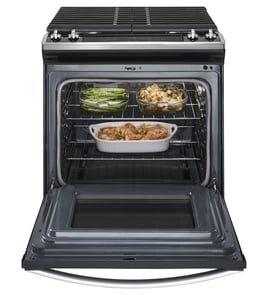



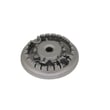
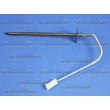
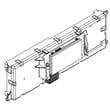
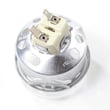

Does KitchenAid replace broken parts?
Yes. For the KitchenAid KFGD500EWH04 gas double oven convection range, KitchenAid covers certain broken parts under its limited warranty when the failure is due to defects in materials or workmanship and the range was installed and used as directed; warranty service is handled through authorized service providers (U.S. 1-year parts and labor, with limited parts coverage in years 2 through 5 for specific components). See the KFGD500EWH04 owner's manual for the warranty terms and service instructions.
What KitchenAid typically covers (and what it does not)
KitchenAid warranty coverage depends on the part and the time since purchase.
- Year 1 (limited warranty): factory-specified replacement parts and repair labor for covered defects
- Years 2 to 5 (limited parts only): certain component parts only (labor not included)
- Not covered examples: consumables such as light bulbs, damage from misuse, and issues caused by non-genuine parts
- Service requirement: warranty service is provided by authorized KitchenAid service providers
Quick coverage snapshot
| Time since purchase | What’s covered | Labor included? |
|---|---|---|
| First year | Covered defects in materials/workmanship (parts and repair labor) | Yes |
| Years 2 to 5 | Certain component parts only (for non-cosmetic defects that prevent function) | No |
Why it matters
Using the correct warranty path can save time and prevent out-of-pocket costs. It also ensures the repair is performed by an authorized provider, which is required for warranty service on the KFGD500EWH04.
If you need the part right away
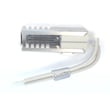
If the range is out of warranty, or the issue is excluded (for example, a bulb), we can help you match the correct replacement part for your exact model. Common examples for this model include the light bulb 8009 and ignition-related parts like the whirlpool range bake igniter W11596211.
Last updated: February 2026
Where is the model number on a KitchenAid gas range?
On the KitchenAid gas double oven convection range model KFGD500EWH04, the model number is on the model/serial/rating plate located behind the control panel. You can view the serial plates by rotating them up, as shown in the KFGD500EWH04 owner's manual.
How to find it safely
- Turn the range off and let it cool completely.
- Avoid reaching near hot surfaces or sharp metal edges.
- Use a flashlight to look behind the control panel area.
- Rotate the serial plates up to read the model and serial numbers.
- Write the model number and serial number down exactly as shown.
What you should see on the plate
The plate typically lists both identifiers you need for parts and service.
| Item on plate | What it’s used for |
|---|---|
| Model number (KFGD500EWH04) | Matching the correct parts diagrams and replacement parts |
| Serial number | Identifying production details for service and support |
Why it matters
We use the model number to ensure parts like an oven igniter, control board, or door hinge match your exact KitchenAid range configuration. Even small model variations can change which parts fit.
Last updated: February 2026
What is the life expectancy of a KitchenAid gas range?
A KitchenAid gas range like model KFGD500EWH04 typically lasts 13 to 15 years. With consistent cleaning, correct rack use, and timely repairs (especially for igniters and controls), many ranges reach the upper end of that range.
Typical lifespan and what affects it
Most gas ranges wear out from heat-related stress, burner ignition issues, and control failures rather than the cabinet itself.
- 13 to 15 years is the typical service life for a gas range
- Heavy daily cooking can shorten lifespan
- Skipping cleaning can cause burner and ignition problems sooner
- Replacing wear parts (igniters, knobs, hinges) extends usable life
- Following operating guidance in the KFGD500EWH04 owner's manual helps prevent avoidable heat and cooking issues
Parts that commonly limit lifespan (and are replaceable)
If the oven stops heating reliably or takes too long to ignite, these are common repair paths on gas ranges.
| Symptom | Common cause | Example part for this model |
|---|---|---|
| Oven will not heat or heats inconsistently | Weak or failed igniter | Whirlpool range bake igniter W11596211 |
| Clicking during ignition, delayed lighting | Igniter or flame sensing issue | Range oven burner igniter WPW10324738 |
| Door won’t close tightly, heat loss | Worn hinge | Door hinge WPW10485732 |
| Display or touch functions act erratically | Control or user interface issue | Control W10877013 |
Maintenance habits that add years
These habits reduce strain on burners, valves, and electronics.
- Keep burner heads and bases clean and dry after boilovers
- Avoid “oven peeking”; opening the door releases heat and increases run time
- Use correct rack positions to prevent over-browning and excess heat cycling
- Replace failing igniters promptly to avoid repeated gas valve cycling
- Use the KFGD500EWH04 installation guide guidance for safe setup and stable operation
Why it matters
A range that is maintained and repaired early usually costs less to keep running than one that is run with weak ignition or poor door sealing, because those problems increase heat cycling and stress key components.
Last updated: February 2026
What are signs of a faulty gas oven igniter?
A faulty gas oven igniter on KitchenAid model KFGD500EWH04 usually shows up as the oven taking a long time to light, not lighting at all, or lighting inconsistently. Because this range uses a glow-bar style igniter to light the bake or broil burner, weak ignition is a strong clue the igniter is failing (or not getting power). See the KFGD500EWH04 installation guide for normal ignition behavior and timing.
Common symptoms you can see (and hear)
- Oven set to Bake or Broil but the burner never lights
- Igniter glows but the burner still does not ignite (weak igniter)
- Ignition is delayed; you smell gas briefly before it lights
- Broil or bake may take up to about 60 seconds to light under some conditions; longer than that points to a problem
- Repeated clicking or cycling without a stable flame (after the start sequence)
- Oven heat is uneven because the burner is not lighting reliably
Quick checks before replacing parts
- Confirm the range has power (plugged in, breaker not tripped, fuse not blown).
- Confirm the gas shut-off valve is fully open.
- Start a Broil cycle and watch for the igniter to glow; once hot, the burner should light.
- If the igniter does not glow at all, check wiring connections and test the igniter circuit.
If the igniter is suspected, the most direct electrical test is a continuity check with a meter.
What “normal” looks like vs. a problem
| What you observe | Most likely meaning | What to do next |
|---|---|---|
| Igniter glows, burner lights within about 60 seconds | Normal ignition sequence | No repair needed |
| Igniter glows, burner does not light | Igniter weak or gas valve not opening | Test igniter; inspect gas valve and wiring |
| Igniter never glows | No power to igniter or igniter open | Check power, wiring, then test igniter continuity |
Parts that commonly fix ignition problems
If testing confirms the bake igniter is bad, a common replacement for this model is the whirlpool range bake igniter W11596211.
Why it matters
A weak igniter can prevent the gas valve from opening fully, which leads to delayed ignition, no heat, and inconsistent baking performance. Catching igniter problems early helps restore reliable Bake and Broil operation.
Last updated: February 2026