Installation guide
 Owner’s manual
 Error Codes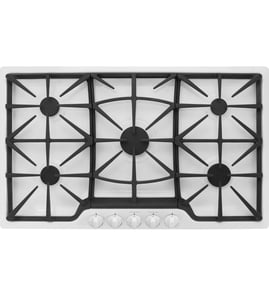
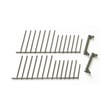



How to clean fisher and paykel gas cooktop?
For the Fisher & Paykel GC913 gas cooktop, we recommend cleaning with warm soapy water and a soft sponge or cloth, then rinsing and drying thoroughly. Clean regularly before spills burn on; for stubborn spots, soak under a soapy cloth for a few minutes, then wipe clean (see the GC913 owner's manual).
Safety first
- Turn all burners off.
- Let the entire cooktop cool completely before cleaning.
- Keep water and cleaners away from live electrical parts.
- Never clean cooktop parts in a self-cleaning oven.
What to use (and what to avoid)
Use the mildest cleaner that gets the job done.
Use:
- Warm soapy water
- Clean, soft cloths or non-scratch sponges
- A nylon scourer for tougher soil on durable surfaces
Avoid:
- Abrasive cleaners and harsh scouring pads (can scratch)
- Steel wool or sharp tools (can permanently damage finishes)
- Leaving cleaner residue behind (it can stain when heated)
Cleaning by part (quick guide)
| Cooktop area | Best method | Key tip |
|---|---|---|
| Grates and burner caps | Wash with hot soapy water; many grates are dishwasher safe | Dry fully before reinstalling |
| Burner parts (ports/holes) | Wash in warm water; clear holes with a stiff nylon brush | Reassemble correctly for an even flame |
| Stainless steel exterior | Soapy water, wipe with the grain | Dry thoroughly to prevent water marks |
If the igniters are not lighting reliably
Dirty igniters can prevent lighting. Clean the igniter area gently with a toothbrush and rubbing alcohol, then let it dry completely before trying again.
Why it matters
Regular cleaning keeps burner flames even, helps the igniter spark reliably, and prevents baked-on residue that can permanently stain stainless steel surfaces.
Last updated: February 2026
What does GC913 mean?
GC913 is the model number for your Fisher & Paykel gas cooktop. We use this exact identifier to match the correct parts (like burner caps, igniters, and the SimmerMat accessory) and to pull the right safety, cleaning, and installation instructions for your specific cooktop in the owner's manual.
Why the model number matters
Using the correct model number prevents ordering the wrong part or assembling burner components incorrectly.
- Parts can look similar across Fisher & Paykel cooktops but mount differently
- Burner components must be assembled in the correct order to avoid irregular flames
- The manual includes model-specific features (for example, SimmerMat use is listed for GC913)
- Installation requirements and clearances can vary by model
- Troubleshooting steps (like lighting during a power failure) are model-specific
Where you’ll see “GC913” used
You’ll typically see GC913 on the rating label and throughout the documentation and parts list.
| Where it appears | What it’s used for | Example |
|---|---|---|
| Parts list | Matching replacement parts | Burner cap, burner head, igniter |
| User instructions | Safe operation and cleaning | Cookware guidance, grate placement |
| Installation info | Hookup and setup requirements | Gas and electrical connection details |
| Service/repair | Identifying the correct configuration | Wok burner assembly order |
Common GC913-RELATED parts customers replace
If you are shopping for maintenance or repair parts for GC913, these are common items on this model’s parts list:
- Cooktop burner cap 530333 (burner flame pattern issues, missing cap)
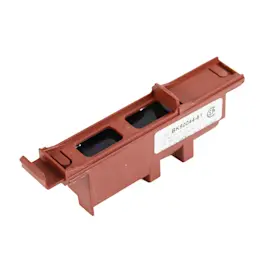
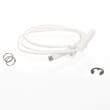
- Cooktop burner igniter 531606 (clicking but not lighting, weak spark)
- Cooktop burner head 531505 (clogged ports, uneven flame)
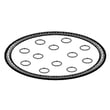
- Simmermat 530460 (low-heat simmer control accessory)
Why it matters for safety and performance
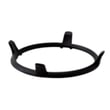
On this cooktop, incorrect burner reassembly can cause dangerous irregular flames and ignition problems. The manual also covers safe cookware use (including wok size limits and using the wok ring correctly) and what to do during a power failure.
Last updated: February 2026
What is the highest BTU for a cooktop?
Most residential gas cooktops top out around 18,000 to 20,000 BTU on the highest-power burner; pro-style units commonly reach 22,000 to 25,000 BTU. For your Fisher & Paykel GC913 cooktop, confirm the exact burner BTU ratings by gas type in the GC913 owner's manual.
Typical “highest BTU” ranges you’ll see
- 12,000 to 15,000 BTU: fast boiling, everyday high heat
- 15,000 to 20,000 BTU: searing, wok cooking, rapid heat-up
- 22,000 to 25,000 BTU: pro-style power (often paired with stronger ventilation)
- 3,000 to 8,000 BTU: simmering and low-heat control
What affects real heat output (not just the BTU number)
- Gas type and pressure (natural gas vs. LP; regulator setting)
- Cookware size and material (thick, flat-bottom pans heat more evenly)
- Flame adjustment (keep flame under the pan, not licking up the sides)
- Burner assembly and cleanliness (cap seated flat; ports not clogged)
- Ventilation and airflow (helps maintain stable combustion)
BTU targets by cooking task
| Cooking task | Typical BTU target | Best practice |
|---|---|---|
| Simmer sauces | 3,000 to 6,000 | Use a smaller burner and a heavy pan |
| Boil water quickly | 12,000 to 18,000 | Use a lid and match pot to burner |
| Sear or stir-fry | 15,000 to 20,000+ | Preheat cookware; use ventilation |
Why it matters
Higher BTU burners heat faster, but efficiency and safety depend on proper flame control. The GC913 guidance emphasizes adjusting the flame so it does not extend beyond the edge of the cookware.
Last updated: February 2026