Installation guide
 Owner’s manual


How do I tell what model my Kenmore dryer is?
Your Kenmore dryer’s model number is printed on the model and serial number label; on model 11062972101, that label is located at the top inside the dryer door well. Once you have the full model number, we can match the correct parts, diagrams, and specifications.
Where to look on Kenmore model 11062972101
Check these spots in order:
- Top inside the dryer door well (most common for this model)
- Inside the door opening around the frame
- Back panel (less common)
- Near the lint screen housing (varies by design)
Use the 11062972101 owner's manual to confirm the label location and how to record the model and serial number.
What to write down (and why)
Record the information exactly as shown on the label:
- Model number (example format often starts with 110 on many Kenmore-built units)
- Serial number
- Purchase date (helpful for service history and documentation)
Why it matters
Kenmore model numbers identify the exact design version of your electric dryer. That ensures we recommend the right items such as a heating element, thermal fuse, door switch, drum support rollers, and the correct installation clearances.
Quick ID checklist
| What you see | What it usually means | What to do next |
|---|---|---|
| Full model number like 11062972101 | Exact parts match | Use it when ordering parts |
| Only partial digits | Not enough for accurate parts | Recheck the label for the full number |
| Label is worn or missing | Model ID is harder to confirm | Check the door well carefully and compare to paperwork |
If you’re ordering parts after you find the model
For common repairs on this model, these parts are frequently referenced:
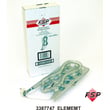
- Dryer heating element WP3387747 for no-heat symptoms
- Dryer thermal fuse WP3390719 for a dryer that will not run
- Dryer door switch WP3406107 if the dryer thinks the door is open
Last updated: February 2026
What are the most common issues with 11062972101?
The most common problems we see on Kenmore electric dryer model 11062972101 are no heat or poor heat, won’t start, drum not turning, and loud squealing or thumping. These issues usually trace to airflow restrictions, heat-safety parts, or drum support wear.
Most common symptoms and likely causes
- No heat / weak heat: blown thermal fuse, failed heating element, failed thermal cut-off, restricted vent
- Long dry times: clogged lint screen or duct, crushed exhaust, blower wheel slipping
- Won’t start: door switch not closing, push-to-start switch failure, timer/contact issue
- Drum won’t turn: broken belt, seized idler pulley, worn drum support parts, motor problem
- Squealing / thumping: worn idler pulley or drum support components
Parts that commonly fix these issues (for this model)
| Problem | Common fix part | Part ID |
|---|---|---|
| No heat | Dryer heating element | Dryer heating element WP3387747 |
| Dryer won’t run (often after overheating) | Dryer thermal fuse | Dryer thermal fuse WP3390719 |
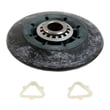
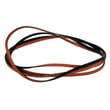
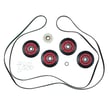
| Squealing, belt issues, drum support wear | Dryer repair kit | Dryer repair kit 4392067 |
| Won’t start when door closes | Dryer door switch | Dryer door switch WP3406107 |
Quick checks we recommend before replacing parts
- Confirm strong airflow outside at the vent hood while the dryer runs
- Clean the lint screen and check for waxy residue that blocks airflow
- If the dryer runs but won’t heat, check for a tripped breaker (electric dryers often use a 2-pole breaker)
- If the dryer won’t start, listen for a click at the door switch when closing the door
- Use the wiring diagram and diagnostic guidance in the owner's manual
Why it matters
Fixing airflow first prevents repeat failures. A restricted vent can overheat the heater housing and repeatedly blow the thermal fuse, even after you replace it.
Last updated: March 2026
What is the average lifespan of 11062972101?
A Kenmore electric dryer like model 11062972101 typically lasts 13 years with normal household use. Regular vent cleaning, not overloading the drum, and replacing wear parts early (belt, rollers, idler) are what most directly extend service life.
What affects lifespan the most
- Airflow: restricted venting overheats the heater and safety fuses
- Load habits: frequent overloading strains the drive motor and drum support
- Maintenance: lint buildup accelerates wear and heat-related failures
- Environment: garages and damp spaces increase corrosion and electrical issues
- Timely part replacement: worn support parts can damage the drum and bulkhead
Typical lifespan by component (what usually fails first)
| Component area | Common wear item | What you notice |
|---|---|---|
| Drum support | Rollers/idler/belt (often serviced as a kit) | Thumping, squealing, drum not turning |
| Heating system | Heater, thermal cut-off, thermal fuse | No heat, shuts off mid-cycle |
| Airflow path | Lint screen, ducting | Long dry times, hot cabinet |
| Controls | Timer or start switch | Won’t start, stuck cycles |
Maintenance that adds years (and prevents repeat failures)
- Clean the lint screen every load; wash it monthly to remove residue
- Inspect and clean the vent run at least yearly (more often with long vents)
- Keep the dryer level so the drum rides evenly on supports
- If you smell overheating or see long dry times, stop and correct airflow first
- Follow the cleaning and venting guidance in the owner's manual
Why it matters
Most “dryer died early” situations trace back to overheating from poor airflow. That heat can take out the dryer thermal fuse and shorten the life of the dryer heating element and wiring.
Last updated: March 2026