

How do I find my compressor model number?
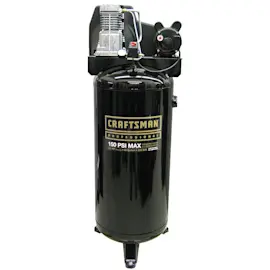
For a Craftsman air compressor like model 282160091, the model number is printed on the unit’s identification label (data plate). Once you locate and copy that number exactly, you can use it to match the correct parts and diagrams on how to find your appliance model number (and what it means for parts).
Where to look on the compressor
Check these common spots where manufacturers place the data plate or sticker:
- On the tank near the handle or wheel bracket
- On the pump or motor shroud (side or rear)
- Near the regulator and gauge panel
- On the frame rail or base plate
- On the back side of the unit where the power cord enters
What to write down (so parts match)
Model labels can include several numbers. For parts lookup, capture these items exactly as shown:
- Model number (the most important)
- Serial number (helps identify production run)
- Type or code (sometimes used on power tools)
- Voltage/amps (useful when diagnosing motor or switch issues)
Quick guide: which number matters most?
| Label item | What it’s used for | Keep it exact? |
|---|---|---|
| Model number | Matching parts diagrams and assemblies | Yes |
| Serial number | Narrowing variations by build run | Yes |
| Type/Code | Extra identifier on some units | Yes |
| HP/PSI/SCFM | Performance reference only | No (for parts lookup) |
Why it matters
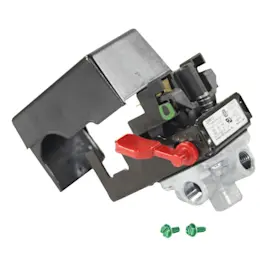
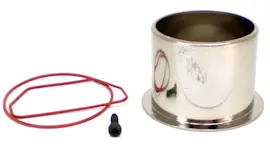
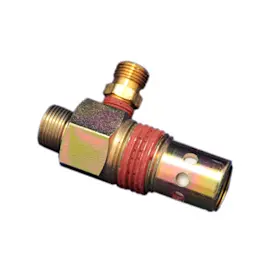
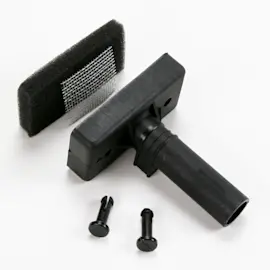
Air compressors often have multiple versions that look similar but use different regulators, pressure switches, check valves, or filters. Using the exact model number prevents ordering a part that fits a different revision.
Last updated: February 2026
What is the most common cause of air compressor failure?
The most common cause of air compressor failure is poor preventive maintenance, especially restricted airflow (dirty intake filter), moisture buildup in the tank, and running the unit hot. On Craftsman model 282160091, these issues typically show up as slow fill, frequent cycling, or hard starting.
Most common failure causes (and what to check first)
- Dirty or restricted air intake filter: reduces airflow, increases heat, and accelerates wear.
- Overheating: caused by blocked cooling fins, poor ventilation, or long run times.
- Moisture and corrosion in the tank: from not draining the tank; can lead to leaks and weak air delivery.
- Electrical problems: loose connections, failing pressure switch, or a weak start capacitor (if equipped).
- Air leaks: fittings, hose connections, regulator, or check valve leaks force longer run times.
Quick symptom-to-cause guide
| Symptom | Most likely cause | What to do |
|---|---|---|
| Runs but won’t build pressure | Air leak or bad check valve | Listen for hissing; soap-test fittings; inspect check valve area |
| Trips breaker or won’t start | Electrical issue or overheating | Check cord/outlet, reset, inspect wiring and ventilation |
| Takes a long time to fill | Dirty intake filter or leak | Clean/replace filter; check fittings and hose connections |
| Water spits from tools | Tank not drained | Drain tank after use; add an inline filter/water separator |
Why it matters
When airflow is restricted or leaks force long run times, the pump and motor run hotter and longer. That heat breaks down seals, stresses valves, and increases the chance of electrical failures.
Maintenance that prevents most failures
- Drain the tank after each use (or daily in humid conditions)
- Keep the intake filter clean and the shroud/vents clear
- Tighten fittings and recheck for leaks periodically
- Use an inline air line filter for painting and moisture-sensitive tools
- Verify power supply is correct; avoid undersized extension cords
For general DIY safety and best practices before troubleshooting electrical components, use are diy appliance repairs safe.
Last updated: February 2026
Are air compressor parts interchangeable?
Most parts on a Craftsman air compressor like model 282160091 are not interchangeable across brands or even across different models. Major components (pump, motor, regulator/manifold assemblies, pressure switch setups) are matched to the compressor’s PSI/CFM requirements and mounting style, so swapping them often causes fit, performance, or leak problems.
What is usually model-specific (not interchangeable)
These parts are typically engineered around the tank size, pressure rating, and how the unit is plumbed:
- Pump and pump head components (valves, gaskets, reed plates)
- Motor and start components (capacitor, centrifugal switch, thermal overload)
- Pressure switch and unloader valve arrangement
- Regulator/manifold assemblies and integrated gauges
- Tank check valve style and port orientation
What is sometimes interchangeable (if the specs match)
Some external air fittings can cross over between brands when the thread type and coupler profile match:
- NPT threaded fittings (commonly 1/4-in or 3/8-in NPT on many shop compressors)
- Quick-connect couplers and plugs (industrial/M-style, automotive/T-style, ARO, etc.)
- Air hose ends and basic adapters
- Simple inline filters and moisture separators (when sized for your airflow)
Quick compatibility checklist
Use this before buying any “universal” replacement.
| What to match | Why it matters | What happens if it’s wrong |
|---|---|---|
| Thread type and size (NPT vs others) | Prevents leaks and cross-threading | Stripped ports, constant leaking |
| Coupler plug style (M, T, ARO, etc.) | Ensures tools connect and seal | Tools will not latch or will leak |
| Pressure rating (PSI) | Safety and performance | Blow-offs, premature failure |
| Airflow capacity (CFM) | Tool performance | Weak tool power, pressure drop |
Why it matters
Air compressors are a system; the pump, controls, and plumbing are tuned to work together. Even when a part “fits,” mismatched flow, pressure control, or sealing surfaces can create chronic leaks, short-cycling, or poor tool performance.
Helpful DIY reference
For electrical or control-part troubleshooting (pressure switch circuits, motor issues), use a meter and confirm power is off before testing. Our guide on how to use a multimeter to test electrical parts video helps you verify common electrical components safely and accurately.
Last updated: February 2026
What does 4.0 scfm at 90 psi mean?
4.0 SCFM at 90 PSI means your Craftsman model 282160091 can deliver about 4 standard cubic feet of air per minute while maintaining 90 pounds per square inch at the outlet. In practical terms, it tells you how much usable airflow you have for air tools that are rated at 90 PSI.
How to use that number when choosing tools
Match the compressor’s SCFM at 90 PSI to the tool’s air requirement (usually listed as SCFM at 90 PSI).
- If the tool needs 3.0 SCFM @ 90 PSI, this compressor output is typically sufficient.
- If the tool needs 5.0 SCFM @ 90 PSI, the compressor will run continuously and pressure will drop.
- For intermittent tools (brad nailers, staplers), SCFM matters less than tank size and recovery time.
- For continuous-use tools (DA sanders, grinders, paint sprayers), SCFM is the main limiting factor.
- Use a regulator at the tool, but remember: a regulator cannot create more SCFM than the compressor can supply.
Quick rule-of-thumb comparison
| Tool type (typical) | Air demand style | What 4.0 SCFM @ 90 PSI usually supports |
|---|---|---|
| Brad/finish nailer | Short bursts | Good fit |
| Blow gun/inflation | Short to moderate | Good fit |
| Impact wrench (small/medium) | Intermittent | Often OK |
| HVLP spray (some setups) | Longer cycles | Borderline |
| DA sander/die grinder | Continuous | Usually undersized |
Why “SCFM at 90 PSI” matters
We use SCFM because it reflects airflow under a common working pressure (90 PSI). Two compressors can both reach a high maximum PSI, but the one with higher SCFM at 90 PSI will keep tools running longer without bogging down.
Helpful related DIY reading
For general safety and planning before DIY repairs or electrical checks around power tools, use are diy appliance repairs safe.
Last updated: February 2026