Installation guide
 Owner’s manual
 Error Codes


How to tell if a Kenmore refrigerator compressor is bad?
If your Kenmore 2537044341D isn’t cooling and you hear repeated clicking, the compressor may be failing to start (often tripping its overload). Before condemning the compressor, confirm the refrigerator isn’t simply in a normal defrost cycle and that it has steady power, because those conditions can mimic a “bad compressor.”
Quick checks before blaming the compressor
Start with these basics; they solve a lot of “no cool” calls.
- Make sure the unit is plugged in firmly and the outlet has power.
- Check for a tripped breaker or blown fuse.
- Confirm the freezer control is not set to OFF.
- Remember defrost is normal; a defrost cycle can last about 30 minutes.
- Avoid using an extension cord or GFI circuit; low or unstable voltage can damage the compressor.
For model-specific operating and safety notes, use the owner's manual.
Signs that point to a compressor problem
These symptoms strongly suggest the compressor is not running correctly (or not running at all):
- Repeated clicking every few minutes with little or no cooling
- Compressor is not running but fans and lights work
- Compressor runs briefly, then shuts off (overload behavior)
- Unusual loud buzzing or knocking from the compressor area
- Refrigerator and freezer temperatures both rise even though controls are set correctly
What to check next (safe, practical steps)
We recommend these steps because they help separate a compressor issue from airflow or control problems.
| What you observe | Most likely cause | What to do |
|---|---|---|
| No cooling; compressor silent | No power, control off, or defrost | Verify power and settings; wait out defrost |
| Clicking; compressor won’t stay on | Start device/overload or compressor | Have a technician test start circuit and compressor draw |
| Compressor runs a lot; still warm | Sealed system or airflow issue | Check for blocked vents; inspect fans and frost patterns |
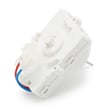
If you confirm the compressor itself has failed and you’re replacing it, the correct part for this model is the refrigerator compressor 241706201.
Why it matters
A compressor diagnosis is important because sealed-system repairs are more involved than common fixes like a fan motor, temperature sensor, or door gasket. Ruling out power, settings, and defrost first prevents unnecessary parts replacement and downtime.
Last updated: February 2026
How to tell what model Kenmore refrigerator?
Your Kenmore refrigerator’s model number is printed on the rating label inside the fresh food (refrigerator) compartment. For Kenmore model 2537044341D, the label is typically on an interior side wall, near the ceiling, or behind a crisper drawer; match that number exactly when looking up parts and instructions in the owner's manual.
Where to look for the model and serial label
Check these common spots first (use a flashlight and look for a white or silver sticker/plate):
- Inside the refrigerator section on the left or right side wall
- On the ceiling of the fresh food compartment
- Behind or underneath a crisper drawer (remove the drawer to see the label)
- Along the door frame area when the refrigerator door is open
- Near the lower front area behind the toe grille (on some designs)
How to use the model number once you find it
Use the full model number exactly as shown (including any letters) to get the right Kenmore bottom-mount refrigerator parts and documentation.
| What you’re looking at | What it’s used for | Example |
|---|---|---|
| Model number | Identifies the exact refrigerator design | 2537044341D |
| Serial number | Identifies your specific unit | Varies by unit |
Why it matters
Kenmore model numbers can look similar, but small differences can change which parts fit (ice maker, door gasket, control board) and which procedures apply (door removal, water line connection, leveling).
Quick tips to avoid mix-ups
- Write the model number down exactly as printed
- Take a clear photo of the label before ordering parts
- Use the model number when following setup steps like water supply connection and door alignment in the installation guide
Last updated: February 2026
Is it worth replacing the ice maker on a refrigerator?
Yes. For your Kenmore 2537044341D, replacing the ice maker is worth it when the refrigerator is cooling normally and the problem is limited to ice production or dispensing. This model’s ice maker is designed to produce about 2.0 to 2.5 pounds of ice per 24 hours under normal conditions.
Quick decision checklist
- Refrigerator and freezer temperatures are stable.
- You use automatic ice regularly.
- Water supply to the refrigerator is connected and turned on.
- You already checked for a kinked supply line.
- You already addressed filter-related flow restrictions.
Rule out common “not the ice maker” causes first
These issues often mimic a bad ice maker and are faster to fix:
- Ice maker is turned off; turning it off only disables ice making (it does not stop water dispensing).
- Low water pressure; this refrigerator’s water supply should fall between 30 psi and 100 psi.
- Clogged filter or slow water flow; replace the filter on schedule if dispensing slows.
- Running the unit without water connected; the fill valve can chatter loudly when it tries to operate dry.
For model-specific operating details (including shutoff arm guidance and ice tips), use the owner's manual.
What “worth it” looks like
| Situation | Best next step | Why it matters |
|---|---|---|
| Cooling is normal, no ice | Replace the ice maker assembly | Restores normal daily ice production |
| Small or slow ice | Fix water supply or restriction first | Prevents repeat failures and poor cube size |
| No water connected | Turn ice maker off until water is available | Prevents valve noise and wear |
Parts that commonly solve the problem
- Refrigerator ice maker 243297613 if the module will not cycle or harvest.
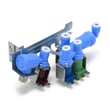
- Refrigerator water inlet valve assembly 242253002 if the ice maker never fills.
- Refrigerator ice maker fill tube seal 5303918571 if you see leaking or icing at the fill tube area.
Why it matters
Ice maker complaints are usually caused by water supply problems or a failed ice maker assembly. Fixing the root cause helps prevent repeat issues and keeps ice production consistent.
Last updated: February 2026
Why is my bottom ice maker not making ice?
If the bottom (freezer) ice maker in your Kenmore 2537044341D isn’t making ice, the most common causes are the ice maker being switched off at the wire signal arm, the water valve being closed, a kinked supply line, or a clogged or mis-seated water filter. Use the checks below to restore water flow and turn the ice maker on.
Quick checks (most fixes)
- Pull the freezer drawer out and confirm the wire signal arm is down (ON); if it’s up, the ice maker is OFF.
- Make sure the refrigerator is connected to the water line and the shutoff valve is fully open.
- Check the water supply line behind the refrigerator for kinks (often happens after pushing the unit back).
- Reseat the water filter; it should snap fully into place.
- Replace the water filter if water dispenses slowly or the filter is about 6 months old.
- Verify nothing in the freezer is holding the wire signal arm up; also push the ice bin fully to the rear so it doesn’t block the arm.
What to expect after you fix it
After installation or after restoring water flow, the ice maker typically starts producing ice within 24 hours. For best taste and to clear air from the tubing, discard the first full bin of ice once production begins (some configurations require discarding more). See the steps in the owner's manual.
Normal production (helps confirm it’s working)
| Item | Typical for this model’s ice maker |
|---|---|
| Time to first ice | Up to 24 hours |
| Ice production rate | About 2.0 to 2.5 lb per 24 hours (varies with use) |
When a part is likely needed
If the water line is open and not kinked, the filter is new and seated, and the ice maker is ON but still won’t fill, a failed water valve or ice maker assembly is a common next step.
- If you suspect the valve isn’t opening to fill the mold, consider the refrigerator water inlet valve assembly 242253002.
- If the mechanism won’t cycle or harvest cubes, consider the refrigerator ice maker 243297613.
Why it matters
An ice maker that’s OFF, starved for water, or restricted by a clogged filter can’t fill the ice mold correctly; that leads to no ice, small cubes, or long gaps between harvest cycles.
Last updated: February 2026