Installation guide
 Owner’s manual
 Error Codes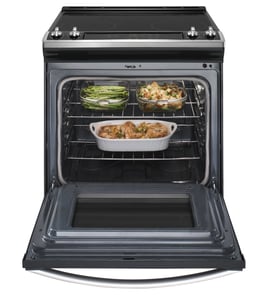



Are Amana electric ranges any good?
Yes. Amana electric ranges like model AER6303MFW2 are a solid choice when you want straightforward controls, dependable everyday cooking, and easy-to-service heating components. For best results, use the cooking and care guidance in the AER6303MFW2 owner's manual.
Most owners judge an electric range by heat-up speed, temperature consistency, and how easy it is to keep working over time. On AER6303MFW2, the most common strengths are:
- Simple, familiar operation (cooktop knobs and electronic oven controls)
- Consistent baking when the oven is properly preheated and racks are positioned correctly
- Serviceable design with common replacement parts available (elements, sensor, switches)
- Practical troubleshooting guidance built into the manual
If cooking results are uneven or the oven seems “off,” we focus on setup and the most failure-prone heating and sensing parts.
- Confirm the range is level (leveling affects baking results)
- Preheat fully before baking
- Verify rack position and airflow around bakeware
- If temperatures seem inaccurate, test for sensor-related issues
- If the oven will not heat, inspect heating elements and wiring connections
| Symptom | Often involved | Example part for AER6303MFW2 |
|---|---|---|
| Oven temp swings or error codes tied to sensing | Oven temperature sensor | Range oven temperature sensor WPW10181986 |
| No bake heat or weak bake | Bake element | Bake element W11182108 |
| Broil not working | Broil element | Range broil element W10856603 |
A “good” electric range is one that holds temperature and heats reliably. When baking results are inconsistent, it is usually a setup issue (leveling, preheat, rack position) or a single replaceable part (sensor or element), not the entire appliance.
Last updated: February 2026
What are the most common stove parts to replace?
On the Amana AER6303MFW2 electric range, the most commonly replaced parts are the ones that directly create heat or control temperature: surface elements, bake and broil elements, and the oven temperature sensor. These parts wear out from normal heating cycles, spills, and high-heat use.
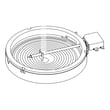
- Surface heating element: burner not heating, heating unevenly, or cycling oddly (example: range radiant surface element W11171119)
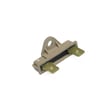
- Surface element control switch: burner stuck on high, won’t turn on, or won’t regulate heat (example: range surface element control switch WP3148952)
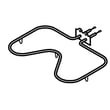
- Bake element: oven won’t heat, slow preheat, or uneven baking (example: bake element W11182108)
- Broil element: no broil heat or weak broil performance (example: range broil element W10856603)
- Oven temperature sensor: oven temperature inaccurate, temperature swings, or related fault codes (example: range oven temperature sensor WPW10181986)
- Oven door seal: heat leaking, longer cook times, or poor temperature stability (example: range oven door seal W11542153)
| Symptom | Most likely part to check first | What to look for |
|---|---|---|
| Oven won’t heat in Bake | Bake element | Blistering, cracks, no glow when heating |
| Broil doesn’t work | Broil element | No heat, visible damage |
| Oven temp is off | Oven temperature sensor | Inconsistent temps, over/under cooking |
| One burner won’t heat | Radiant surface element | No heat, intermittent heat |
| Burner won’t regulate | Surface element control switch | Stuck high/low, no change with knob |
These parts are the “workhorses” of an electric range. When one starts failing, you’ll see longer preheat times, uneven cooking, or burners that do not respond correctly, which can also put extra strain on the electronic control.
- Confirm the problem is limited to one burner or affects the whole cooktop/oven.
- Check for obvious damage (burn marks, cracks, loose wiring at the component).
- Make sure the control knobs are in Off before handling anything.
- For model-specific operating and care details (including cleaning guidance that helps prevent repeat failures), use the owner's manual.
Last updated: February 2026
What are the parts of an electric oven?
An electric oven like the Amana AER6303MFW2 is built around heating elements, temperature sensing, airflow venting, and rack supports that work together to cook evenly. The most common “core” oven parts are the bake system, broil system, oven temperature sensor, oven vent, door seal, and oven racks (plus the electronic control).
- Bake element: Provides the primary heat for baking and roasting (bottom of the oven on many models). If baking is weak or uneven, the element can be the cause.
- Broil element: Provides high, direct top heat for broiling and browning.
- Oven temperature sensor: Tells the control board the oven temperature so it can cycle heat accurately.
- Electronic control: Runs bake/broil functions, timing, and temperature regulation.
- Oven vent: Releases hot air and moisture; it should not be blocked because airflow affects cooking results.
- Oven racks and rack supports: Hold cookware at different positions for baking and roasting.
- Oven door seal (gasket): Helps keep heat inside the oven cavity for stable temperatures.
| Symptom | Common part to check | Example part for this model |
|---|---|---|
| Oven temperature seems off | Oven temperature sensor | Range oven temperature sensor WPW10181986 |
| Oven will not bake or bakes unevenly | Bake element | Bake element W11182108 |
| Broil does not heat | Broil element | Range broil element W10856603 |
| Heat leaks, long preheat | Door seal | Range oven door seal W11542153 |
| Need an extra rack | Oven rack | Range oven rack W11520287 |
- Confirm you are using the correct rack position and bakeware for the recipe.
- Make sure the oven vent is not covered; blocked venting can hurt baking and self-cleaning performance.
- If the oven heats but is inaccurate, run a basic temperature check with an oven thermometer.
- If an element is not heating, look for visible damage (blisters, cracks, or burn spots).
- If the door does not seal tightly, inspect the gasket for gaps, tears, or hardened sections.
Knowing the main oven parts helps you match symptoms to the right repair. For example, temperature swings often point to the sensor or control, while no-heat conditions often point to a failed bake or broil element. For model-specific operating details (including venting and rack guidance), use the owner's manual.
Last updated: February 2026
Who makes Amana electric ranges?
Amana electric ranges (including model AER6303MFW2) are made under the Whirlpool Corporation umbrella. In other words, Amana is a Whirlpool-owned brand, and many Amana ranges share Whirlpool-designed components and service practices.
When you are troubleshooting or ordering replacement parts for your Amana AER6303MFW2 electric range, you will often see Whirlpool-style part numbering and common range components.
Common examples on this model include:
- Oven temperature sensing parts such as the range oven temperature sensor WPW10181986
- Oven heating parts such as the bake element W11182108 and range broil element W10856603
- Cooktop heating and control parts such as the range radiant surface element W11171119 and range surface element control switch WP3148952
| What you see | What it typically indicates | Why it matters |
|---|---|---|
| Amana on the badge | Consumer-facing brand | Use AER6303MFW2 for correct parts lookup |
| Whirlpool-style part IDs (WP...) | Whirlpool parts system | Helps match the right replacement part |
| Shared range components | Common design across brands | Repairs and troubleshooting steps are often similar |
We recommend verifying the model and serial label on your range before you order parts, especially for control boards, elements, and sensors.
Use these checks:
- Find the model/serial label on the upper right corner of the front frame (oven frame area)
- Match the model number exactly to AER6303MFW2
- Compare the part description (sensor, bake element, control switch) to the symptom you are fixing
- Use the wiring and troubleshooting guidance in the owner's manual
Amana being a Whirlpool-owned brand helps you get the right repair approach faster because parts, diagnostics, and error-code behavior are often consistent across Whirlpool-family electric ranges.
Last updated: February 2026