 Owner’s manual
 Error Codes




Is GE PVD28BYNFS a good refrigerator?
Yes. The GE PVD28BYNFS is a strong choice if you want a feature-rich GE bottom-mount refrigerator with flexible storage, a built-in water filtration system, and convenience features like a dispenser and Autofill. Overall performance is typically very good; the best fit depends on your priorities for noise, ice capacity, and door storage.
What “good” means for this model
We judge a refrigerator like the GE PVD28BYNFS on daily-use performance, not just features.
- Temperature stability: Consistent cooling and freezing is the core job.
- Usability: Controls, lighting, drawer layout, and access to frequently used items.
- Water and ice reliability: Filtered water flow, ice production, and fewer clogs.
- Noise level: Fans and ice maker sounds vary by home and installation.
- Serviceability: Common wear items (filters, valves, sensors) are replaceable.
For model-specific features and operating details, use the PVD28BYNFS owner's manual.
Pros and trade-offs to consider
| Area | What most owners like | What to watch for |
|---|---|---|
| Storage | Flexible compartments and easy organization | Door bins can be warmer than the center of the fresh-food section in many French door designs |
| Water features | Filtered dispenser and Autofill convenience | Flow can drop when the filter is overdue or water pressure is low |
| Ice | Convenient in-door ice access | Ice capacity can feel limited for large households |
| Sound | Normal fan and ice cycling | Some homes notice more operating noise depending on leveling and cabinet fit |
Quick checks that improve satisfaction
These steps prevent many “not cooling right” and “no ice” complaints.
- Level the refrigerator so doors close firmly and seals contact evenly.
- Keep vents clear; do not block airflow with tall containers.
- Set realistic temps (most homes do best around 37°F fresh food and 0°F freezer).
- Replace the water filter on schedule; most cartridges are replaced about every 6 months.
- Confirm water pressure is in a normal range for ice maker and dispenser performance.
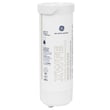
If you need the correct replacement filter for this model, use the GE refrigerator water filter XWFE.
Why it matters
A “good” refrigerator is one that holds safe temperatures, fits your household’s ice and water needs, and stays quiet enough for your kitchen. Dialing in installation, airflow, and filter maintenance is what keeps the GE PVD28BYNFS performing like it should.
Last updated: February 2026
What are the disadvantages of a bottom freezer refrigerator?
A bottom-freezer design like the GE PVD28BYNFS keeps fresh food at eye level, but it makes you bend and reach down for frozen items. It can also feel heavier to load and unload, and many models cost more upfront than basic top-freezer styles.
Common disadvantages you may notice
- More bending and squatting to access the freezer drawer and lower baskets
- Heavier lifting from a low position, especially with bulk frozen foods
- Less “at-a-glance” visibility for freezer items because they stack in bins
- Potentially higher purchase price compared with many top-freezer refrigerators
- More floor space needed to open the freezer drawer fully in tight kitchens
Bottom freezer vs. top freezer: quick comparison
| Feature | Bottom freezer | Top freezer |
|---|---|---|
| Access to fresh food | Easier (at eye level) | More bending |
| Access to frozen food | More bending | Easier |
| Freezer organization | Bins and baskets | Shelves (often simpler) |
| Typical cost | Often higher | Often lower |
Tips to reduce the downsides
- Put everyday frozen items in the upper basket so you do not dig through the lower bin.
- Use small labeled containers to prevent “pile-ups” in the drawer.
- Avoid overloading the freezer; heavy bins make lifting and sliding harder.
- If you need to remove baskets or the drawer for cleaning or access, follow the steps in the PVD28BYNFS owner’s manual.
Why it matters
Ergonomics and kitchen layout drive satisfaction with a bottom-mount refrigerator. If you use the freezer frequently, the extra bending and drawer clearance can be the deciding factors, even when the fresh-food convenience is a big plus.
Last updated: February 2026
What is the most common problem with a GE refrigerator?
The most common issue we see on GE refrigerators like model PVD28BYNFS is not cooling properly (fresh food warm, freezer warming, or temperatures swinging). It is usually caused by airflow problems, dirty condenser coils, a failing fan, or a defrost system issue; start with the quick checks in the PVD28BYNFS owner's manual.
Most common symptoms and what they usually point to
- Fridge warm, freezer OK: restricted airflow, damper issue, evaporator fan problem, overpacked shelves
- Freezer warm too: dirty condenser coils, condenser fan issue, sealed system or compressor/inverter concerns
- Frost buildup on back wall/freezer panel: defrost heater, defrost sensor, or control problem
- Clicking or buzzing with poor cooling: compressor start/inverter or fan motor strain
- Ice maker or dispenser issues: water supply, filter restriction, inlet valve, or ice room airflow
Quick checks we recommend first (10 to 20 minutes)
- Confirm settings: refrigerator about 37°F, freezer about 0°F.
- Check door seal and closure: look for gaps, torn gasket, or bins preventing closure.
- Clean condenser coils: dust buildup commonly causes warm temps and longer run times.
- Verify airflow: do not block vents; leave space around the air tower and return vents.
- Listen for fans: you should typically hear a steady fan sound when cooling is running.
Common parts involved (when symptoms match)
| Symptom | Likely system | Example part for PVD28BYNFS |
|---|---|---|
| Frost buildup, warming | Defrost system | Freezer defrost heater WR51X31995 or refrigerator defrost sensor WR55X29875 |
| No ice, weak water flow | Filtration/water supply | GE refrigerator water filter XWFE or refrigerator water inlet valve assembly WR57X32000 |
| Ice clumping, slow ice production | Ice room airflow | Refrigerator ice room fan motor assembly WR60X31997 |
Why it matters
Cooling problems can quickly lead to food spoilage and can also make the compressor run longer than normal. Catching airflow, defrost, or water-supply issues early helps protect performance and reduces repeat failures.
For model-specific diagnostics and any error code meanings, use the GE refrigerator error codes reference alongside the PVD28BYNFS owner's manual.
Last updated: February 2026
What type of compressor is PVD28BYNFS?
The GE PVD28BYNFS bottom-mount refrigerator uses a high-efficiency, variable-speed style compressor (commonly called an inverter compressor). This design runs at different speeds to hold steadier temperatures and typically sounds like a soft hum or a higher-pitched tone during operation; see the PVD28BYNFS owner's manual for normal sound descriptions.
What “inverter compressor” means on this refrigerator
An inverter compressor is designed to adjust output instead of simply turning fully on and off. In day-to-day use, that helps with temperature stability in both the fresh food and freezer sections.
What you may notice:
- Longer run times at lower speed (more consistent cooling)
- Fewer big temperature swings compared to older fixed-speed compressors
- A higher-pitched hum or pulsating sound at times (normal)
- Different “whoosh” sounds as pressures equalize when doors close (normal)
Quick comparison: inverter vs. traditional compressor
| Feature | Inverter compressor (PVD28BYNFS) | Traditional fixed-speed compressor |
|---|---|---|
| Operation | Variable speed | On/off cycling |
| Temperature control | More consistent | Wider swings |
| Typical sound | Steady hum, sometimes higher-pitched | More noticeable start/stop |
| Efficiency | Typically higher | Typically lower |
When compressor-related symptoms point to another part
If cooling is inconsistent, the compressor is not always the first culprit. On GE refrigerators like PVD28BYNFS, these issues often involve airflow, defrost, or controls.
Check these common items first:
- Confirm temperature settings and allow 24 hours after changes
- Make sure vents are not blocked by food packages
- Listen for fan operation; airflow problems can mimic compressor trouble
- Look for frost buildup that suggests a defrost issue (sensor or heater)
- If you see an error code, use the GE refrigerator error codes reference
Parts that commonly relate to cooling/defrost symptoms on this model:
- Refrigerator defrost sensor WR55X29875
- Freezer defrost heater WR51X31995
- Refrigerator power control board WR55X31984
Why it matters
Knowing PVD28BYNFS uses an inverter compressor helps set expectations: steadier temperatures and different normal operating sounds. It also helps troubleshooting, because many “not cold enough” complaints are caused by airflow or defrost problems rather than the compressor itself.
Last updated: February 2026





