Owner’s manual
 Error Codes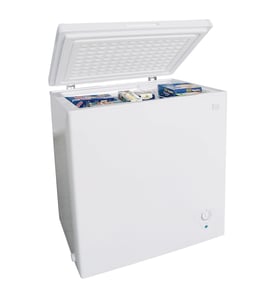
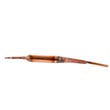


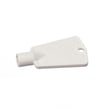
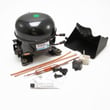
Why is my Kenmore Elite freezer not working?
If your Kenmore Elite chest freezer 25316082108 is not working, the most common causes are a power supply problem (loose plug, tripped breaker, control set to OFF) or a failed component such as the compressor or electronic control board. Start with the basic power and control checks in the 25316082108 owner's manual.
Quick checks we recommend first
- Confirm the temperature control is not set to OFF.
- Make sure the power cord is fully seated in the outlet.
- Check the home circuit breaker or fuse.
- Avoid using an outlet protected by a GFCI if it trips (try a different dedicated outlet).
- If there was a power outage, keep the lid closed; food can stay frozen at least 24 hours when closed.
- If the freezer was unplugged recently, allow time for it to restart and pull down temperature.
What to check next (common failure points)
If power and settings are correct but the freezer still will not run or will not cool, these parts are common suspects on this model:
| Symptom | What it often points to | Example part for this model |
|---|---|---|
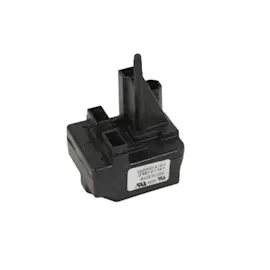
| No cooling, compressor tries to start then clicks | Start device/overload issue | Freezer compressor overload and relay clamp 216954300 |
| Runs but does not get cold enough | Sealed system restriction or refrigerant issue | Filter drier 5303305677 |
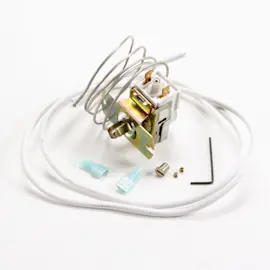
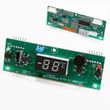
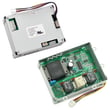
| Erratic temps or no response to control changes | Control problem | Frigidaire freezer electronic control board 216979700 |
Why it matters
A freezer that is not running can lead to rapid food loss. Keeping the lid closed during a failure slows warming, and checking the control setting and power supply first prevents unnecessary part replacement.
Last updated: February 2026
Can you reset a chest freezer?
Yes. For the Kenmore Elite chest freezer model 25316082108, the most effective “reset” is a power reset: unplug the freezer (or switch off the breaker) for about 30 seconds, then restore power and allow several hours for temperatures to stabilize. See the 25316082108 owner's manual for control and alarm details.
What a reset does (and does not do)
A power reset clears temporary control glitches and restarts the cooling cycle. It does not fix issues like a warm cabinet caused by a bad door seal, a failing compressor, or a temperature control problem.
- Restarts the temperature control and alarm logic
- Stops and restarts the compressor cycle
- Helps after a brief power outage or control “lockup”
- Does not repair sealed-system or mechanical failures
If lights are blinking or an alarm is sounding
Many freezers blink an indicator light until the cabinet reaches a safe freezing temperature again. If the freezer warmed up, the light can keep blinking even after you reset power.
- Press the alarm off button (if your control has one) to silence the buzzer
- Keep the lid closed to pull temperature down faster
- Wait several hours between temperature adjustments
- If the alarm returns repeatedly, troubleshoot airflow, loading, and door seal
Quick checks that solve most “needs reset” complaints
- Confirm the freezer is firmly plugged in and the outlet has power
- Verify the temperature control is not set to OFF
- Avoid loading unfrozen food until the freezer has run about 4 hours
- Reduce warm-food loading (freeze in smaller batches)
- Check the lid is closing fully and the gasket is sealing
Common causes and what to do next
| Symptom | Most common cause | What we recommend |
|---|---|---|
| Blinking light after restart | Freezer not yet back to safe temp | Keep lid closed; wait several hours |
| Runs a lot after reset | Warm food, frequent openings, hot room | Limit openings; allow 4+ hours |
| Won’t cool after reset | Control, relay/overload, compressor issue | Check start components; service if needed |
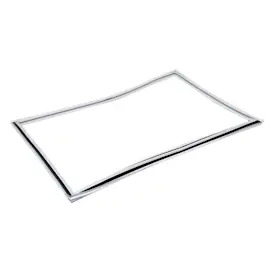
| Frost or poor seal | Dirty/worn gasket | Inspect and consider frigidaire freezer gasket and liner fastener kit 5304406520 |
Why it matters
A proper reset plus a short “hands-off” recovery period prevents unnecessary part replacement and helps you tell the difference between normal pull-down time and a real cooling failure.
Last updated: February 2026
How to remove back freezer panel Kenmore Elite?
On the Kenmore Elite 25316082108 chest freezer, the rear access panel is typically removed by unplugging the freezer first, then taking out the perimeter screws and lifting the panel away to reach components like the compressor area. For fastener locations and safety notes, use the 25316082108 owner's manual.
Safety first (do this before touching the panel)
- Unplug the freezer to avoid electrical hazard.
- Move food to a cooler if the lid will be open for a while.
- Pull the freezer forward so you can work without straining the power cord.
- Wear cut-resistant gloves; sheet metal edges can be sharp.
- Keep screws organized so the panel seats correctly during reassembly.
Step-by-step: removing the rear access panel
- Disconnect power at the wall outlet.
- Clear the work area behind the freezer; protect the floor with cardboard.
- Locate the rear access panel (lower back area on most chest freezers).
- Remove the screws around the panel edge using the correct nut driver or screwdriver.
- Lift and pull the panel away carefully; if it sticks, wiggle gently to release it.
- Set the panel aside flat to avoid bending it.
What you can inspect once the panel is off
| What you see | What it usually means | What to do next |
|---|---|---|
| Dusty condenser area | Reduced cooling efficiency | Vacuum and brush gently (avoid damaging tubing) |
| Clicking near compressor | Start device or overload issue | Check wiring and consider the freezer compressor overload and relay clamp 216954300 |
| Oil residue on lines | Possible sealed-system concern | Stop and schedule sealed-system service |
Why it matters
Removing the back panel correctly prevents stripped screws, bent panels, and air-flow restrictions that can raise run time and temperatures. It also gives you safe access to common service points like wiring, the condenser area, and compressor start components.
Last updated: February 2026
How to clean condenser coils in chest freezer?
For Kenmore Elite chest freezer model 25316082108, we clean the condenser area by unplugging the freezer first, then removing dust and lint so heat can release properly. Cleaner coils help the compressor run cooler, improve freezing performance, and reduce energy use.
Before you start (safety and access)
- Unplug the power cord from the wall outlet.
- Move the freezer far enough to work safely around the back and bottom.
- Use a soft brush and a vacuum with a brush attachment; avoid sharp tools.
- Keep water and cleaners away from electrical parts.
- Confirm any model-specific access steps in the 25316082108 owner's manual.
How we clean the condenser coils (step-by-step)
- Unplug the freezer.
- Locate the condenser area (commonly underneath or behind the unit on chest freezers).
- If needed, remove the lower cover to reach the coil area; some models use an access panel 216034305.
- Brush loose dust off the coil and nearby surfaces.
- Vacuum remaining debris from the coil, compressor area, and surrounding vents.
- Reinstall any covers, restore power, and verify the freezer runs normally.
Cleaning frequency guide
| Home conditions | Recommended coil cleaning | Why |
|---|---|---|
| Pets, dusty basement/garage | Every 3 to 6 months | Lint buildup happens fast |
| Typical indoor use | Every 6 to 12 months | Prevents efficiency loss |
| Rarely used, very clean area | About yearly | Keeps airflow consistent |
Why it matters
Condenser coils release heat from the sealed system. When dust blocks airflow, the compressor can run longer and hotter, which can lead to warmer temperatures, higher electric bills, and more wear on components.
Last updated: February 2026
Why is my Kenmore Elite freezer not freezing?
If your Kenmore Elite chest freezer 25316082108 is not freezing, the most common causes are a temperature control set incorrectly, a power issue, or warm air leaking in through a lid that is not sealing. Start with the quick checks in the 25316082108 owner's manual.
Quick checks we recommend first
- Confirm the temperature control is not set to OFF.
- Make sure the freezer is plugged in firmly; the plug can feel seated but still be loose.
- Check the house breaker or fuse; reset the breaker if it tripped.
- Avoid using a GFCI-protected outlet if it trips easily (the manual notes GFCI circuits can be involved in “freezer does not run” complaints).
- Limit lid openings for a few hours; frequent openings add heat and moisture.
Air leaks and lid alignment (very common on chest freezers)
A slightly open lid or poor seal can keep temperatures from dropping.
- Inspect the lid gasket for dirt, gaps, or damage.
- Make sure the freezer is level; an unlevel cabinet can prevent proper sealing and cause cooling and moisture problems.
- If the lid does not close smoothly or sits unevenly, check the hinge area.
| Symptom | What it points to | What to do |
|---|---|---|
| Frost near the lid edge | Air leak at gasket | Clean gasket, check for gaps |
| Lid looks misaligned | Leveling or hinge issue | Shim feet pads, inspect hinges |
| Runs a lot but still warm | Air leak or heavy warm load | Reduce openings, verify seal |
When it runs too long or never gets cold
The manual lists several normal conditions that increase run time: hot room temperatures, recently adding warm food, or the freezer being unplugged for a while.
If those do not apply, focus on these likely repair paths:
- Sealed system or compressor starting issues (relay/overload problems can prevent proper compressor operation).
- Control problems (some models use an electronic control board to regulate cooling).
Helpful parts often involved in “not freezing” symptoms include the freezer compressor overload and relay clamp 216954300 and, less commonly, the compressor 5304478809.
Why it matters
A freezer that is not sealing or is set incorrectly can mimic a major failure. Fixing airflow, leveling, and lid sealing first prevents unnecessary parts replacement and helps the freezer reach and hold safe food-storage temperatures.
Last updated: February 2026
How big is a Kenmore chest freezer model 25316082108?
Kenmore Elite chest freezer model 25316082108 is a full model number (not just a “253” series). For exact exterior dimensions and capacity, use the product data on the rating label and the specs section in the 25316082108 owner's manual; then confirm with a tape-measure fit check where you plan to install it.
How to get the exact dimensions (fast)
Use these steps to pin down the true width, depth, and height for your specific unit:
- Find the model/serial plate; on chest freezers it’s typically on the left exterior wall.
- Record the capacity (cu. ft.) and any listed overall dimensions from the rating label.
- Measure width at the widest point (often the cabinet top/trim).
- Measure depth including any rear spacing needed for airflow.
- Measure height to the top of the cabinet; also account for lid swing clearance.
Typical planning ranges for Kenmore chest freezers
If you are planning space before you can check the label, these ranges help you estimate:
| Size class | Typical capacity | Typical width | Typical height |
|---|---|---|---|
| Compact | 5 to 7 cu. ft. | 28 to 33 in. | 33 to 35 in. |
| Medium | 8 to 14 cu. ft. | 34 to 45 in. | 33 to 36 in. |
| Large | 15 to 22 cu. ft. | 46 to 60 in. | 33 to 36 in. |
Why it matters
Correct size and clearance protect performance. A chest freezer that is squeezed into a tight spot or not level can develop poor lid sealing, frost buildup, and moisture issues.
Last updated: February 2026
How to get Kenmore Elite freezer out of demo mode?
Kenmore Elite chest freezer model 25316082108 is not designed with a retail “demo mode” like many refrigerators; if it is running but not cooling, the fix is almost always a control setting, power issue, or a cooling-system problem. Use the 25316082108 owner's manual to confirm your exact control type and settings.
What to do first (most common fixes)
- Make sure the temperature control is not set to OFF.
- Verify the outlet has power; the Power On light (if equipped) should be lit.
- Unplug the freezer for 5 minutes, then plug it back in to reset the control.
- Close the lid firmly and check for gaps all the way around.
- Allow 24 hours after a setting change for temperatures to stabilize.
If it still will not cool
These checks separate a simple setting issue from a repair issue:
- Listen for the compressor: a steady hum indicates it is running.
- If you hear repeated clicking and the compressor will not start, the start device is a common cause; see Freezer compressor overload and relay clamp 216954300.
- If the compressor runs but the freezer stays warm after several hours, sealed-system components can be involved (compressor, filter drier).
- If the lid does not seal, warm air leaks can prevent proper freezing.
Quick symptom guide
| What you notice | What it usually means | What to do |
|---|---|---|
| Lights on, no cooling | Control set to OFF or control needs reset | Set colder; power reset |
| Clicking, no compressor run | Start device/overload issue | Check start device; service if needed |
| Runs but never gets cold | Sealed-system or airflow/heat-load issue | Reduce load; check condenser area; service |
| Frost or sweating near lid | Air leak at lid | Clean sealing surface; inspect alignment |
Why it matters
“Demo mode” is often blamed when cooling stops, but on a chest freezer like the Kenmore 25316082108, focusing on the temperature control, power, and compressor operation prevents wasted time and unnecessary parts.
Last updated: February 2026