Owner’s manual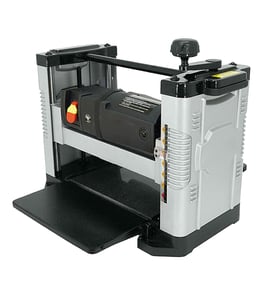

How many blades does a DeWalt DW734 planer have?
The Dewalt DW734 12-1/2" planer uses a three-knife cutter head, so it has 3 blades. Each blade has two sharpened edges, so you can rotate a blade once before replacing it (see the owner's manual).
What “3 blades” means on the DW734
A three-knife cutter head means three separate planer knives are installed in the cutter head at the same time.
- Blade count: 3 knives installed
- Edges per blade: 2 (reversible)
- Service option: rotate the knife to the second edge, then replace
When to rotate or replace the blades
Dull or nicked knives can cause poor planing results and performance issues.
- Feeding problems (slow feed or no feed)
- Motor overloading or frequent breaker trips
- Excessive tearout on the wood surface
- Nicks from knots or debris in the board
Quick reference
| Item | DW734 typical setup |
|---|---|
| Cutter head style | Three-knife |
| Number of blades installed | 3 |
| Cutting edges per blade | 2 |
Why it matters
Keeping all three knives sharp and at the same height helps the DW734 cut smoothly, reduces snipe and tearout, and prevents extra strain on the motor and feed system.
Last updated: February 2026
What is the DW734 used for?
The Dewalt DW734 12-1/2 inch portable thickness planer is used to plane rough lumber to a consistent thickness and create a smoother, more uniform surface on boards. It is designed for woodworking tasks like flattening stock and reducing board thickness in controlled passes (see the owner's manual).
What you can do with a DW734 thickness planer
- Reduce a board to a target thickness (for example, to match existing trim or panels)
- Clean up rough-sawn lumber by removing saw marks and minor surface defects
- Improve surface finish before sanding and final assembly
- Make multiple boards the same thickness for glue-ups and joinery
- Run repeatable passes for consistent results across a project
Typical materials and best-use scenarios
The DW734 is built for common shop lumber and hardwoods when you take appropriate depth-of-cut passes.
| Task | What the planer does | Best practice |
|---|---|---|
| Thicknessing | Brings boards to a uniform thickness | Take light passes and measure often |
| Surface cleanup | Removes shallow tear-out, milling marks | Feed with the grain when possible |
| Batch consistency | Makes multiple boards match | Use the same settings for the whole batch |
Setup and safety basics that matter
- Use proper eye and respiratory protection
- Keep hands clear of the cutterhead and feed area
- Unplug the planer before adjustments, cleaning, or changing accessories
- Avoid using the tool in damp locations
Why it matters
A thickness planer like the Dewalt DW734 helps you control final board thickness and improve surface quality, which directly affects fit, glue joints, and the finished look of your woodworking project.
Last updated: February 2026
What are the pros and cons of the DW734?
The Dewalt DW734 is a 12-1/2 inch portable thickness planer built for jobsite-style use; it runs on 120V and draws 15A, with a 10,000 RPM no-load cutterhead speed. Its biggest strengths are portability and straightforward maintenance; its main tradeoffs are noise, chip control without a dust hood, and the limits of a smaller, portable planer.
Pros (what owners typically like)
- Portable size: Easier to move and store than stationary planers.
- Solid cutting performance for its class: 12-1/2 inch capacity fits many common boards.
- Standard household power: Runs on 120V AC and 15A, so it fits typical shop circuits.
- Serviceable wear items: Motor brushes are accessible for inspection and replacement.
- Accessory support: The manual lists a compatible dust hood, disposable reversible knives, and a mobile stand.
Cons (common tradeoffs to plan for)
- Dust and chips: Without a dust hood and good collection, chips can build up fast.
- Noise and PPE needs: Planers are loud; eye and respiratory protection are important.
- Portable-planer limits: Narrower capacity and lighter mass than larger shop planers can mean more sensitivity to feed technique and setup.
- Maintenance expectations: Periodic cleaning and lubrication help keep the gear case and feed system working smoothly.
Quick comparison: strengths vs. tradeoffs
| Category | DW734 advantage | Typical tradeoff |
|---|---|---|
| Power | 120V, 15A compatibility | Can trip breakers if the circuit is shared or undersized |
| Portability | Easier to transport | More vibration and noise than heavier stationary units |
| Chip handling | Optional dust hood available | Messy without dust collection |
| Upkeep | Brushes and routine cleaning are manageable | Needs regular cleaning to prevent buildup |
What we recommend checking before you buy or tune it up
- Confirm your circuit is 120V, 15A and not heavily shared
- Use dust collection if possible (especially on resinous woods)
- Inspect/replace knives when you see tearout or ridges
- Check motor brushes if power seems inconsistent
- Follow the cleaning and lubrication guidance in the owner's manual
Why it matters
Most “pros vs. cons” on the DW734 come down to matching the tool to your workflow: portable thickness planers excel at convenience and solid results on typical stock, but they demand good chip control, sharp knives, and consistent setup to stay smooth and accurate.
Last updated: February 2026