Owner’s manual
 Error Codes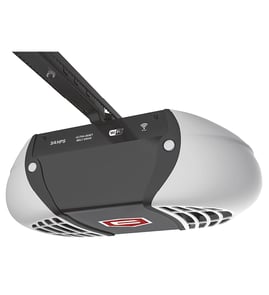


How do I know what model my garage door opener is?
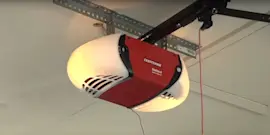
Your Craftsman garage door opener model number is printed on a label on the powerhead (the motor unit mounted to the ceiling). On many Craftsman openers, you can find it under a light lens cover, often on the side opposite the antenna. For model-specific label locations, use the 13955918 owner's manual.
Where to look on the opener (most common spots)
Check the powerhead housing for a white or silver label. Look in these places:
- Under the front light lens cover
- Under the left light lens cover (when you are facing the opener from inside the garage)
- On the side panel opposite the antenna wire
- Near the learn button area (behind a light cover on many units)
- On the back or underside of the motor unit near the hanging bracket
What to write down (so you get the right parts)
When you find the label, record these items exactly as shown:
- Model number (example for this page: 13955918)
- Manufacturing date or date code (if listed)
- Motor unit logic board number (if listed)
- Remote/keypad “learn” color (if shown; helps match remotes)
| Label item | Why it matters | Example format |
|---|---|---|
| Model number | Matches the correct parts list and diagrams | 13955918 |
| Date code | Helps confirm compatible revisions | 2020-05 or similar |
| Learn color | Helps identify remote compatibility | Yellow/Purple/Red/Green |
If the label is missing or unreadable
Use these quick checks to narrow it down:
- Look for a model label on the opener’s end panel or under a light cover
- Check the wall control and remote for a part/model label
- Note whether it is chain drive or belt drive (helps match common parts)
- Watch the opener lights for blink patterns and compare them to Craftsman error codes
Why it matters
Garage door opener parts (logic boards, wall controls, safety sensors, remotes, and drive gears) are model-specific. Using the exact model number prevents ordering the wrong Craftsman replacement part and speeds up troubleshooting.
Last updated: February 2026
Is it worth repairing a 20 year old garage door opener?
For a 20-year-old garage door opener, replacement is usually the better long-term choice because most openers are built to last about 10 to 15 years. For a Craftsman model 13955918, a small repair can make sense if it is inexpensive and the door is otherwise running smoothly, but major failures typically justify upgrading.
Quick decision guide
- Repair if the problem is minor (remote battery, sensor alignment, loose wiring at the wall control).
- Replace if the opener struggles to lift the door, reverses randomly, or needs repeated force/travel adjustments.
- Replace if you want modern features (quieter operation, better security, smart controls).
- Repair if the door itself is the real issue (binding rollers, dry hinges, tight springs) and the opener is fine.
- Replace if parts and troubleshooting time are adding up.
What to check first (before spending money)
Use the steps and adjustment procedures in the owner's manual. Then verify these common items:
- Safety sensors: both LEDs steady, lenses clean, brackets not bent
- Door balance: door should stay about halfway open when released (a heavy door overloads the opener)
- Force and travel settings: set only as needed; too much force is a safety risk
- Drive system: chain/belt tension and obvious wear
- Wall control and wiring: intermittent shorts can mimic a failing logic board
Repair vs. replace comparison
| Situation | Usually best choice | Why |
|---|---|---|
| Remote or keypad issues | Repair | Low cost, quick fix |
| Door will not close and lights blink | Repair (often sensors) | Alignment/obstruction is common |
| Motor runs but door barely moves | Replace (or major repair) | Worn gears/motor, high labor |
| Frequent reversals or inconsistent travel | Replace | Aging components, reliability issues |
Why it matters
An older opener that is out of adjustment or fighting a heavy, unbalanced door can become unreliable and can reduce safety. A newer opener also typically improves security and day-to-day convenience.
For troubleshooting symptoms and diagnostic blink patterns, we use the Craftsman error codes guide.
Last updated: February 2026
Why is my garage door not responding to remotes and/or keypad?
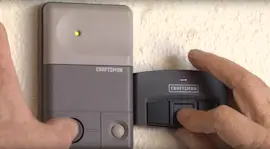
If your Craftsman garage door opener model 13955918 won’t respond to remotes and/or the keypad, start by testing the wall control. If the wall button works, the issue is usually power to the remote/keypad, programming, interference, or the opener’s receiver. Use the 13955918 owner's manual for the exact learn/program steps.
Quick checks (fastest fixes first)
- Make sure the opener has power (opener lights on, or wall control has indicators).
- Replace the batteries in every remote and the keypad.
- Confirm the wall control is not in Lock/Vacation mode (this disables remotes/keypad).
- Check that the opener’s hanging antenna wire is intact and pointing down.
- Remove common interference sources near the opener (some LED bulbs, chargers, Wi-Fi devices).
- Power-cycle the opener: unplug for 30 to 60 seconds, then plug back in.
What the wall button test tells you
| What works? | Most likely cause | What to do next |
|---|---|---|
| Wall button works; remotes/keypad do not | Wireless issue (battery, lock mode, programming, interference, receiver) | Reprogram and reduce interference |
| Wall button and remotes/keypad all fail | Power, wall control wiring, logic board, or a safety condition | Check power, sensors, and wiring |
| One remote fails; others work | That remote is bad or unprogrammed | Replace battery; reprogram that remote |
Reprogram and reset (common for sudden “all remotes stopped”)
- Reprogram each remote and the keypad using the learn procedure in the 13955918 owner's manual.
- If programming won’t “take,” erase all devices from memory, then re-add them.
- If range is very short, swap any LED bulbs in the opener light sockets for garage-door-opener-compatible bulbs.
If the door won’t close (even though it opens)
Safety sensors can block closing and make it seem like the keypad/remote is ignored.
- Confirm both sensor LEDs are on and steady.
- Clean the sensor lenses and realign them.
- Check for staple or pinch damage on the sensor wires.
Why it matters
Remote/keypad failures are often simple (battery, lock mode, interference), but a no-response condition can also point to a receiver/logic issue. Testing the wall control first prevents unnecessary parts swapping.
For opener light blink patterns and diagnostic codes, use Craftsman error codes.
Last updated: February 2026
Where can I buy Craftsman garage door opener parts?
You can buy replacement parts for your Craftsman garage door opener model 13955918 through our parts listings and diagrams, using your model number to match the correct components (remote controls, safety sensors, wall control, logic board, drive parts, and hardware). Use the 13955918 owner's manual to confirm features and compatible accessories before ordering.
How we recommend finding the right part
- Confirm the opener model number: 13955918
- Identify the symptom (won’t close, won’t open, remotes won’t work, lights blink)
- Use the parts diagram to locate the exact component name and location
- Compare your existing part visually (connector style, mounting holes, wire colors)
- If your opener shows diagnostic flashes, look up the meaning first
Common parts customers replace first
| Problem you see | Parts to check first | What to look for |
|---|---|---|
| Door won’t close | Safety sensors, sensor wiring, brackets | Misalignment, blocked beam, damaged wires |
| No response from wall control | Wall control, wiring, logic board | Loose connections, corrosion, failed board |
| Remote won’t operate door | Remote, receiver/logic board, antenna wire | Dead battery, broken antenna, lost programming |
| Motor runs but door doesn’t move | Drive gear, sprocket, chain/belt, trolley | Stripped gear, slack chain/belt, worn trolley |
Why it matters
Garage door opener parts are not always interchangeable across Craftsman models. Matching parts to 13955918 helps prevent ordering the wrong safety sensor style, wall control type, or drive components, and it keeps the opener operating safely and smoothly.
Helpful DIY references before you order
If you are seeing blinking lights or a diagnostic code, use our Craftsman error codes guide to narrow the failure to a sensor issue, travel/force setting, or control problem before you choose parts.
Last updated: February 2026
What are the common problems with Craftsman garage door openers?
Common problems on a Craftsman garage door opener like model 13955918 usually fall into three buckets: safety sensor issues (door will not close), drive or door hardware problems (grinding, slipping, partial travel), and control/electrical problems (remote or wall button not responding). The fastest path is to match symptoms to the checks in the 13955918 owner's manual.
Most common symptoms and what they usually mean
- Door will not close and opener lights blink: safety sensors are blocked, misaligned, or have wiring damage.
- Door reverses when closing or stops mid-travel: travel limits or force settings need adjustment; door may be binding.
- Grinding noise or motor runs but door barely moves: worn drive gear/worm gear, loose chain/belt, or trolley issue.
- Remote/keypad works sometimes or not at all: dead battery, lost programming, RF interference, or receiver/logic board issue.
- Wall control is dead: loose wiring at the wall control terminals, bad wall control, or logic board problem.
- Door is heavy or jerky by hand: door springs/rollers/hinges need service; the opener is reacting to excess resistance.
Quick checks we recommend before replacing parts
- Test the door balance: pull the emergency release and lift the door by hand. It should move smoothly and stay near mid-height.
- Inspect and align safety sensors: clean the lenses, confirm both LEDs are steady, and verify the brackets are not bent.
- Check the rail and drive: look for slack chain/belt, a cracked gear housing, or a trolley that is not engaging.
- Reprogram controls: re-learn the remote/keypad to the opener (steps vary by logic board).
- Confirm settings: adjust travel/force only in small increments; then retest the safety reversal.
Symptom-to-fix guide (at a glance)
| What you notice | Most likely cause | Best first action |
|---|---|---|
| Won’t close; lights blink | Safety sensor alignment/obstruction | Clean, align, check wiring |
| Reverses on close | Force/travel set too sensitive or door binds | Inspect door movement; adjust force/travel |
| Motor hums; door doesn’t move | Stripped gear or drive issue | Inspect gear area; check chain/belt tension |
| Remote won’t work | Battery/programming/interference | Replace battery; reprogram; reduce interference |
Why it matters
Most “opener problems” are actually safety sensor alignment or door resistance issues. Fixing those first prevents repeat failures, protects the logic board and drive gears, and keeps the safety reversal system working correctly.
For blink patterns and diagnostic flashes, use our Craftsman error codes reference to narrow the cause quickly.
Last updated: February 2026