Owner’s manual
 Error Codes


How long is the compressor warranty on a Kenmore Elite refrigerator?
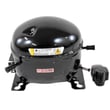
For the Kenmore Elite 79575065910 bottom-mount refrigerator, the linear compressor warranty is 10 years from the date of sale. After the first year, the warranty continues to cover the compressor part, but you are responsible for labor costs for installation (see the warranty section in the 79575065910 owner's manual).
What the warranty covers (and what changes after year 1)
The warranty terms for this model break down into two common time periods:
- Years 0 to 1: compressor part and installation (labor) are covered if it is a verified defect
- Years 2 to 10: compressor part is covered, but labor is not covered
- Coverage applies when the refrigerator is installed, operated, and maintained as instructed
Quick warranty summary
| Item | Coverage length | What is covered | Labor after year 1? |
|---|---|---|---|
| Linear compressor | 10 years | Compressor part | Yes, you pay |
| Sealed refrigerant system | 5 years | System parts | Yes, you pay |
| Entire refrigerator | 1 year | Defects in materials/workmanship | No (covered in year 1) |
Why it matters
A compressor replacement is one of the highest-cost refrigerator repairs. Knowing that the compressor part is covered for 10 years helps you plan for the labor portion of the repair after the first year, and it helps you decide whether to troubleshoot related issues first (airflow, defrost, condenser cleaning).
Before you schedule service (helpful checks)
These steps can prevent unnecessary compressor-related service calls:
- Confirm the temperature settings are correct for fresh food and freezer
- Make sure the condenser area is not blocked by dust or pet hair
- Verify the doors seal tightly; a torn gasket can cause long run times
- Listen for the evaporator fan running when the doors are closed
- Check for heavy frost buildup that can point to a defrost problem
If you are also troubleshooting cooling issues, parts that commonly relate to temperature control and defrost performance include the refrigerator defrost sensor assembly 6615JB2005R.
Last updated: January 2026
What are the common problems with Kenmore Elite refrigerators?
Common problems on the Kenmore Elite 79575065910 bottom-mount refrigerator include not cooling or running warm, frost or ice buildup from airflow or defrost issues, water or ice maker problems, and unusual noises. Many issues are caused by blocked vents, frequent door openings, or water supply conditions, and can be diagnosed using the 79575065910 owner's manual.
Most common symptoms and what usually causes them
- Not cooling or weak cooling: demo mode enabled, unit in defrost cycle, blocked air vents, dirty condenser area, or a sealed-system issue
- Too warm after install or move: normal pull-down time; it can take up to 24 hours to reach set temperatures
- Frost/ice buildup: door not sealing, doors left open, or a defrost system problem (sensor, heater, control)
- Ice maker not making ice: freezer not at 15°F or below, ice maker turned off, low water pressure, or a valve issue
- Water dispenser slow or no water: clogged filter, low supply pressure, kinked line, or inlet valve problem
Quick checks we recommend before replacing parts
- Confirm the refrigerator is not in demo mode and the controls are set correctly.
- Make sure air vents are not blocked by food packages.
- Reduce long door openings; warm, humid air quickly raises temperature and moisture.
- Verify the home water supply meets typical requirements: 20 to 120 psi and potable water.
- If ice production is the issue, confirm the freezer is 15°F or colder and the ice maker is ON.
Parts that commonly solve these problems (when diagnosis points there)
| Symptom | Common part involved | Example part for this model |
|---|---|---|
| No water or no ice fill | Water inlet valve | Refrigerator water inlet valve AJU75632502 |
| Bad taste/slow flow | Water filter | Genuine Kenmore refrigerator water filter 9980 AGF80300805 |
| Frost/defrost complaints | Defrost sensor | Refrigerator defrost sensor assembly 6615JB2005R |
Why it matters
Cooling and ice maker complaints often come from setup and airflow issues, not a failed compressor. Checking demo mode, vent blockage, door sealing, and water pressure first prevents unnecessary part replacement and helps restore normal temperatures faster.
Last updated: January 2026
Why is my Kenmore Elite refrigerator leaking water out of the bottom?
Water leaking from the bottom of your Kenmore Elite 79575065910 bottom-mount refrigerator is usually caused by a clogged or frozen defrost drain. When the drain can’t carry meltwater to the drain pan, water backs up, pools under the evaporator area, and eventually runs out onto the floor. For model-specific access points and safety steps, use the 79575065910 owner's manual.
Most common causes (and what to check first)
- Frozen defrost drain: Ice blocks the drain hole and meltwater overflows.
- Clogged drain tube: Food debris or sludge restricts flow to the drain pan.
- Water line connection seepage: A slow drip at the rear water connection can track to the bottom.
- Icemaker or dispenser supply leak: A small leak can collect under the unit and appear as a “bottom leak.”
- Door not sealing well: Warm air intrusion increases frost, which increases defrost water and can overwhelm a partially restricted drain.
Quick fix: clear a frozen/clogged defrost drain
- Unplug the refrigerator.
- Remove items from the freezer and take off the rear interior panel (if equipped).
- Melt visible ice around the drain trough and drain hole using warm water (not boiling).
- Flush the drain hole with warm water until it flows freely.
- Confirm water reaches the drain pan underneath.
Helpful tools
| Tool | Why we use it |
|---|---|
| Turkey baster or squeeze bottle | Controlled warm-water flushing |
| Towels and a shallow pan | Catch meltwater and prevent floor damage |
| Hair dryer on low (kept moving) | Speeds ice melt without overheating plastics |
If the leak is from the water system
The manual notes the water supply connection is at the upper right rear area and provides water-line connection cautions to reduce water damage risk. Use these checks:
- Inspect the rear water line connection for drips.
- Check the inlet valve area for moisture.
- Look for cracks or looseness at fittings.
- Replace a damaged fitting such as the refrigerator water tube fitting 4932JA3002C if it’s leaking.
- If the valve is leaking or not shutting off, replace the correct valve for your configuration (examples include refrigerator water inlet valve AJU75632502 or refrigerator water inlet valve MJX64471402).
Why it matters
A defrost drain backup can refreeze into a larger ice mass, restrict airflow, and lead to temperature swings. A water-line leak can cause ongoing floor damage and can also affect icemaker and dispenser performance.
Last updated: January 2026
How do you level a Kenmore Elite refrigerator?
To level a Kenmore Elite refrigerator model 79575065910, we adjust the two front leveling legs until the cabinet is steady and the doors close easily. For best door closing, set the refrigerator with a slight tilt so the front is a bit higher than the rear, as described in the 79575065910 owner's manual.
Step-by-step leveling (model 79575065910)
- Plug the refrigerator into a properly grounded outlet and slide it into its final position.
- Locate the two front leveling legs (one left, one right).
- Using an 11/16-inch wrench or a flat-blade screwdriver, turn the leveling leg:
- Left (counterclockwise) to raise that side
- Right (clockwise) to lower that side
- Recheck stability by gently rocking the cabinet; it should not wobble.
- Open and close both fresh food doors; if they do not close easily, raise the front slightly more by turning both leveling legs to the left the same amount.
Quick reference: which way to turn
| Goal | Turn leveling leg | Result |
|---|---|---|
| Raise that side | Left (counterclockwise) | Front corner goes up |
| Lower that side | Right (clockwise) | Front corner goes down |
| Improve door closing | Raise front slightly | Doors close more easily |
Tips that make leveling easier
- Have someone push backward against the top of the refrigerator to take weight off the leveling legs while you turn them.
- Make adjustments in small, equal turns when you are changing the front-to-back tilt.
- Expect to apply slight pressure to fully close the doors; this model is designed with two fresh food doors that can close independently.
Why it matters
Proper leveling reduces vibration and noise, helps the doors seal consistently, and supports stable temperatures in the fresh food and freezer compartments.
Last updated: January 2026