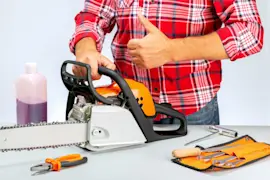



Is a 16 or 18 inch chainsaw better?
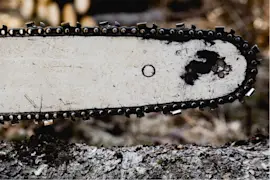
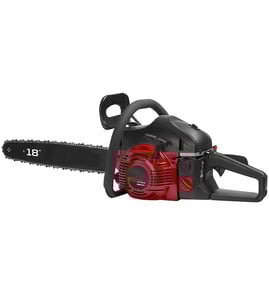
For most homeowners, a 16-inch chainsaw is better because it’s lighter, easier to control, and handles typical limbing and small firewood jobs well. An 18-inch bar is better when you regularly cut thicker wood and want more reach, but it adds weight and demands more from the saw.
| Feature | 16-inch bar | 18-inch bar |
|---|---|---|
| Best for | Limbing, pruning, small firewood | Larger firewood, small-to-medium trees |
| Handling | More maneuverable | Heavier, more fatiguing |
| Cutting capacity | Good for smaller diameters | Better for thicker diameters |
| Saw demand | Lower | Higher (needs more power and good chain speed) |
- Choose 16-inch if you mostly cut branches, storm cleanup, and smaller logs.
- Choose 18-inch if you often buck thicker rounds and want extra reach.
- Match the bar length to your comfort level; control matters more than maximum length.
- Keep the chain sharp and properly tensioned; a dull chain makes any bar feel “too small.”
- Use the correct chain and bar combination for your Craftsman 358350822.
Bar length alone does not guarantee compatibility; the mount pattern, pitch, gauge, and drive link count must match the saw’s setup.
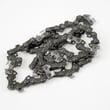
If you’re replacing wear items, start with the exact parts listed for this model, such as:
Using a bar that’s too long for the saw’s power and chain speed can lead to slow cutting, more kickback risk, and faster wear on the bar, chain, and clutch. The “better” choice is the one that keeps your cuts controlled and your chainsaw running efficiently.
Last updated: February 2026
What model is my Craftsman chainsaw?
Your Craftsman chainsaw’s model number is printed on a factory ID label on the saw. Once you find that label, the model is the full number on it (for example, 358350822 for this Craftsman chainsaw model page). Use that exact number when ordering parts or looking up diagrams.
On Craftsman gas chainsaws, the model label is usually on the saw body, not on the bar or chain. Check these common spots:
- On the starter housing (recoil starter side)
- Near the rear handle or trigger area
- On the crankcase area behind the clutch cover
- On the underside of the saw body near the oil and fuel caps
- Near the muffler side (look for a stamped plate or printed sticker)
Model labels often include several numbers. For parts lookup, we recommend capturing:
- Model number (the most important; often 8 to 10 digits)
- Product number or type (if shown)
- Serial number (helpful for production changes)
- Any prefix/suffix characters (letters matter)
| Label item | What it’s used for | Example |
|---|---|---|
| Model number | Matching parts diagrams and part fit | 358350822 |
| Serial number | Identifying production range | Varies |
| Bar/chain info | Matching cutting system parts | Varies |
Using the exact model number prevents ordering the wrong chain, guide bar, or fuel system parts. Even small model-number differences can change the correct pitch, gauge, or fuel line routing.
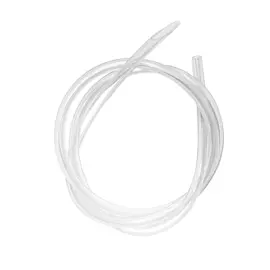
For Craftsman 358350822, common wear items include the chain 91PX045G, guide bar 100SDEA041, and fuel line 530069216.
Last updated: February 2026
What is the most common problem with chainsaws?
The most common problem we see with gas chainsaws like the Craftsman 358350822 is a dull or damaged chain, which makes cutting slow and unsafe. Close behind are fuel-related issues (stale fuel, cracked fuel lines, carburetor problems) that cause hard starting, stalling, or rough running.
- Chain condition and sharpness: dull cutters, damaged teeth, or incorrect depth gauges
- Chain tension: too loose (derails) or too tight (overheats bar and clutch)
- Fuel delivery: stale mix, clogged filter, or a cracked/leaking line such as the fuel line 530069216
- Airflow: dirty air filter or blocked cooling fins (overheating, poor power)
- Bar and lubrication: worn bar rails, plugged oiler port, low bar oil
- Ignition basics: fouled spark plug or incorrect gap
| Symptom | Most common cause | What to do next |
|---|---|---|
| Cuts slowly, makes dust | Dull chain | Sharpen chain; replace if damaged |
| Won’t start or starts then dies | Fuel issue | Refresh fuel mix; inspect fuel line and carb |
| Chain keeps coming off | Tension or bar wear | Set correct tension; inspect bar rails |
| Smokes or bar turns blue | No/low bar oil | Check oiler hole, oil level, and bar groove |
- Confirm you have the correct chain for your bar; common options for this model include chain 91PX045G and chain 91PX040G.
- Set chain tension so the drive links stay engaged in the bar groove but the chain still pulls around by hand (with gloves).
- Inspect the bar groove and rails; replace a worn bar if the chain won’t track straight.
A dull chain and poor lubrication increase kickback risk, overheat the guide bar, and can damage the clutch and sprocket. Fixing chain, bar, and fuel issues early keeps your Craftsman 358350822 cutting safely and starting reliably.
For step-by-step troubleshooting by symptom, use our chainsaw won't start guide.
Last updated: February 2026
What is the most reliable gas chainsaw brand?
Husqvarna, Stihl, and Echo are the most consistently reliable gas chainsaw brands because they tend to deliver strong engine durability, good parts support, and long-term cutting performance. For a Craftsman chainsaw like model 358350822, reliability also depends heavily on routine maintenance and using the correct wear parts.
Reliability is usually a mix of starting consistency, power under load, and how well the saw holds adjustment over time.
- Starts easily hot and cold (carburetor and fuel system stay stable)
- Runs smoothly at idle and full throttle (no bogging or surging)
- Oils the bar and chain consistently (reduced bar and chain wear)
- Holds chain tension and cuts straight (bar and chain match and stay sharp)
- Has readily available wear parts (chain, bar, fuel line)
| Brand | Best fit | Typical strengths | Typical tradeoffs |
|---|---|---|---|
| Husqvarna | Homeowner to pro | Strong power-to-weight, wide model range | Some models are more sensitive to fuel quality |
| Stihl | Serious homeowner to pro | Excellent durability, strong cutting performance | Often higher upfront cost |
| Echo | Homeowner to pro | Great value, dependable engines | Fewer model choices than the biggest brands |
Even a solid saw becomes “unreliable” when fuel delivery or cutting hardware is worn. These are common maintenance-related fixes:
- Replace cracked or soft fuel lines to prevent air leaks and hard starting (see fuel line 530069216)
- Keep the chain sharp and correctly matched to the bar (see chain 91PX045G or chain 91PX040G)
- Replace a bent or heavily worn bar to prevent crooked cuts and thrown chains (see guide bar 100SDEA041)
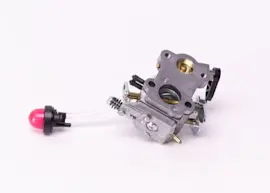
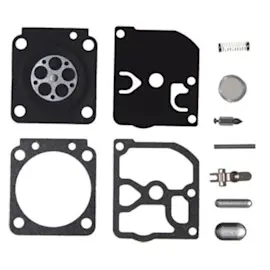
- If the saw runs rough or won’t start, focus on fuel freshness, carburetor condition, and air leaks
Choosing a reliable brand helps, but day-to-day reliability comes from fuel system integrity, correct chain and bar fit, and consistent upkeep. That is why wear parts like the fuel line, chain, and guide bar have an outsized impact on performance.
For more troubleshooting and maintenance best practices, use our chainsaw care and troubleshooting tips.
Last updated: February 2026
Should I use 40 1 or 50 1 fuel for a chainsaw?
Use the fuel-to-oil ratio specified for your Craftsman model 358350822; that exact ratio is the only correct choice for this saw. In general, many modern 2-cycle chainsaws run 50:1, while some older designs use 40:1 or 32:1, so matching the spec matters.
Use this checklist so you do not end up with a hard-starting saw or engine damage:
- Find the ratio on the fuel cap, starter housing decal, or emissions label.
- Mix only enough fuel for short-term use; stale fuel causes starting and running problems.
- Use 2-cycle oil intended for air-cooled engines.
- Measure accurately; do not “eyeball” the oil.
- If you suspect the saw was run with the wrong mix, drain the tank and refill with correctly mixed fuel.
These are standard mix amounts; use the row that matches the ratio listed on your saw.
| Mix ratio | Oil per 1 gallon gas | Oil per 1 quart gas |
|---|---|---|
| 50:1 | 2.6 oz | 0.64 oz |
| 40:1 | 3.2 oz | 0.80 oz |
| 32:1 | 4.0 oz | 1.0 oz |
If the saw starts acting up after refueling, check these items first:
- Excess smoke, wet plug, and sluggish throttle response (often too much oil or stale fuel)
- Surging, overheating, or loss of power under load (often too little oil or a lean condition)
- Fuel smell, wet spots, or visible cracks in the line (fuel leak)
A common fix on older gas chainsaws is replacing a cracked or softened fuel line; use the exact replacement fuel line 530069216. For step-by-step guidance, follow how to replace chainsaw fuel lines.
A 2-cycle engine depends on oil in the fuel to lubricate the crankshaft bearings, piston, and cylinder. Too little oil scores the engine; too much oil increases carbon buildup, smoke, and spark plug fouling.
Last updated: February 2026