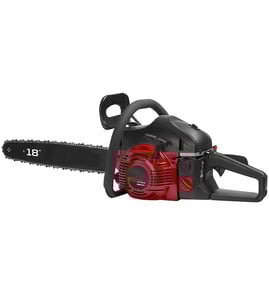

How to adjust H and L screws on chainsaw?
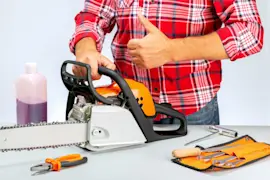
On the Craftsman 358351041 gas chainsaw, the L (low-speed) and H (high-speed) carburetor screws control the air-fuel mixture at idle/acceleration and at full throttle. We adjust L for smooth pickup, H for safe top-end power, then set idle so the chain does not move.
Before you adjust (important)
- Work on a cold saw first, then do final tuning warm.
- Use fresh, properly mixed fuel; old fuel makes tuning impossible.
- Clean the air filter and check the spark arrestor screen (if equipped).
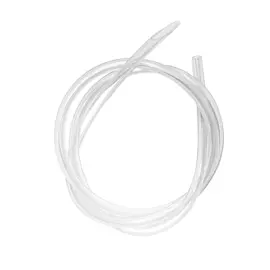
- Inspect fuel lines for cracks or softness; replace if leaking or collapsing (see line kit 530069216).
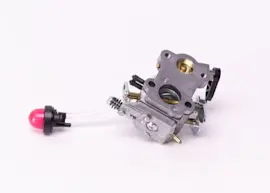
- If the primer bulb will not fill or fuel will not stay in the bulb, address the fuel supply first (see primer assembly 530071835).
Step-by-step: L, H, and idle (T/LA)
- Start with a baseline: gently turn L and H clockwise until they lightly seat, then back each out about 1 turn.
- Set idle speed (T/LA): adjust so the engine idles reliably and the chain does not spin.
- Adjust L (low): turn L in small steps (about 1/8 turn) to get smooth idle and strong acceleration. If it bogs on throttle, open L slightly.
- Adjust H (high): at full throttle, tune for strong cutting power without a “screaming” lean sound. A slightly richer setting runs cooler and protects the engine.
- Re-check idle: after H/L changes, re-set idle speed again.
Quick symptom guide
| Symptom | Likely direction | What to do |
|---|---|---|
| Dies at idle | Too lean on L or idle too low | Open L slightly; raise idle |
| Bogging on acceleration | Too lean on L | Open L slightly |
| Chain spins at idle | Idle too high | Lower T/LA until chain stops |
| High-pitched at WOT | Too lean on H | Open H slightly |
Why it matters
A carb set too lean can overheat the engine and reduce chain saw life; a carb set too rich can foul the plug and lose power. Correct H/L tuning also helps the clutch engage smoothly and reduces stalling.
Last updated: January 2026
Is a 16 or 18 inch chainsaw better?
An 18-inch chainsaw is better when you regularly cut thicker wood and want more reach and cutting capacity; a 16-inch chainsaw is better for lighter work because it’s typically easier to control and less tiring. For a Craftsman gas chainsaw like model 358351041, the “better” choice depends on the wood size and how often you cut.
Quick comparison: 16-inch vs 18-inch
| Bar length | Best for | Typical tradeoffs |
|---|---|---|
| 16-inch | Limbing, pruning, storm cleanup, smaller firewood | Lighter feel, easier handling, less reach |
| 18-inch | More frequent firewood cutting, larger limbs, small tree felling | Heavier feel, more kickback potential, needs more power |
How to choose the right bar length for your job
- Match the bar to your typical wood diameter: a longer bar helps when logs are consistently larger.
- Prioritize control if you cut overhead or in tight spaces: shorter bars are usually more maneuverable.
- Consider fatigue: extra bar length often means extra weight and more time on the trigger.
- Think about maintenance: longer bars and chains can cost more to replace and sharpen.
- Confirm fit before buying: bar mount pattern, pitch, gauge, and drive link count must match your saw.
If you’re replacing a worn setup on this model, start by matching the existing size and specs. For example, the available bar 140SDEA041 and chain 91PX052G are 14-inch options that fit certain configurations, so they’re a good reminder that “best” also means “correct fit.”
Why it matters
A bar that’s too long for the saw’s powerhead can cut slowly and encourage forcing the cut, which increases wear on the clutch, chain, and bar. A bar that’s too short can make bigger cuts awkward and less efficient.
What we recommend for most homeowners
- Choose 16-inch if most cuts are under about 12 to 14 inches and you value control.
- Choose 18-inch if you often cut larger rounds and want extra reach.
- Keep the chain sharp and properly tensioned; performance differences often come down to maintenance.
Last updated: January 2026
How long can a chainsaw run on a tank of gas?
Most gas chainsaws like the Craftsman 358351041 run about 30 to 45 minutes per tank under steady cutting, and less time in heavy hardwood or if the carburetor is running rich. If run time suddenly drops, a fuel delivery issue is usually the cause.
Typical run time ranges (what to expect)
Run time depends on engine size, how hard you cut, and tune. Use these as practical benchmarks:
- Light limbing / intermittent cutting: 40 to 60 minutes
- Bucking logs steadily: 30 to 45 minutes
- Heavy hardwood, full-throttle most of the time: 20 to 35 minutes
- Cold weather or stale fuel: often shorter run time and harder starting
Quick checks if your run time is shorter than normal
If the Craftsman 358351041 is burning through fuel fast or won’t stay running, we focus on the fuel system first:
- Inspect the fuel lines for cracks, soft spots, or leaks; replace with the line kit 530069216.
- Make sure you have a tight seal at the tank; a damaged cap can leak or vent incorrectly (see fuel cap assembly 580940901).
- Prime and watch the bulb; if it won’t fill or collapses, the primer circuit may be failing (see primer assembly 530071835).
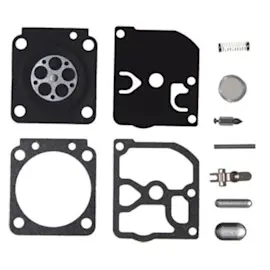
- If it surges, stalls, or only runs on choke, rebuild the carburetor (see carburetor repair kit 530069826) or replace it.
- Check for oil and sawdust buildup around the carb area and air intake; restricted airflow can change the fuel mixture.
What changes run time the most
| Factor | Usually does this to run time | Why |
|---|---|---|
| Cutting continuously at full throttle | Decreases | Highest fuel demand |
| Dull chain / pinched bar | Decreases | More load, more throttle |
| Carburetor set rich or diaphragm issues | Decreases | Extra fuel flow |
| Fuel leak at line or cap | Decreases a lot | Fuel loss, not just consumption |
Why it matters
A normal run time helps you spot problems early. A sudden drop in minutes-per-tank often points to a leak, a failing primer, or carburetor/fuel line issues, which can also cause hard starting and stalling.
Last updated: January 2026
Is 40 1 or 50 1 better for chainsaws?
For the Craftsman 358351041 gas chainsaw, 40:1 is the correct fuel mix ratio; it provides the lubrication this 2-cycle engine is designed to run on. A 50:1 mix has less oil and can increase wear risk in a saw built for 40:1.
40:1 vs 50:1 (what it means in the real world)
| Mix ratio | Oil per 1 gallon gas | What it does | What can go wrong if used in a 40:1 saw |
|---|---|---|---|
| 40:1 | 3.2 oz | Correct lubrication level for this engine design | Normal operation when measured accurately |
| 50:1 | 2.6 oz | Less oil, cleaner exhaust in engines designed for it | Reduced lubrication, hotter running, faster internal wear |
How we recommend mixing fuel for model 358351041
- Use fresh, ethanol-free gas when available; mid-grade or premium is commonly used for small engines.
- Measure oil accurately; do not “eyeball” the ratio.
- Mix in an approved fuel can: add half the gas, add oil, shake, then add the rest and shake again.
- Mix only what you will use in about 30 days.
- If the saw has been sitting, drain old mix and refill with fresh 40:1.
Signs your mix or fuel system needs attention
- Hard starting even with proper choke and priming
- Surging, bogging, or dying when you squeeze the throttle
- Excessive smoke that does not clear after warm-up
- Spark plug repeatedly fouling
- Fuel smell, wet spots, or visible line cracking
Parts that commonly help after bad fuel or wrong mix
If old fuel or a lean oil mix has contributed to running problems, these model-compatible parts are common fixes:
- Carburetor repair kit 530069826 (restores a gummed or leaking carburetor)
- Primer assembly 530071835 (helps pull fuel into the carburetor for starting)
- Line kit 530069216 (replaces cracked or leaking fuel lines)
Why it matters
A 2-cycle chainsaw relies on oil in the fuel for piston, cylinder, and crank bearing lubrication. Running less oil than specified (such as 50:1 in a 40:1 saw) accelerates wear and shortens engine life.
Last updated: January 2026