Owner’s manual


How to reset garage door opener from previous owner?
To reset a Craftsman 13953993D garage door opener from a previous owner, erase the opener’s stored remote/keypad codes at the motor unit, then program only your remotes and any keyless entry you want to use. This removes old access and restores control to your household.
We recommend doing this first so any old remotes stop working.
- Make sure the garage door is closed.
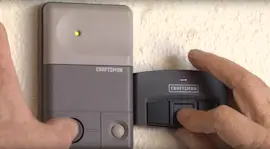
- Locate the Learn button on the motor unit (near the antenna wire and indicator light).
- Press and hold the Learn button until the indicator light goes out (typically about 6 to 15 seconds).
- Release the button; all previously learned remotes and keypads are now erased.
- Reconnect power and test operation from the wall control.
For model-specific button locations and programming steps, use the owner's manual.
After you clear memory, you must re-teach the opener each device.
- Press and release the Learn button.
- Within about 30 seconds, press and hold the button on the remote you want to use until the opener light blinks or you hear a click.
- Repeat for each additional remote.
- If you have a wireless keypad, set a new PIN and follow the keypad programming steps in the Programming section.
If you are troubleshooting a keypad PIN or remote behavior, the Craftsman error codes guide helps you match light patterns or diagnostic codes to the next fix.
These issues commonly block successful pairing.
- Replace the remote battery and retry programming.
- Stand 3 to 10 feet from the motor unit when pairing.
- Confirm the wall control works; if it does not, check power to the opener.
- Verify the safety reversing sensors are aligned; misalignment can prevent normal closing behavior.
- If the door reverses or stops unexpectedly, correct force and travel settings per the owner's manual.
| Item | After reset | What you do next |
|---|---|---|
| Remote and keypad codes | Erased | Reprogram devices you want |
| Door travel/force settings | Usually unchanged | Adjust only if door behavior is unsafe |
| Safety sensor alignment | Unchanged | Realign if door will not close |
Garage door openers can store multiple remotes and a keyless entry PIN. Clearing the memory prevents a previous owner’s remote or keypad code from opening your garage, improving security and reducing surprise operation.
Last updated: February 2026
What are the common problems with Craftsman garage door openers?
Common problems on the Craftsman 13953993D garage door opener are safety sensor issues that prevent closing (lights blink), remote or wall control problems, and drive or motor wear that causes noisy or inconsistent travel. We use the built-in diagnostic lights and the troubleshooting steps in the owner's manual to pinpoint the cause.
- Door will not close; opener lights blink: The safety reversing sensors are misaligned, blocked, or not connected correctly.
- Door reverses while closing: The door hit an obstruction or the sensor beam was interrupted.
- Remote will not run the opener: Lock mode may be on at the wall control, the remote needs reprogramming, or the opener diagnostic LED is reporting a fault.
- Door stops or behaves inconsistently: Door travel or force settings may be off, or the door itself may be binding.
- Grinding or loud operation: Commonly points to drive system wear (gears, sprocket, chain/belt condition) or lack of basic maintenance.
- Check the sensor eyes: Make sure both sensor indicator lights are on and the beam path is clear.
- Test the safety reversal: Close the door and confirm it reverses when the beam is blocked; the opener lights should flash.
- Try the wall control: If the wall control works but remotes do not, focus on remote programming or lock mode.
- Watch the opener diagnostic LED: Count flashes and match them to the diagnostic chart.
- Inspect the door movement by hand: With the door disconnected from the opener, the door should move smoothly and stay balanced.
| Symptom | Most likely area | Next best step |
|---|---|---|
| Won’t close; lights blink | Safety reversing sensors | Align sensors; clear obstructions; verify both LEDs are lit |
| Remotes don’t work | Remote programming or lock mode | Disable lock mode; reprogram remotes |
| Reverses during close | Obstruction or sensor beam break | Clear door path; check sensor alignment |
| Stops while opening | Door binding or force/travel | Check door balance; review force/travel adjustments |
Most “opener problems” are actually safety sensor alignment or door balance issues. Fixing those first prevents repeat shutdowns, nuisance reversing, and unnecessary wear on the motor and drive system.
For model-specific flash codes and what each pattern means, use Craftsman error codes.
Last updated: February 2026
Can you get a universal remote for an old garage door opener?
Yes. For a Craftsman garage door opener like model 13953993D, you can use a compatible universal remote in many cases, but the best results come from using a Security+ rolling-code remote that can be programmed to the opener using the motor unit’s LEARN button. See the 13953993D owner's manual for the exact programming steps.
This model is designed to work with Security+ remotes and can be programmed for multiple hand-held remotes and a keyless entry keypad.
- Look for a LEARN button on the motor unit (you will use it to pair a remote).
- Choose a remote that supports rolling-code Security+ operation.
- Avoid older fixed-code style transmitters; they are not the right match for Security+ systems.
- If you want outside access without a remote, consider a keyless entry keypad (also programmed through LEARN).
- Plan to erase and reprogram remotes if you are replacing lost remotes.
We use the same basic steps for adding a new compatible remote to the Craftsman 13953993D.
- Press and release the LEARN button on the motor unit (the indicator light stays on for about 30 seconds).
- Within that time window, press and hold the button on the remote you want to use.
- When the opener lights blink (or you hear clicks), the remote is learned.
If a remote is lost or you want to deactivate one, erase the opener’s memory and then reprogram only the remotes/keypad you want.
| Task | What it does | When to do it |
|---|---|---|
| Add a remote | Pairs one new remote | New remote purchase |
| Erase all codes | Removes all remotes/keypad codes | Lost remote, security reset |
| Reprogram | Adds back the remotes you still have | After erasing codes |
Using the correct rolling-code remote keeps your opener operating as designed and helps ensure safe, predictable door operation. After programming, always confirm the safety reverse system works; the door must reverse when it contacts a 1-1/2 inch object.
Last updated: February 2026
How do I know what model my garage door opener is?
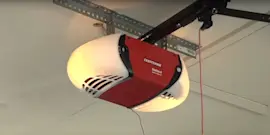
For a Craftsman garage door opener, the model number is typically printed on a label on the motor unit under one of the light lenses. On model 13953993D, check under the front light lens first, then check under the left lens (when you are facing the opener).
Most Craftsman openers place the ID label on the motor head (the unit mounted to the ceiling), near the light covers.
- Look under the front light lens (remove the lens cover if needed).
- If you do not see it, look under the left light lens while facing the garage door.
- Check the side opposite the antenna wire (the antenna usually hangs down from the motor unit).
- If the label is dusty or painted over, wipe it gently with a dry cloth.
- Write down the full model number exactly as shown (letters, numbers, and punctuation).
For this opener, the owner documentation identifies the model as 139.53993D (often shown without the dot as 13953993D). Use the full number when looking up parts, programming steps, or troubleshooting.
| You might see it printed as | Use this when searching parts/manuals | Notes |
|---|---|---|
| 139.53993D | 13953993D | Same model; punctuation varies by label/manual |
| 13953993D | 13953993D | Common format on parts lookups |
The model number determines which remote controls, wall control console, safety reversing sensors (Protector System), and programming steps apply. It also helps match the correct troubleshooting steps and error code guidance.
- Use the model number to follow the correct programming steps for remotes and keyless entry.
- Keep the documentation nearby for safe operation and periodic checks.
- If you are seeing blinking lights or diagnostic behavior, use our Craftsman error codes guide.
- For model-specific operating and safety details, use the 13953993D owner's manual.
Last updated: February 2026
Is it cheaper to repair or replace a garage door opener?
For a Craftsman garage door opener like model 13953993D, it’s cheaper to repair when the problem is isolated (safety sensors, remote programming, force or travel limit adjustment). Replacement is the better value when the opener has repeated failures, the motor is failing, or repair costs stack up close to the price of a new unit; use the 13953993D owner's manual to confirm adjustments and diagnostics first.
- Repair when the door won’t close due to sensor alignment, wiring, or sunlight interference at the sensors.
- Repair when the opener needs travel limit or force adjustment (common after seasonal changes or door hardware changes).
- Repair when remotes or keyless entry need reprogramming or memory reset.
- Replace when the motor or drive system repeatedly fails, or the opener struggles even after proper force and travel setup.
- Replace when the door is frequently out of balance or binding and the opener has been overworked (fix the door first either way).
| Scenario | Typical outcome | Best choice |
|---|---|---|
| One clear symptom (won’t close, lights blink, remote issue) | Often a single adjustment or small part | Repair |
| Multiple symptoms over time (intermittent operation, grinding, stalls) | More labor and repeat service calls | Replace |
| Safety reversal or sensor system won’t pass tests after setup | Safety risk until corrected | Repair first; replace if it won’t stabilize |
The manual for this opener includes steps to adjust travel limits, adjust force, and test the safety reversal system and Protector System. These checks often separate a simple fix from a true hardware failure.
- Test safety reversal using a 1-1/2 inch object (or a 2x4 laid flat) on the floor.
- Check door balance; an unbalanced door can prevent proper reversing and overload the opener.
- Inspect safety sensors for alignment and obstructions.
- Adjust travel limits if the door stops short or reverses unexpectedly.
- Adjust force only after confirming the door moves smoothly by hand.
A garage door opener is a safety device, not just a motor. If force and travel are set incorrectly or the door is out of balance, the door may not reverse when it should. Getting the safety system tests to pass is the priority before deciding to invest in a replacement.
Last updated: February 2026