Installation guide
 Owner’s manual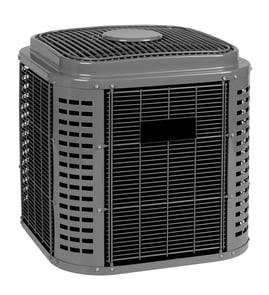




How many square feet does a 36000 BTU air conditioner cool?
A 36,000 BTU (3-ton) central air conditioner like the Carrier 38TRA036 typically cools about 1,500 to 2,500 square feet in an average home. The right size depends most on insulation, sun exposure, ceiling height, and local climate, so the best match is based on a proper load calculation.
Quick sizing guidance (what changes the number)
A “square feet per ton” estimate is only a starting point. Your real coverage can land on the low or high end depending on:
- Insulation and air sealing (older, leaky homes need more BTUs)
- Ceiling height (tall ceilings increase volume and load)
- Window area and sun exposure (west-facing glass adds heat)
- Occupancy and internal heat (people, cooking, lighting, electronics)
- Duct condition (leaks and poor airflow reduce delivered cooling)
Typical coverage ranges for 36,000 BTU
Use this as a practical rule of thumb for a 3-ton system.
| Home conditions | Typical coverage for 36,000 BTU |
|---|---|
| Tight, well-insulated, shaded | ~2,100 to 2,500 sq ft |
| Average insulation, typical windows | ~1,700 to 2,100 sq ft |
| Poor insulation, lots of sun, leaky ducts | ~1,500 to 1,800 sq ft |
Why it matters (oversized vs. undersized)
Correct sizing helps comfort and equipment life. An oversized unit can short-cycle and leave humidity high; an undersized unit can run for long periods and still struggle on the hottest days. Your Carrier 38TRA036 is designed to run longer on extreme heat days and cycle more normally on moderate days, which is expected behavior when the system is sized correctly. Check the 38TRA036 owner's manual for operating tips and normal run-time expectations.
Model-specific notes that affect performance
The installation requirements also impact how effectively your 3-ton capacity is delivered:
- Maintain proper clearances around the outdoor condensing unit for airflow
- Keep the unit within its cooling outdoor ambient range (55°F to 125°F)
- Ensure indoor airflow is close to rated CFM before checking charge or performance
For clearance and installation details, use the 38TRA036 installation guide.
Last updated: February 2026
What is the tonnage of Carrier 38TRA036?
Carrier model 38TRA036 is a 3-ton central air conditioner condensing unit; “036” indicates about 36,000 BTU/hr of cooling capacity (12,000 BTU/hr per ton). For installation sizing details like line-set diameters, use the installation guide.
How we determine tonnage from the model number
Most residential central AC model numbers use the last three digits to indicate nominal capacity in thousands of BTU/hr.
- 018 = about 18,000 BTU/hr (1.5 ton)
- 024 = about 24,000 BTU/hr (2 ton)
- 030 = about 30,000 BTU/hr (2.5 ton)
- 036 = about 36,000 BTU/hr (3 ton)
- 042 = about 42,000 BTU/hr (3.5 ton)
- 048 = about 48,000 BTU/hr (4 ton)
- 060 = about 60,000 BTU/hr (5 ton)
Quick conversion table
| Nominal capacity | BTU/hr | Tons |
|---|---|---|
| 036 | 36,000 | 3.0 |
| 042 | 42,000 | 3.5 |
| 048 | 48,000 | 4.0 |
Why it matters
Correct tonnage affects comfort, humidity control, and compressor life. It also ties directly to installation details. For example, the 38TRA series installation instructions list recommended refrigerant connection and tubing sizes by unit size (including 030/036), which helps prevent noise, vibration, and performance problems.
Related installation checks for a 3-ton 38TRA unit
Before you replace parts or start troubleshooting, we recommend confirming these basics from the installation guide:
- Refrigerant line routing is as direct as possible (fewer bends)
- Proper slack and isolation to reduce vibration transfer
- Wall penetrations are sealed to prevent air and moisture intrusion
- Tubing insulation fully surrounds the vapor line
- Liquid line size stays within the stated residential maximum (3/8-in O.D.)
Last updated: February 2026
How much does a 3-ton Carrier AC cost?
A 3-ton Carrier central air conditioner system typically costs about $5,000 to $6,000 installed, with the final price driven by efficiency rating, existing ductwork and electrical condition, and installation complexity. For your Carrier 38TRA036 (a 3-ton condensing unit), the outdoor unit is only one part of the total installed cost; the indoor coil, line set, refrigerant work, and labor often make up a large share.
What changes the installed price most
- Efficiency level (SEER/SEER2): higher efficiency equipment and matching components cost more.
- Indoor equipment match: a new evaporator coil or air handler can add significant cost.
- Refrigerant and line set work: long runs, line set replacement, or difficult routing increases labor.
- Electrical and controls: disconnect, whip, breaker sizing, and thermostat upgrades can add cost.
- Permits and start-up: local code requirements and commissioning time vary.
Typical cost breakdown (3-ton split system)
| Cost item | What it covers | Typical share |
|---|---|---|
| Outdoor condensing unit | Compressor, condenser coil, fan section | Medium |
| Indoor coil/air handler | Evaporator coil and airflow components | Medium |
| Labor and commissioning | Set, braze, evacuate, charge, test | High |
| Electrical and misc. | Disconnect, wiring, pad, fittings | Low to medium |
Model-specific installation details that can affect labor
Your 38TRA-series installation instructions call out refrigerant connection sizing by unit size. For size 036, the guide lists 3/8-inch liquid and 3/4-inch vapor connections for typical line sets; longer or more complex runs can increase materials and labor. Check the exact requirements and job-site steps in the installation guide.
Why it matters
A “3-ton Carrier AC cost” number is only accurate when the entire matched system and the installation scope are defined. Even with the same 38TRA036 outdoor unit, changes in indoor coil compatibility, line set length, and electrical upgrades can move the total price substantially.
Last updated: February 2026
What is the life expectancy of a Carrier air conditioner?
A Carrier central air conditioner condensing unit like model 38TRA036 lasts 15 to 20 years. Reaching that lifespan depends on correct installation, steady airflow (clean filter, open registers), and keeping the outdoor unit clear so the compressor and fan do not overheat or short-cycle.
Typical lifespan and what affects it
- 15 to 20 years is the normal service life for a quality split-system central AC
- Restricted airflow (dirty filter, blocked registers) increases operating cost and shortens life
- Outdoor debris and crowding around the condenser raises heat stress on the compressor
- Rapid cycling (frequent on and off) accelerates compressor and electrical wear
- Harsh environments (salt air, heavy run time) reduce overall service life
Maintenance that protects the 38TRA036 outdoor unit
Our care guidance for this Carrier unit focuses on airflow and avoiding operating habits that strain the compressor.
- Keep the condenser coil area free of leaves, grass clippings, and dirt
- Maintain about 12 inches of clearance from tall grass, vines, and shrubs
- Do not cover the unit or lean items against it
- Use the thermostat normally; avoid switching power ON and OFF to control temperature
Quick end-of-life indicators
| What you notice | What it often points to | Practical next step |
|---|---|---|
| Frequent repairs | Wear in electrical parts or compressor strain | Compare repair cost vs. unit age |
| Higher electric bills | Efficiency loss from airflow or component wear | Check filter and outdoor airflow first |
| Uneven cooling | Airflow restriction, duct issues, or capacity decline | Verify registers are open; then diagnose |
Parts that commonly impact reliability
If the unit struggles to start, the fan will not run, or it short-cycles, these common wear items are often involved:
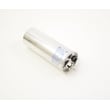
- Capactr dual CAP050300440RSP (run capacitor for compressor and fan circuits)
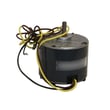
- Central air conditioner condenser fan motor HC37GE210 (moves air through the condenser)
Why it matters
The compressor is typically the most expensive component. Clean airflow and correct cycling reduce heat and electrical stress, helping your 38TRA036 reach its full 15 to 20 year lifespan.
For model-specific operation, clearances, and safety steps, use the 38TRA036 installation guide and 38TRA036 owner's manual.
Last updated: February 2026