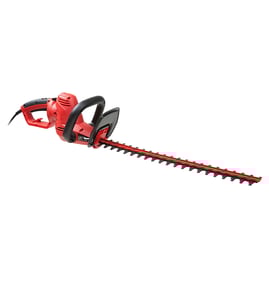

Can I use WD-40 to lubricate a hedge trimmer?
No. For a Craftsman 31581571 18" hedge trimmer, we use a real lubricating oil for the blades; WD-40 is primarily a cleaner and water-displacing spray, not a long-lasting blade lubricant. Proper oiling reduces friction, heat, and premature wear.
Use a light machine oil or a dedicated hedge trimmer bar and chain oil.
- Apply a thin film along both sides of the cutting blades
- Add a drop at pivot points and sliding surfaces (where the blades overlap)
- Wipe off excess oil to avoid attracting debris
- Reapply after cleaning, and anytime the blades start sounding dry or running hot
- For heavy sap buildup, clean first, then oil
| Task | Do | Don’t |
|---|---|---|
| Lubrication | Use light oil or bar and chain oil | Rely on WD-40 as the only lubricant |
| Cleaning | Remove sap and debris first | Oil over thick buildup |
| Storage | Lightly oil blades before storing | Store with wet, dirty blades |
Hedge trimmer blades run at high speed; without proper lubrication, metal-to-metal contact increases heat and drag. That can dull the cutting edges faster, strain the motor, and lead to rough cutting.
If you are shopping for maintenance items or replacement parts for model 31581571, start with the parts list for your exact model, then use Sears PartsDirect to search by model number if you need additional diagrams or related items.
For general DIY safety and prep before servicing, we recommend reviewing are diy appliance repairs safe.
Last updated: February 2026
What is the difference between a hedge trimmer and a hedge cutter?
A hedge trimmer (like your Craftsman 31581571 18-inch hedge trimmer) is built for routine shaping and light-to-medium growth, using closely spaced blade teeth for cleaner, more controlled cuts. A “hedge cutter” usually refers to a heavier-duty tool designed to power through thicker, woodier stems with a more aggressive cutting capacity.
| Feature | Hedge trimmer | Hedge cutter (heavy-duty) |
|---|---|---|
| Best for | Shaping, maintenance trimming | Cutting back overgrown hedges |
| Typical tooth gap | Smaller (finer control) | Larger (handles thicker stems) |
| Cut feel | Cleaner finish on small growth | Faster removal, rougher finish |
| Tool size | Lighter, easier to maneuver | Heavier, more powerful |
Use these practical guidelines when deciding what you need:
- Choose a hedge trimmer for frequent touch-ups, straight lines, and detailed shaping.
- Choose a hedge cutter (or heavy-duty trimmer) when you regularly face thicker, woody stems.
- If you want a cleaner look, trim more often so you are cutting smaller growth.
- If branches are too thick for the blade to bite cleanly, switch tools instead of forcing the cut.
- For mixed work, many homeowners keep a trimmer for shaping and use a separate cutting tool for thicker branches.
Using the right tool protects the blade set and drive components, reduces binding and kickback, and gives you a better finish on the hedge. Forcing a light-duty trimmer into heavy cutting is one of the fastest ways to dull blades and strain the motor.
For replacement parts and diagrams for Craftsman 31581571, start with the model parts list; if you need to search more broadly by model number, use Sears PartsDirect.
Last updated: February 2026
Why does my hedge trimmer keep jamming?
Your Craftsman 31581571 18" hedge trimmer usually keeps jamming because the cutter blades are packed with debris, the blades are dull or nicked, or the blade bar is running dry. Cleaning the blade teeth and lubricating the cutting bar typically stops repeat jams.
- Hidden debris between teeth: sap, fine twigs, and compacted clippings lock the blades together
- Dull or damaged blades: dull edges grab and bind instead of slicing cleanly
- Not enough lubrication: dry blade rails create friction and heat, which increases binding
- Cutting material that is too thick: hedge trimmers bind when forced through oversized branches
- Bent blade teeth or misalignment: a slight bend can cause the moving blade to catch
- Power off completely: unplug the corded unit or remove the battery on cordless versions.
- Clear the cutter bar: use a stiff brush to remove packed debris from between the teeth.
- Inspect the teeth: look for nicks, bends, or shiny rub marks that indicate contact.
- Lubricate the blades: apply a light coat of hedge trimmer blade oil along both sides of the cutter bar.
- Test cut on light growth: if it still binds quickly, the blades likely need sharpening or service.
| What you notice | Most likely cause | What to do next |
|---|---|---|
| Jams only in certain spots on the bar | Bent tooth or misalignment | Inspect for a bent section; straighten only if minor, otherwise service |
| Jams more as you keep cutting | Sap buildup or dry blades | Clean, then lubricate more often |
| Motor runs but blades stop | Debris bind or worn drive components | Clear jam; if it repeats, plan a deeper inspection |
| Cuts fine on thin tips but jams on thicker stems | Material too thick | Trim in smaller passes; avoid thick branches |
Repeated jamming overheats the blade bar and strains the drive system, which can shorten the life of the motor and internal gears. Keeping the cutter bar clean and lubricated helps the trimmer cut faster and reduces wear.
If you need replacement parts for Craftsman model 31581571, start with the parts list for your model, or search by model number on Sears PartsDirect. For model identification tips, use how to find your appliance model number (and what it means for parts).
Last updated: February 2026
Is it worth repairing a hedge trimmer?
Yes, repairing a Craftsman 31581571 18" hedge trimmer is worth it when the problem is a normal wear item or a simple electrical issue; it is usually not worth it when the motor is failing, the unit has heavy internal damage, or repair cost approaches the price of a comparable replacement.
- Repair if it just needs cleaning, blade service, fasteners tightened, or a basic electrical fix (cord, switch, wiring).
- Repair if the trimmer runs but cuts poorly and the blades are dull, gummed up with sap, or slightly nicked.
- Repair if it won’t start and you can trace the issue to power supply, a bad connection, or a failed switch.
- Replace if the motor smells burnt, trips breakers repeatedly after basic checks, or has visible overheating.
- Replace if the gearbox or drive components are grinding loudly and the unit has significant play or binding.
- Power and safety: Unplug the trimmer; confirm the outlet works and any extension cord is heavy-duty and undamaged.
- Blade condition: Clean off sap and debris; check for bent teeth, missing hardware, or blades that bind.
- Cutting test: If it runs but stalls in light growth, the blades usually need cleaning and sharpening.
- Electrical inspection: Look for cracked insulation, loose terminals, or pinched wires; repair only with proper connectors and strain relief.
| Situation | Usually worth repairing? | Why |
|---|---|---|
| Dull or dirty blades | Yes | Low cost, big performance gain |
| Loose hardware, vibration | Yes | Often a simple tighten and inspect fix |
| Bad cord/switch/wiring | Often | Parts and labor are usually moderate |
| Motor failure or severe overheating | No | High cost, reliability risk |
A hedge trimmer that vibrates excessively, binds, or cuts poorly is harder to control and can overheat the motor. Restoring smooth blade movement and solid electrical connections protects the tool and improves cut quality.
We list replacement parts by model; start with the Craftsman 31581571 parts list, or search by model on Sears PartsDirect. For safe electrical diagnostics, our DIY resources like how to use a multimeter to test electrical parts video help you confirm power and continuity before replacing anything.
Last updated: February 2026
What are the three types of hedge trimmers?
The three main hedge trimmer types are corded electric, cordless (battery), and gas-powered. For your Craftsman model 31581571 hedge trimmer, the type matters because it affects cutting power, runtime, routine maintenance, and the kinds of parts you typically troubleshoot or replace.
- Corded electric: Plug-in power; consistent runtime, lighter weight, and minimal routine maintenance.
- Cordless (battery): Portable and quieter; runtime depends on battery capacity, age, and charger performance.
- Gas-powered: Strong cutting power for thicker, woody growth; requires fueling, tune-ups, and more frequent maintenance.
- Choose corded electric for small to medium hedges near an outlet.
- Choose cordless for portability and quick trimming around the yard.
- Choose gas for large properties, dense hedges, or longer cutting sessions.
- Match blade length and tooth gap to the branch size you cut most often.
- Consider storage needs (battery storage for cordless, fuel handling for gas).
| Type | Best for | Typical tradeoffs |
|---|---|---|
| Corded electric | Steady trimming near the house | Extension cord management, limited reach |
| Cordless (battery) | Portability and convenience | Limited runtime per charge, battery aging |
| Gas-powered | Heavy trimming and long sessions | More noise, more maintenance, heavier |
The power source drives the most common service issues. Corded models often involve cord, switch, or wiring problems; cordless models commonly involve battery, charger, or internal wiring checks; gas models frequently need fuel system and ignition maintenance. To find the correct replacement parts for Craftsman 31581571, start with the model-based parts list, or search by model number on Sears PartsDirect.
Last updated: February 2026