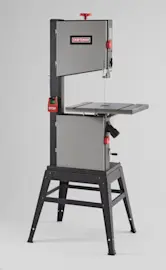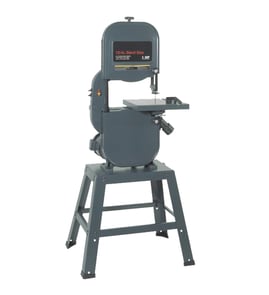

What are the two types of band saws?
The two main types of band saws are vertical band saws and horizontal band saws, named for how the blade runs relative to the work. Your Skil 1010 is a portable band saw that functions like a handheld, vertical-style saw because you guide the tool through the cut.
Vertical vs. horizontal band saws
- Vertical band saw: The blade runs in a vertical loop; the operator guides the workpiece (or the tool, for portable models) to follow a cut line.
- Horizontal band saw: The blade runs horizontally through stock; the saw head typically pivots down into the material, often used for cut-off work.
- Portable band saws (like Skil 1010): Usually used handheld or in a stand; you control the cut path and feed rate.
Quick comparison
| Type | Best for | How the cut is controlled | Common use cases |
|---|---|---|---|
| Vertical band saw | Curves, notches, general shaping | Operator guides the work (or guides the tool) | Fabrication, woodworking, pattern cutting |
| Horizontal band saw | Straight cut-offs | Saw head feeds into clamped stock | Metal stock cutting, repetitive cuts |
Why it matters
Knowing the type helps you choose the right blade, setup, and technique. For example, vertical-style cutting (including portable band saw use) depends heavily on steady feed pressure and keeping the blade tracking straight to avoid drift and premature blade wear.
Safe, practical tips for either type
- Unplug the saw before changing blades or inspecting guards.
- Use the correct blade width and tooth count for the material.
- Let the blade do the work; forcing the cut increases drift and can damage the blade.
- Support the workpiece so it cannot twist or pinch the blade.
- If the saw bogs down, reduce feed pressure and check blade sharpness.
For more DIY repair and troubleshooting resources, see are diy appliance repairs safe.
Last updated: February 2026
Which is the best band saw?
The best band saw is the one that matches your work type and capacity needs. For a portable tool like the Skil model 1010 (a 2-speed portable band saw), “best” usually means clean, straight cuts in metal or conduit, comfortable handling, and easy blade changes, not maximum resaw height.
How to choose the best band saw for your projects
- Material you cut most: metal, PVC, conduit, or wood (woodworking band saws are a different class).
- Cut capacity: maximum throat and depth you actually need.
- Power and speed options: 2-speed helps match blade speed to material.
- Blade availability: common blade length and tooth count (TPI) options.
- Ergonomics: weight, balance, trigger control, and visibility at the cut line.
- Serviceability: brush access (if applicable), wheel tracking adjustment, and guard condition.
Quick comparison: portable vs. stationary band saws
| Feature | Portable band saw (like Skil 1010) | Stationary woodworking band saw |
|---|---|---|
| Best for | Pipe, strut, conduit, metal stock | Curves, joinery, resawing lumber |
| Typical use | Jobsite, maintenance, fabrication | Shop woodworking |
| Key “best” factor | Control and blade choice | Frame stiffness and resaw height |
What “best” looks like for a portable band saw
A portable band saw earns the “best” label when it:
- Tracks the blade without wandering
- Cuts without excessive vibration
- Keeps guards and guides aligned
- Has wheels/tires in good condition
- Uses the right blade for the material (fine TPI for thin metal, coarser for thicker stock)
Why it matters
Choosing the right band saw type prevents wasted blades, crooked cuts, and overheating. Matching the saw to the job (portable metal-cutting vs. stationary woodworking) is the fastest way to get better results.
For help confirming you have the correct model number before shopping parts or diagrams, use how to find your appliance model number (and what it means for parts).
Last updated: February 2026
What are the main parts of a band saw?
The main parts of a band saw include the blade, wheels that drive and guide the blade, a tensioning and tracking system, and the work support (table or shoe). On the Skil 1010 2-speed portable band saw, these parts work together to keep the blade aligned, tensioned, and cutting smoothly.
Main band saw components (what they do)
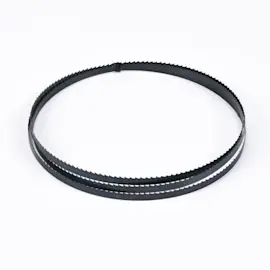
- Blade: The continuous loop that does the cutting.
- Drive wheel (lower wheel): Powered by the motor; moves the blade.
- Idler wheel (upper wheel): Guides the blade and helps maintain alignment.
- Tension control: Tightens the blade so it does not slip or wander.
- Tracking adjustment: Centers the blade on the wheels.
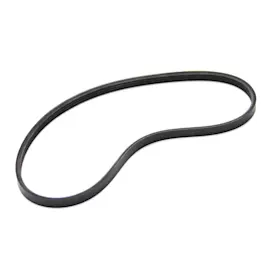
- Motor and drive system: Provides power (often through gears, belt, or direct drive depending on design).
- Frame/arm (housing): Holds the wheels in alignment and supports the tool.
Quick “where to look” guide
| Part | Typical location | What you notice when it is off |
|---|---|---|
| Blade | Around both wheels | Poor cut, drift, or broken blade |
| Tension control | Near the wheel housing | Blade slips or jumps off wheels |
| Tracking adjustment | Near upper wheel area | Blade rides to one side |
| Drive wheel/motor | Lower housing | Tool slows, stalls, or will not run |
Why it matters
Knowing these parts helps you troubleshoot common band saw problems like blade drift, repeated blade breakage, slow cutting, and unusual vibration. Most issues trace back to blade condition, tension, tracking, or wheel alignment.
Helpful related DIY reading
Last updated: February 2026
What is the 3-tooth rule for bandsaws?
The 3-tooth rule for band saws means your blade choice should keep at least three teeth in the cut at all times. On a Skil model 1010 2-speed portable band saw, this helps prevent tooth snagging, broken teeth, and rough cuts by matching blade TPI (teeth per inch) to the material thickness.
How to apply the 3-tooth rule (quick method)
- Measure the material thickness (the direction the blade travels through).
- Multiply thickness (in inches) by blade TPI.
- Aim for 3 to 6 teeth engaged for most cutting; never go below 3.
- Thin material needs higher TPI so enough teeth stay engaged.
- Thick material can use lower TPI for faster cutting and better chip clearing.
- If the blade chatters or grabs, go to a finer TPI.
- If the blade loads up with chips or overheats, go to a coarser TPI.
- Keep blade speed appropriate for the material (your 2-speed saw helps with this).
Common TPI guidance by material thickness
| Material thickness | Teeth in cut target | Typical blade choice (TPI) |
|---|---|---|
| 1/16 in (0.0625) | 3+ | 18 to 24 |
| 1/8 in (0.125) | 3 to 6 | 14 to 18 |
| 1/4 in (0.250) | 3 to 6 | 10 to 14 |
| 1/2 in (0.500) | 3 to 6 | 6 to 10 |
Why it matters
When fewer than three teeth contact the workpiece, each tooth takes too big a bite. That increases vibration, makes the cut wander, and can strip teeth, especially on thin-wall tubing, sheet metal, and small stock.
Related DIY help
- Use a meter and basic electrical checks if the saw bogs down or cuts inconsistently due to power issues: how to use a multimeter to test electrical parts video
Last updated: February 2026
What does a 10 bandsaw mean?
A “10-inch band saw” rating usually refers to the saw’s cutting capacity, not the blade length. In most cases, it means the saw can cut material up to about 10 inches wide (often called throat capacity), though the exact usable capacity can be slightly less depending on the design.
What “10-inch” typically measures
On most vertical band saws, the “10-inch” size is tied to the maximum width you can cut between the blade and the frame (the throat).
Common ways the size is described:
- Throat capacity: maximum width of a workpiece you can cut
- Resaw height: maximum height (thickness) you can cut vertically
- Wheel diameter: sometimes used informally, but less common for consumer sizing
What to expect on a portable band saw like Skil 1010
Your Skil model 1010 is a 2-speed portable band saw, and portable band saws are usually rated by:
- Maximum cut capacity (often rectangular and round/pipe)
- Blade size (length and width range)
- Motor power and speed settings
A “10-inch” label is more common on stationary woodworking band saws than on portable units, so if you saw “10” in a listing, confirm whether it refers to:
- the model number (1010),
- a 10-inch stationary saw class, or
- a capacity spec listed elsewhere.
Quick reference: common band saw size terms
| Term | What it means | Why it matters |
|---|---|---|
| 10-inch (size rating) | Usually throat capacity on vertical saws | Limits max width you can cut |
| Cut capacity | Max size you can cut (often listed as WxH or round) | Tells you what fits in the jaws/frame |
| Resaw height | Max vertical height under the guides | Limits thickness of boards |
Why it matters
Matching the “size” to your project prevents frustration and unsafe cuts. If the throat or cut capacity is too small, the saw can bind, wander, or force you to twist the workpiece.
Helpful next step
To make sure you are shopping for the right replacement items or confirming specs for Skil 1010, use our model number tips in how to find your appliance model number (and what it means for parts).
Last updated: February 2026