Owner’s manual
 View engine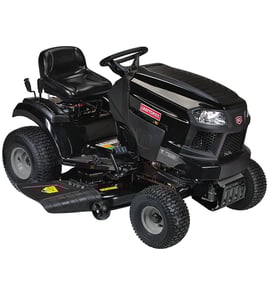

What model number is the Craftsman 917289073 riding mower?
The model number for this Craftsman riding mower is 917.28907 (often written without the dot as 91728907). For parts lookup and ordering, use the full Sears model format 917289073, which matches the model on this Craftsman front-engine lawn tractor page and in the owner's manual.
Where to find the model number on the tractor
We recommend confirming the model number on the tractor’s ID label before ordering parts.
- Check under the seat area or seat pan
- Look on the frame near the rear fender
- Check near the engine compartment or hood area
- Match the label to the manual cover format (917.28907)
Model number formats you may see (and what they mean)
These formats commonly refer to the same tractor family; the last digits can vary by revision or retail package.
| You see this | What it’s used for | Notes |
|---|---|---|
| 917.28907 | Operator’s manual identification | Dot format shown on the manual cover |
| 91728907 | Same as above, no dot | Common in searches and databases |
| 917289073 | Parts lookup on Sears PartsDirect | Use this to match diagrams and part lists |
Why it matters
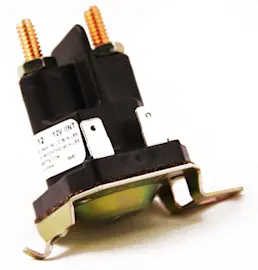
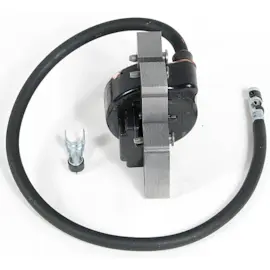
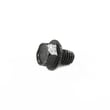
Using the correct model number helps ensure the right fit for parts tied to your exact deck and chassis configuration, such as a lawn tractor starter solenoid 582042802 or a lawn tractor ignition switch 532193350. Even small model-number differences can change wiring, belts, or mower deck components.
Last updated: February 2026
What engine does Craftsman riding mower use?
The Craftsman riding mower model 917289073 (917.28907 in the manual) uses a low-emission gasoline engine; this tractor is a 19.5 HP class, 42-inch mower configuration. For the exact engine make and model (such as Briggs & Stratton), check the engine ID label and confirm it in the owner's manual.
How to identify the exact engine on your 917289073
Use these quick checks to match the engine correctly before ordering tune-up or starting parts:
- Look for the engine model, type, and code stamped on the blower housing or printed on an engine label
- Record the full string exactly (letters and numbers)
- Compare the label info to the specifications section in the owner's manual
- If the label is dirty, wipe it clean; do not scrape off printed text
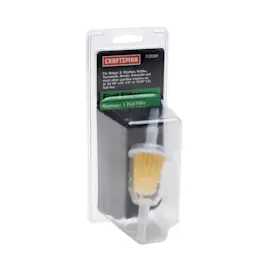
- Use the engine ID (not just horsepower) when shopping for filters, plugs, and carburetor parts
What we can confirm from the manual
The operator’s manual for this tractor describes the configuration and operating system details that align with the engine and safety controls.
| Item | What to expect on this model |
|---|---|
| Engine type | Low-emission gas engine |
| Power class | 19.5 HP class |
| Starting | Electric start |
| Mower deck | 42-inch cutting deck |
Why it matters
Craftsman tractors often share the same chassis and deck size across multiple engine suppliers and production runs. Using the engine’s model/type/code prevents ordering the wrong ignition, fuel, or tune-up parts and helps troubleshoot starting issues faster.
Related starting-system parts on this model
If you are diagnosing a no-start or click-no-crank condition, these model-matched parts are commonly involved:
For step-by-step help when the engine clicks but will not turn over, use riding lawn mower engine clicks but doesnt turn over video.
Last updated: February 2026
How much does it cost to replace a riding lawn mower engine?
For a Craftsman riding tractor like model 917289073, a full engine replacement typically runs about $800 to $2,500 installed (engine plus labor). The biggest cost drivers are engine type/horsepower, whether the replacement is a direct-fit, and the shop labor time.
What makes the price go up or down
- Engine cost: Most replacement riding mower engines fall roughly in the $500 to $1,800 range.
- Labor time: Many shops bill 4 to 8 hours for a riding mower engine swap.
- Extra parts: Belts, pulleys, wiring, fuel lines, or mounting hardware sometimes need replacement.
- Diagnosis first: A no-start can be battery, wiring, ignition, or solenoid related, not the engine.
- Availability: Direct-fit engines and correct crankshaft specs reduce labor and surprises.
Before you replace the engine, confirm it is really the problem
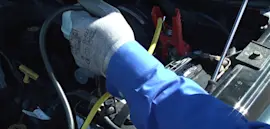
Our troubleshooting guidance for this tractor family points to common no-start causes like a weak battery, corroded terminals, loose wiring, or a bad solenoid or starter. Use the checks and safety steps in the owner's manual.
If the engine clicks but will not start, these are the first items to verify:
- Battery charge and cable tightness
- Battery terminal corrosion
- Wiring condition at the starter/solenoid
- Starter solenoid operation
- Starter motor condition
A common, lower-cost fix is replacing the solenoid; for this model, see the lawn tractor starter solenoid 582042802.
Typical cost breakdown (installed)
| Scenario | What you pay for | Typical total |
|---|---|---|
| Electrical no-start repair | Battery/terminals/wiring/solenoid | $50 to $400 |
| Engine replacement (basic) | Engine + 4 to 6 labor hours | $800 to $2,000 |
| Engine replacement (complex) | Engine + 6 to 8 labor hours + extras | $1,500 to $2,500 |
Why it matters
Replacing an engine is one of the highest-cost repairs on a riding mower. Spending a little time confirming the starting and safety-interlock circuits can prevent paying for an engine when the real issue is a solenoid, ignition switch, or wiring.
Last updated: February 2026
Is it worth replacing a lawn mower engine?
Yes, replacing the engine on your Craftsman 917289073 front-engine lawn tractor is worth it when the tractor’s deck, chassis, and drive system are still solid and the total engine-swap cost stays well below the cost of replacing the tractor. If the machine has widespread wear (deck rust-through, steering or transmission issues), put the money toward a replacement instead.
Quick decision checklist
- The mower deck is structurally sound (no cracks, severe rust, or bent hangers)
- The tractor still drives strongly (no slipping, loss of drive, or chronic belt issues)
- You can complete basic maintenance and safe lifting/handling for the swap
- You can still get key wear parts (blades, pulleys, belts, electrical parts)
- The engine failure is confirmed (not a battery, wiring, or solenoid problem)
Rule-of-thumb cost comparison
Use this table to make a fast, practical call.
| Situation | Engine replacement usually makes sense | Replacement tractor usually makes sense |
|---|---|---|
| Deck and chassis condition | Solid deck and frame | Deck damage, heavy corrosion, or multiple broken mounts |
| Starting problem type | Confirmed engine failure | Electrical no-start (battery, wiring, solenoid) |
| Total repair cost | Clearly under about half the cost of a comparable replacement | Near the cost of a replacement |
| Time and tools | You have time, tools, and space | You need it running immediately |
Before you blame the engine (common “no-start” causes)
Your manual’s troubleshooting chart points to several issues that can mimic a bad engine, especially when the engine clicks but will not start. Check these first:
- Battery charge and battery terminal corrosion
- Loose or damaged wiring
- Starter solenoid and starter function
If the tractor clicks and will not crank, a failed solenoid is a common fix; see lawn tractor starter solenoid 582042802.
Why it matters
An engine swap can restore reliability, but it does not fix underlying deck and drive wear. Confirming the real failure first prevents spending engine money on a tractor that still will not start or will not cut well.
Helpful references for this model
- Maintenance intervals, troubleshooting, and safety interlock behavior: owner's manual
Last updated: February 2026