Owner’s manual
 Error Codes



How many cubic feet is my Kenmore Elite refrigerator?
For Kenmore Elite model 10657783701, the exact cubic-foot capacity is listed on the model’s rating label and in the specifications section of the 10657783701 owner's manual. If you are comparing listings online, many Kenmore Elite refrigerators in this style are commonly advertised around the low- to mid-20 cu. ft. range.
We recommend confirming capacity from the appliance itself because “Kenmore Elite” covers multiple sizes.
- Check the model and serial tag inside the fresh food compartment (often on a side wall or ceiling area).
- Look for a line that says capacity or cu. ft.
- If the tag is hard to read, use the specs section in the 10657783701 owner's manual.
- If you are measuring for kitchen fit, use the overall dimensions from the manual rather than capacity.
Retail listings sometimes show a capacity for a similar-looking refrigerator, but not the exact model.
| Source | What it usually shows | Best for |
|---|---|---|
| Rating label inside the refrigerator | Exact capacity for your unit | Confirming true cu. ft. |
| Owner’s manual specifications | Exact capacity and key specs | Planning, documentation |
| Retail listings | Often a “family” or similar model | Rough comparisons only |
Capacity affects how much food you can store, but it also impacts airflow and temperature stability. Using the correct model-specific capacity helps when comparing replacement shelves, bins, and storage layout for Kenmore Elite 10657783701.
Last updated: January 2026
What is the disadvantage of a side-by-side fridge?
A key disadvantage of a side-by-side refrigerator like Kenmore Elite 10657783701 is reduced usable width in both compartments, which makes it harder to store wide items (pizza boxes, party trays, large platters). Many people also find fresh-food items less visible because shelves run narrower from left to right.
- Narrow shelves: Limits wide containers and large leftovers; use smaller bins and stackable containers.
- More bending for produce: Crispers sit low; keep everyday produce in the upper shelves.
- Freezer organization can get messy: Tall, narrow space hides items; use labeled baskets.
- Door storage can reduce interior space: Heavy door bins can crowd the main shelves.
- Door swing clearance matters: You may need extra side clearance to fully open doors and access drawers.
Our manual guidance for this style of refrigerator is to allow about 1/2 inch of space on each side and at the top for ventilation, and about 2 inches minimum on the hinge side when next to a fixed wall so the doors can swing open. If the unit has an ice maker, leave extra space behind for the water line. See the 10657783701 owner's manual.
| What you want to store | Side-by-side challenge | Practical workaround |
|---|---|---|
| Large platters, pizza boxes | Not enough shelf width | Use smaller trays or split into containers |
| Bulk frozen foods | Items get lost in tall narrow freezer | Add bins and label sections |
| Produce you grab daily | Crispers are low | Keep “daily use” produce at eye level |
Side-by-side designs trade wide shelf space for easy access to both fresh and frozen foods at standing height. Knowing the layout limits helps you plan storage, avoid overpacking, and keep airflow moving so temperatures stay consistent.
Last updated: January 2026
What is the average lifespan of a Kenmore Elite refrigerator?
A Kenmore Elite refrigerator typically lasts 10 to 15 years. With consistent care (good airflow, clean condenser coils, tight door seals, and stable temperatures), many units reach the high end of that range, including the Kenmore Elite 10657783701.
Most side-by-side refrigerators follow a similar life pattern: strong performance early on, then higher repair frequency as sealed-system and control components age.
- 0 to 5 years: Mostly minor issues (ice maker, dispenser, door alignment)
- 5 to 10 years: Wear items show up (fans, defrost parts, valves)
- 10 to 15 years: Higher chance of major repairs (sealed system, compressor, electronics)
- 15+ years: Possible with excellent maintenance, but repairs often become less cost-effective
We see lifespan swing by years based on a few controllable factors.
- Keep condenser area clean and unobstructed for proper heat removal
- Make sure doors close fully and gaskets seal all the way around
- Avoid overpacking so air can circulate through the freezer and fresh-food sections
- Use correct temperature settings (too cold can increase frost and run time)
- Address frost buildup early (often tied to defrost heater, thermostat, or airflow)
Use these as your baseline routine; the care and cleaning section in the 10657783701 owner's manual is a good reference.
- Vacuum and brush dust from the condenser area periodically
- Clean door gaskets with mild soap and water; dry completely
- Confirm the evaporator fan is running and vents are not blocked
- If ice production slows, inspect the ice maker and water supply
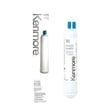
- After changing a water filter, flush the water system as directed in the manual
| Symptom | Often related to | Example part for this model |
|---|---|---|
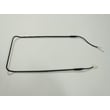
| Frost buildup, warm freezer | Defrost system | Refrigerator heater WP2323198 |
| No ice or irregular ice | Ice maker assembly | Refrigerator ice maker 2198597 |
| Warm temps, weak airflow | Evaporator fan motor | Refrigerator evaporator fan motor WP2315549 |
Knowing the typical 10 to 15 year lifespan helps you decide when routine maintenance is enough versus when a major repair (like a sealed-system issue) may justify replacing the refrigerator.
Last updated: January 2026