Installation guide
 Owner’s manual
 Error Codes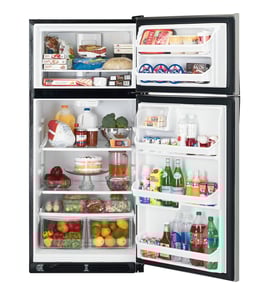



What is the upper part of a fridge called?
On the Frigidaire LFHT1817LBA top-mount refrigerator, the upper section is the freezer compartment. It is the colder compartment designed to keep foods frozen and, on some setups, it can also support an ice maker.
What you will typically find in the upper (freezer) compartment
- Freezer shelves or bins for frozen food storage
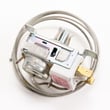
- A freezer temperature control setting (or shared control, depending on design)
- The freezer door gasket that seals cold air in
- Airflow outlets that move cold air to the fresh food section
- Optional ice maker components (if equipped and connected to water)
Freezer vs. fresh food section (quick comparison)
| Section | Typical purpose | Typical temperature |
|---|---|---|
| Freezer (upper) | Long-term frozen storage | About 0°F |
| Fresh food (lower) | Everyday refrigerated foods | About 37°F |
Why it matters
Knowing the upper section is the freezer helps when you are adjusting controls, checking door sealing, or troubleshooting cooling. For example, if the freezer door is not sealing or the cabinet is not level, temperatures can drift and frost or warm spots can develop.
Related setup checks that affect freezer performance
We recommend these basic checks during setup or after moving the refrigerator (they directly impact freezer sealing and cooling):
- Confirm the freezer door is level across the top
- Make sure the door seals completely to the cabinet on all sides
- Level the refrigerator side-to-side and tilt it slightly front-to-back so doors close freely
- Keep the toe grille installed and unblocked for proper airflow
- If an ice maker is installed, connect the water supply and recheck for leaks after 24 hours
For model-specific operating and setup details, use the LFHT1817LBA owner's manual.
Last updated: January 2026
How to fix a Frigidaire refrigerator door alignment?
On the Frigidaire LFHT1817LBA top-mount refrigerator, door alignment is usually corrected by leveling the cabinet first, then adjusting the hinges so the doors sit square and seal evenly. Most alignment issues come from the front rollers or leveling screws being out of adjustment.
Step 1: Level the refrigerator (most important)
Use the leveling method shown in the LFHT1817LBA installation guide. All four corners should rest firmly on the floor before you try to “move” the doors.
- Unplug the refrigerator or switch off power for safety.
- Remove the toe grille (kick plate) so you can access the front leveling points.
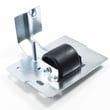
- Adjust the front rollers or front leveling screws until the cabinet is stable (no rocking).
- Recheck that the refrigerator is not leaning forward; a slight backward tilt helps doors close.
- If the hinge side is against a wall, leave extra clearance so the door can open fully.
Step 2: Align the doors at the hinges
If the cabinet is level but the doors still look uneven, the hinge positions can be corrected.
- Check the top hinge and center hinge for looseness.
- Support the door while loosening hinge screws slightly.
- Close the door to help “center” it in the opening, then tighten the hinge screws.
- Confirm the plastic washer is in place on the hinge pin if you have the door off.
Quick checks that confirm alignment is fixed
| What you see | What it usually means | What to do |
|---|---|---|
| Door swings open or won’t stay shut | Cabinet not level | Re-level front rollers/leveling screws |
| Door top corners don’t line up | Hinge position shifted | Re-seat and tighten top/center hinge |
| Warm spots or moisture near edge | Door not sealing evenly | Inspect gasket contact all around |
If the door still will not seal
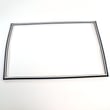
A torn, warped, or hardened gasket can mimic an alignment problem. If you have a white gasket, the correct replacement for this model is the Frigidaire refrigerator door gasket (white) 242193206.
Why it matters
Proper door alignment protects food by keeping temperatures stable, reduces frost buildup, and prevents the compressor from running longer than necessary.
Last updated: January 2026
What is the most common problem with a Frigidaire refrigerator?
Cooling problems are the most common issue we see with Frigidaire refrigerators like model LFHT1817LBA, usually showing up as warm fresh food, a freezer that is not cold enough, or temperatures that swing. Many “no cool” complaints trace back to airflow restrictions, dirty coils, or a failing evaporator fan.
Most common symptoms customers notice
- Refrigerator section is warm but freezer seems OK (or the reverse)
- Frost buildup on the freezer back wall
- Loud humming, rattling, or a fan noise that comes and goes
- Unit runs a lot, then still does not hold temperature
- Door does not seal tightly, moisture or condensation appears
Quick checks that solve many cooling complaints
Start with these basics from the LFHT1817LBA care and troubleshooting guidance in the LFHT1817LBA owner's manual.
- Confirm the plug is fully seated in the outlet
- Check the house fuse or reset the circuit breaker (the manual notes a 15-amp time-delay fuse)
- Make sure the temperature controls are not set to “0” (cooling is disabled even though power remains)
- Wait about 20 minutes if the refrigerator may be in a defrost cycle, then recheck cooling
- Allow 24 hours after any control change for temperatures to stabilize
Parts that commonly relate to “not cooling” symptoms
If the refrigerator is running but not moving cold air well, these model-related parts are often involved:
| Symptom | Common area to inspect | Example part for LFHT1817LBA |
|---|---|---|
| Warm refrigerator section, freezer cold | Freezer airflow and fan | Refrigerator evaporator motor 242077705 |
| Rattling or scraping fan noise | Fan blade hitting ice or shroud | Refrigerator evaporator fan blade 5308000010 |
| Heavy frost, poor cooling | Defrost system | Refrigerator defrost heater 242044008 |
Why it matters
Cooling issues can quickly lead to food spoilage and can also overwork the compressor. Catching airflow, defrost, or door-seal problems early helps the refrigerator cool more evenly and run more efficiently.
Related DIY help
Last updated: January 2026
Why is my Frigidaire top mount freezer not freezing?
If your Frigidaire LFHT1817LBA top-mount freezer isn’t freezing, the most common causes are incorrect temperature control settings (including being set to “0”), blocked air vents, or a failed evaporator fan that can’t circulate cold air. Start with control settings and airflow checks first using the LFHT1817LBA owner's manual.
Quick checks (fastest fixes first)
- Make sure the refrigerator/freezer control is not set to “0”; “0” stops the compressor and prevents cooling.
- Adjust temperatures gradually; move the knob in small increments and allow 24 hours for temperatures to stabilize.
- Confirm food packages are not blocking cold air vents; blocked vents stop airflow between compartments.
- Listen for the evaporator fan running in the freezer; if it’s silent, airflow and freezing performance drop.
- Check that doors close fully and aren’t held open by bins, drawers, or overpacked shelves.
What to check based on symptoms
| What you notice | Most likely issue | What we recommend |
|---|---|---|
| Freezer warm and fridge also warm | Control set wrong (including “0”) or compressor not running | Reset controls, wait 24 hours; verify power and outlet |
| Freezer warm but fridge cool | Airflow problem or evaporator fan issue | Clear vents; inspect fan area for ice buildup |
| Frost or ice buildup in freezer | Defrost system problem | Check for heavy frost; plan a defrost-system diagnosis |
| Door won’t seal well | Warm air leaking in | Inspect gasket for gaps, tears, or warping |
Parts that commonly relate to “not freezing”
If airflow is weak or temperatures swing, these parts are often involved:
- Refrigerator evaporator motor 242077705 (moves cold air through the freezer and into the fresh-food section)
- Refrigerator defrost heater 242044008 (helps clear frost from the evaporator so air can pass)
- Frigidaire refrigerator door gasket (black) 242193212 (prevents warm air leaks that reduce freezing)
Why it matters
A top-mount refrigerator like the LFHT1817LBA relies on a fan to circulate air and on clear vents to distribute cold temperatures. When airflow is blocked or the compressor is prevented from running (such as when the control is set to “0”), the freezer temperature rises quickly and food safety becomes a concern.
Last updated: January 2026