Owner’s manual
 Error Codes


What size is Kenmore refrigerator model 79573139410?
Kenmore Elite refrigerator model 79573139410 is a bottom-mount (bottom freezer) refrigerator; most units in this Kenmore 795 series size class are about 33 inches wide with roughly 22 to 23 cubic feet of total capacity. For the exact width, depth, height, and capacity for your unit, use the specifications section in the 79573139410 owner’s manual.
These are the most common measurements we see for 33-inch bottom-mount refrigerators like the Kenmore 795 series:
- Width: about 32 3/4 to 33 inches
- Height: about 67 to 70 inches (to top of hinge)
- Depth: about 30 to 34 inches (varies with handles)
- Capacity: about 22 to 23 cu. ft.
Use a tape measure and record all three dimensions so you can confirm fit through doorways and in the cabinet opening.
- Measure width at the widest point (usually the cabinet, not the doors)
- Measure height from floor to the top hinge cover
- Measure depth two ways: without handles and with handles
- Allow clearance for door swing and airflow behind and above the cabinet
| Measurement | What to include | Why it matters |
|---|---|---|
| Width | cabinet widest point | cabinet opening fit |
| Height | floor to top hinge | overhead clearance |
| Depth | with and without handles | walkway and counter alignment |
| Capacity | total cu. ft. | storage planning |
Getting the exact size for 79573139410 prevents installation surprises (tight cabinet openings, doors hitting walls) and helps when ordering parts like door bins or drawers that must match the cabinet style.
Last updated: January 2026
How do you level a Kenmore Elite refrigerator?
To level your Kenmore Elite refrigerator model 79573139410, adjust the front leveling legs until the cabinet is steady and the doors close on their own; the front should sit slightly higher than the rear to reduce vibration and improve door sealing. For the exact leg locations and access points, follow the steps in the 79573139410 owner's manual.
- Empty heavy items from the doors (this reduces shifting while you adjust).
- Place a level on the top front edge of the cabinet (left-to-right), then on a side edge (front-to-back).
- Turn the front leveling legs to raise or lower the front corners.
- Recheck the level after each adjustment.
- Confirm the doors self-close from a partially open position.
- The refrigerator does not rock when you push on the corners.
- Doors align evenly at the top and along the center gap.
- Doors close without needing a push.
- No new rattling or vibration starts after leveling.
- Shelves sit flat and items do not slide.
| Symptom | Most likely adjustment |
|---|---|
| Doors swing open or do not stay shut | Raise the front slightly (increase front-to-back tilt) |
| Cabinet rocks on the floor | Lower the high corner or raise the opposite front leg |
| Uneven door gap at the top | Fine-tune left vs. right front leveling legs |
| Vibration or buzzing on the floor | Re-level, then confirm the cabinet is firmly supported |
Proper leveling helps the door gaskets seal consistently, keeps the compressor and fans from vibrating against the cabinet, and prevents nuisance noises that can sound like a failing evaporator fan or condenser area rattle.
Last updated: January 2026
Why is my Kenmore Elite refrigerator leaking water out of the bottom?
Water leaking out of the bottom of your Kenmore Elite refrigerator model 79573139410 is most often caused by a clogged or frozen defrost drain. When the drain can’t carry meltwater to the drain pan, water backs up, refreezes, and eventually spills into the freezer floor or out the front.
- Frozen or clogged defrost drain (most common): ice blocks the drain trough and drain tube.
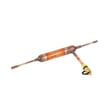
- Cracked or loose drain tube: water misses the drain pan and ends up on the floor (see refrigerator drain tube 5251JA3003D).
- Door left ajar or bad door seal: excess frost creates more meltwater than the drain can handle.
- Water filter or filter head leak: dripping can run down and look like a bottom leak.
- Ice maker or water line seepage: slow leaks can track to the lowest point.
- Unplug the refrigerator and protect the floor with towels.
- Remove the freezer drawer/bins to access the rear freezer panel.
- Melt ice in the drain trough using warm water (turkey baster) or a hair dryer on low.
- Flush the drain until water flows freely to the drain pan.
- Reassemble and restore power; confirm no water returns over the next 24 hours.
For panel removal details and exact access points on this model, use the 79573139410 manual.
Use this checklist:
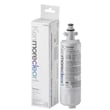
- Inspect the filter seating and O-rings; replace the filter if it won’t seal (see genuine Kenmore refrigerator water filter 9690 AGF80300801).
- Look for drips at the filter head and tubing connections.
- Check the inlet valve area for seepage (see lg refrigerator water inlet valve AJU72992601).
| Symptom | Most likely source | Best next step |
|---|---|---|
| Water under freezer, icy sheet on freezer floor | Defrost drain frozen/clogged | Thaw and flush drain |
| Water only after dispensing | Filter or filter head leak | Reseat/replace filter; inspect head |
| Slow puddle near back of unit | Inlet valve or supply line | Inspect fittings; replace valve if leaking |
Bottom leaks can lead to recurring ice buildup, poor cooling airflow, and floor damage. Clearing the drain and correcting any water-line seepage prevents repeat leaks and helps the defrost system work normally.
Last updated: January 2026
What are the common problems with Kenmore Elite refrigerators?
Common problems on the Kenmore Elite refrigerator model 79573139410 include weak or no cooling, ice maker or water dispenser issues, frost buildup from defrost or door-seal problems, and unusual noises from fans or the compressor. We use the symptoms to narrow the likely system (airflow, defrost, or sealed system) and fix the root cause.
- Not cooling or warm temperatures: dirty condenser coil, failed evaporator fan motor, or a control/defrost airflow issue.
- Frost or ice buildup (freezer back wall or vents): defrost system problem or door not sealing.
- Water leaking or puddles: clogged/iced drain path or a drain tube issue.
- No ice or slow ice production: water supply restriction, inlet valve problem, or ice maker fault.
- Clicking, buzzing, or rattling: fan blade hitting ice, failing compressor start components, or a failing compressor.
- Confirm temperatures: set refrigerator to about 37°F and freezer to about 0°F; allow 24 hours to stabilize.
- Check door sealing: close a dollar bill in the gasket; it should resist pulling out all around.
- Clean airflow areas: clear vents inside; vacuum dust from the condenser area if accessible.
- Listen for fans: evaporator fan noise usually comes from the freezer area; condenser fan noise comes from the rear/bottom.
- Inspect for ice blockage: heavy frost on the freezer back panel points to a defrost/airflow problem.
| Symptom | Common part involved | Example part for this model |
|---|---|---|
| Warm fridge, freezer OK or noisy airflow | Evaporator fan motor | Lg refrigerator evaporator fan motor 4681JB1027C |
| No water/ice, weak flow | Water inlet valve or filter path | Lg refrigerator water inlet valve AJU72992601 |
| Leaking water inside/freezer | Drain components | Refrigerator drain tube 5251JA3003D |
| No ice production | Ice maker assembly | Lg refrigerator ice maker AEQ72910412 |
Catching airflow, defrost, and water-supply problems early helps prevent food spoilage, recurring ice jams, and compressor overwork (which can turn a simple fan or drain fix into a major repair).
For model-specific operating details, diagnostics, and care steps, follow the 79573139410 manual.
Last updated: January 2026