
What size bar is a PRO?
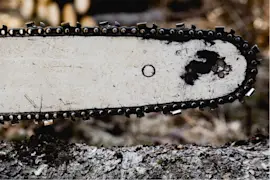
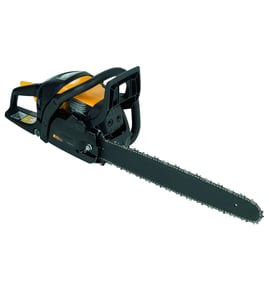
For the Mcculloch PRO chainsaw model PRO, the guide bar size depends on the exact PRO-SERIES variant and the matching chain pitch and gauge. Most homeowner gas chainsaws in this class commonly run a 14-inch to 18-inch bar; we recommend confirming the bar length stamped on your current bar before ordering.
How to confirm the correct bar size on your saw
- Look on the guide bar for a stamped length (often shown as 14 in., 16 in., or 18 in.).
- Check the chain specs printed on the bar (pitch, gauge, and drive link count).
- Measure the usable cutting length from the front of the saw body to the bar tip (not the full metal length).
- Verify the bar mount pattern matches your saw (stud spacing and tensioner hole location).
- Match the bar to the correct chain; bar length alone is not enough.
Bar length vs. chain specs (what must match)
A “PRO” chainsaw can accept different bars only when these specs match the sprocket and bar groove.
| Spec | What it affects | Where to find it |
|---|---|---|
| Bar length | Cutting reach and load on engine | Stamped on the bar |
| Chain pitch | Fit on drive sprocket | Bar stamp or chain package |
| Chain gauge | Fit in bar groove | Bar stamp or chain package |
| Drive links | Chain length for that bar | Bar stamp or chain package |
Why it matters
Using the wrong bar or mismatched chain pitch or gauge can cause poor cutting, thrown chains, overheating, and premature wear on the clutch, sprocket, and bar rails.
Next best step for PRO model PRO
Use our DIY resources to identify the right setup and common wear parts for your saw: chainsaw category landing page.
Last updated: February 2026
What happened to McCulloch chainsaws?
Mcculloch chainsaws did not disappear; the Mcculloch name continued after ownership changes, and the brand shifted from its original PRO-LEANING heritage to mostly consumer-focused outdoor power equipment sold under the Mcculloch label. For repair help and parts lookup by model, we use our chainsaw resources to keep older saws running.
What this means for your Mcculloch PRO chainsaw
Even when a brand changes hands, parts support usually becomes model-based, not brand-history-based. For the Mcculloch model number PRO, the most reliable approach is to identify the exact saw version (bar length, serial range, and engine family) and then match parts by diagram and description.
Common items that still drive most chainsaw repairs include:
- Carburetor and carburetor rebuild parts
- Fuel lines, fuel filter, and tank vent
- Spark plug and ignition module
- Air filter and impulse line
- Clutch, sprocket, and chain brake parts
- Bar, chain, and oiler components
Quick troubleshooting if you are fixing an older Mcculloch
Brand changes do not affect the basics of how a 2-cycle gas chainsaw runs. If your saw is hard to start or runs rough, focus on fuel delivery and air leaks first.
- Drain old fuel; refill with fresh, PROperly mixed 2-cycle fuel
- Check the fuel lines for cracking or softness
- Clean or replace the air filter
- Inspect the spark plug condition and gap
- Verify the chain brake is fully released before starting
Symptom-to-likely-cause guide
| Symptom | Most common cause | What to check first |
|---|---|---|
| Won’t start | Fuel issue | Fuel lines, filter, carb settings |
| Starts then dies | Lean condition | Air leak, clogged carb, tank vent |
| Runs rough | Dirty carb or air leak | Carburetor, intake boot, fuel quality |
| Leaks gas | Deteriorated lines | Fuel line routing, grommet, tank |
Why it matters
Mcculloch ownership history is interesting, but it does not change the repair path. Correctly identifying the exact configuration of your saw prevents ordering the wrong carburetor, fuel line kit, or ignition parts.
For step-by-step DIY help, use our chainsaw repair guide landing page to narrow the fix by symptom and repair type.
Last updated: February 2026
How old is a McCulloch PRO?
A Mcculloch chainsaw labeled “PRO” is not a single dated model; it is a model family/series name used across multiple PROduction years. For the Mcculloch PRO model number PRO, the most reliable way to date it is by matching the full model tag details and any serial/date code to the correct parts breakdown.
How to identify the exact age (what to check)
Use the information on the saw’s ID tag so we can narrow it to a specific PROduction run:
- Complete model string (for example, PRO MAC 310 600042-07, not just “PRO”)
- Type/serial number stamped or printed on the tag
- Any date code (often a short numeric code near the serial)
- Engine tag details (sometimes separate from the chassis tag)
- Carburetor and ignition module markings (helpful when tags are worn)
Quick dating guide: what “PRO” usually means
“PRO” typically indicates a PROfessional-grade Mcculloch saw line, not a specific year. Many older PRO MAC series saws were PROduced in the 1970s through 1990s era, and the exact age depends on the suffix and serial range.
| What you have | What it tells us | What to do next |
|---|---|---|
| Only “PRO” | Series name only | Use the full model tag and suffix |
| “600042-07” style suffix | Revision/version identifier | Match it to the correct illustrated parts list |
| Serial/date code present | Best clue to build period | Decode the date code and confirm with parts |
Why it matters
Getting the year range right helps you order the correct carburetor kit, fuel lines, ignition parts, bar, and chain. Small revisions (like a “-07” suffix) can change fuel system routing and mounting patterns, which affects fit.
Next best step
Use our DIY resources to narrow symptoms and confirm which assemblies match your saw:
- Chainsaw category landing page
- Chainsaw common questions
- What are the most common replacement parts for chainsaws
Last updated: February 2026
Are McCulloch chainsaws good quality?
Mcculloch chainsaws are generally considered solid, homeowner-friendly saws when they’re maintained correctly: they’re built to deliver dependable cutting power, reasonable durability, and comfortable handling for typical yard and firewood work. For your Mcculloch PRO chainsaw, overall “quality” comes down to condition, tune, and routine wear parts.
What “good quality” means for a chainsaw
A chainsaw can feel high-quality when it starts easily, idles smoothly, accelerates without bogging, and oils the bar and chain consistently. The biggest drivers are fuel system health, ignition condition, and cutting setup.
Common signs your saw is in good shape
- Starts within a few pulls when cold (with choke used correctly)
- Idles without the chain creeping
- Revving is crisp (no hesitation or surging)
- Bar oil is visibly flinging off the tip at speed
- Cuts straight with minimal vibration
Quick quality check you can do in 5 minutes
- Chain and bar: Confirm the chain is sharp and PROperly tensioned.
- Oiling: With the bar pointed at clean cardboard, run at half throttle; you should see an oil line.
- Air filter: A dirty filter makes any saw feel weak and “low quality.”
- Fuel: Fresh, PROperly mixed fuel (and a clean fuel filter) prevents hard starting and rough running.
- Spark plug: Check for heavy carbon or a wet plug that points to fuel or ignition issues.
Common issues vs. what they usually point to
| Symptom | Most common cause | Typical fix |
|---|---|---|
| Won’t start | Old fuel, fouled plug, clogged carb | Refresh fuel, service plug, carb clean/rebuild |
| Runs rough | Dirty carb, air leak, clogged filter | Clean carb, inspect fuel lines, replace filter |
| Leaking gas | Cracked fuel line, loose grommet | Replace fuel lines and seals |
| Poor cutting | Dull chain, wrong depth gauges | Sharpen and set rakers |
Why it matters
A well-tuned Mcculloch can cut smoothly and safely; a neglected saw can feel underpowered, vibrate more, and increase kickback risk. Keeping the chain sharp and the fuel system clean does more for “quality” than any brand label.
For step-by-step help, we recommend our DIY resources like chainsaw care and troubleshooting tips and tips for a hard to start chainsaw.
Last updated: February 2026
How many cc's is a McCulloch PRO?
For the Mcculloch PRO MAC 310 chainsaw (model PRO, type 600042-07), the engine displacement is about 35 cc (approximately 34.4 cc). That number is the key spec to use when comparing performance, tuning, and matching engine-related parts.
What “cc” means on your Mcculloch chainsaw
Engine displacement (cc) is the cylinder volume. It helps you match the saw to the job and avoid mix-ups when similar Mcculloch names exist.
- Higher cc typically supports longer bars and heavier cutting
- Lower cc is lighter and better for limbing and smaller firewood
- cc is not the same as bar length; bars can be swapped
- cc helps narrow down carburetor and fuel-system configurations
Quick reference
| Model identification | Displacement |
|---|---|
| Mcculloch PRO MAC 310 (600042-07) | ~35 cc (34.4 cc) |
Why it matters
Using the correct displacement helps you choose compatible fuel-system and ignition components and prevents ordering the wrong parts for a different “PRO Mac” series saw.
If your saw is hard to start or runs poorly, use tips for a hard to start chainsaw for step-by-step checks before making carburetor adjustments.
Last updated: February 2026