Installation guide
 Owner’s manual


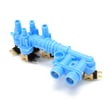
Are Whirlpool washer parts interchangeable?
Whirlpool washer parts are not universally interchangeable; for Whirlpool model WTW8100BW0, we recommend using factory-specified parts designed for that exact model so the fit, electrical connections, and cycle performance stay correct (and to avoid repeat failures). See the WTW8100BW0 owner's manual for model-specific part and service guidance.
Some Whirlpool parts look similar across models, but compatibility depends on the washer’s design (top-load vs. front-load), control system, wiring harness, and mounting points.
Common reasons a “close match” part still fails:
- Different connectors or wire pin-outs (lid lock, sensors)
- Different calibration or resistance values (motor stator, position sensor)
- Different shaft or spline design (hub, washplate)
- Different hose diameters or routing (pressure switch hose, drain hose)
- Different software expectations from the control board
Use the model number WTW8100BW0 when selecting parts and compare the exact identifiers.
Checklist we use:
- Match the model number on the parts list to WTW8100BW0
- Match the part ID on the listing (not just the description)
- Confirm the part’s location and mounting style in the manual diagrams
- If it’s electrical, confirm the connector style and wire count
| Part type | Example for this model | What it affects |
|---|---|---|
| Lid safety system | Washer lid lock WPW10619844 | Won’t start, stops mid-cycle, lid won’t lock |
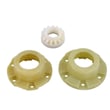
| Drive interface | Hub W10820039 | Agitation/spin issues, slipping, grinding |
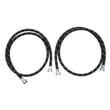
| Water level sensing | Hose WP353244 | Overfill/underfill, pressure sensing problems |
Using the correct Whirlpool factory-specified replacement part helps the washer “fit right and work right,” reduces installation headaches, and prevents symptoms like no-start, no-spin, leaks, or error codes caused by mismatched components.
Last updated: February 2026
What is the capacity of WTW8100BW0?
The Whirlpool washer model WTW8100BW0 has a 4.5 cu. ft. wash basket capacity, which is sized for larger loads such as bedding and multiple baskets of everyday laundry. For cycle-by-cycle load guidance, use the WTW8100BW0 owner's manual.
A 4.5 cu. ft. top-load washer is built for fewer loads per week and better handling of bulky items.
- King or queen comforter (material and fill level matter)
- Mixed family load (towels, jeans, shirts) without overpacking
- Larger items like blankets and small rugs (washer-safe only)
- Better turnover for high-volume laundry days
Overloading reduces cleaning and can cause off-balance spinning.
- Load items loosely; do not pack them down
- Keep the top of the load below the tub ring area
- Mix large and small items to balance the basket
- Use the correct cycle for bulky items (Bulky/Sheets when available)
- If the washer bangs or walks, reduce the load and re-distribute
| Capacity | Best for | What to avoid |
|---|---|---|
| 4.5 cu. ft. | Comforters, towels, larger mixed loads | Packing items tightly, single heavy items alone |
Capacity affects cleaning results, spin balance, and wear on key drive components. Consistently overloading can contribute to vibration and strain on suspension and drive parts over time.
Last updated: February 2026
What is the life expectancy of a whirlpool washing machine?
A Whirlpool washer like model WTW8100BW0 typically lasts 10 to 14 years with normal household use. Consistent maintenance, correct HE detergent use, and avoiding chronic overloading are the biggest factors that help this high-efficiency top-load washer reach the upper end of that range.
- Load size and balance: Overloading and repeated off-balance loads strain the suspension and drive system.
- Detergent choice: Use HE detergent and avoid oversudsing, which can cause pauses and poor draining.
- Water quality and hose care: Sediment can clog inlet screens; aging hoses can leak.
- Drain performance: Slow draining makes the pump work harder and can leave loads wet.
- Electrical supply: A stable, grounded outlet helps prevent control and motor issues.
Use these as a simple routine for WTW8100BW0:
- Follow the cleaning and care steps in the WTW8100BW0 use and care guide.
- Check inlet hoses for kinks and periodically clean inlet valve screens.
- Keep loads loosely packed; bulky items should be balanced with similar items.
- Run the appropriate cycle and spin speed for the fabric type.
- Address “won’t drain/spin” symptoms early to reduce wear on the pump and drive.
| Symptom | Likely wear area | What it can lead to |
|---|---|---|
| Excess vibration or banging | Suspension | Faster tub and bearing wear |
| Won’t start or stops mid-cycle | Lid lock system | More failed cycles, more stress on components |
| Poor agitation or slipping | Drive hub | Reduced cleaning, added drivetrain wear |
| Slow drain or wet loads | Drain pump | Overheating, repeated cycle failures |
If you are already seeing these symptoms, checking parts like the washer lid lock WPW10619844 or hub W10820039 can be a practical first step.
Washer lifespan is mostly about reducing repeated stress events (overloads, oversudsing, off-balance spinning, restricted water flow). Preventing those issues helps the motor, pump, and suspension last longer and keeps performance consistent.
Last updated: February 2026
What problems are common with the WTW8100BW0?
Common Whirlpool WTW8100BW0 washer problems include vibration or “walking” during spin, not filling or stopping mid-cycle, not draining or leaving loads wet, and dispenser issues (products dispensing too soon or not dissolving). Most of these trace back to load balance, leveling, water supply, drain setup, or suds from non-HE detergent.
- Vibration, rocking, or walking: washer not level, feet not locked, or an unbalanced load.
- Won’t run: lid not fully closed or the washer is paused in a normal cycle phase.
- Won’t fill or fills slowly: water faucets off, kinked inlet hoses, or clogged inlet screens.
- Not draining or not spinning (clothes still wet): drain hose installed incorrectly, hose too far into the standpipe, clogs, or excess suds.
- Dispenser problems: overfilled dispenser, wrong options selected, or low water pressure leaving residue.
Use the troubleshooting section in the WTW8100BW0 owner’s manual to match your symptom to the right checks.
- Confirm both water faucets are fully on.
- Inspect inlet hoses for kinks and clean inlet valve screens.
- Re-load items in loose heaps evenly around the washplate (not piled in the center).
- Verify the washer is level and the feet are firmly on the floor.
- Use HE detergent only and measure carefully; too many suds can stop draining/spinning.
| Symptom | Part to consider | What it affects |
|---|---|---|
| Won’t start, stops with lid open message | Washer lid lock WPW10619844 | Confirms lid is locked so the cycle can run |
| Walking, banging, off-balance spins | Suspension W10247710 | Helps stabilize the tub during spin |
| Won’t drain or drains poorly | Washer drain pump WPW10409079 | Moves water out during drain/spin |
Catching these issues early helps prevent repeat cycle interruptions, overly wet loads, and excessive vibration that can stress the tub, drive components, and hoses. Correct leveling, proper drain hose setup, and HE detergent use solve a large share of “common problems” without major repairs.
Last updated: February 2026