Owner’s manual
 Error Codes


Where to find model number on Kenmore Elite refrigerator?
On Kenmore Elite model 79571032110, the model and serial number are printed on an identification label located on the interior liner of the refrigerator compartment. Use the 79571032110 owner's manual to confirm the exact label location and what information to record.
Where to look first (fastest checks)
- Open the fresh food (refrigerator) doors and look along the inside walls (the interior liner)
- Check the side wall near the crisper drawers and lower bins
- Look near the top side walls where shelves mount into the liner
- Use a flashlight; the label is often small and easy to miss
What the label typically includes
| Item on label | Why you need it |
|---|---|
| Model number | Ensures you order parts that fit 79571032110 |
| Serial number | Helps match production version and service info |
| Electrical ratings | Useful for troubleshooting and safe servicing |
Tips for reading and using the model number
- Write the model number exactly as shown (all digits, no spaces)
- Take a clear photo before ordering parts or starting a repair
- If the label is smudged, wipe gently with a damp cloth and dry it
Why it matters
Kenmore Elite refrigerators can look similar across multiple model series. Using the exact model number (79571032110) prevents ordering the wrong items such as a door switch, water inlet valve, or evaporator fan motor.
Last updated: February 2026
What is the average lifespan of a Kenmore Elite refrigerator?
Most Kenmore Elite refrigerators, including model 79571032110, typically last 10 to 15 years with normal household use and basic maintenance (cleaning coils, keeping doors sealing, and addressing cooling or water issues early).
What affects lifespan the most
- Condenser cleanliness: Dusty coils make the compressor work harder.
- Door seal condition: Air leaks cause longer run times and temperature swings.
- Fan and airflow health: A noisy or weak evaporator fan can lead to warm temps and frost issues.
- Water system upkeep: Clogged filters or a failing inlet valve can stress the dispenser and ice maker.
- Temperature settings and loading: Overpacking blocks vents and reduces airflow.
Maintenance checklist (best return for the effort)
Use the schedule and care steps in the owner's manual as your baseline.
- Vacuum and brush the condenser area regularly (more often with pets).
- Keep door gaskets clean and check for gaps or torn sections.
- Confirm the refrigerator stays near 37°F and the freezer near 0°F.
- Clear and organize items so interior vents are not blocked.
- Fix water leaks and puddles quickly to prevent icing and drain problems.
Common “wear items” vs. major repairs
| Category | Examples on this model | Why it matters |
|---|---|---|
| Wear/adjustment items | Door alignment, bins, switches | Small issues can cause warm temps or lights staying on |
| Cooling airflow parts | Evaporator fan motor | Poor airflow shortens compressor life |
| Water and ice parts | Water inlet valve, ice maker components | Prevents leaks, slow fill, and ice production problems |
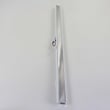
If you are troubleshooting door-related symptoms (lights not turning off, beeping, or inconsistent cooling), the refrigerator door switch 6600JB1010A is a common part to check first.
Why it matters
A refrigerator that runs longer than it should (from dirty coils, air leaks, or restricted airflow) puts extra load on the sealed system and compressor. Keeping airflow and seals in good shape is the most reliable way to reach the 10 to 15 year lifespan range.
Last updated: February 2026
How many cubic feet is my Kenmore refrigerator by model number?
Your Kenmore Elite refrigerator model 79571032110 has its exact cubic-foot capacity listed on the model and serial (rating) label and in the specifications section of the 79571032110 owner's manual. That is the most accurate way to match capacity to your exact configuration.
Where to find the cubic-foot capacity
Check these spots in this order:
- Rating label inside the refrigerator (typically on a side wall near the crisper area or upper compartment wall)
- Specifications section in the manual (often near “Parts and features” or product specs)
- Product packaging or purchase paperwork (if you still have it)
- Model family clues (helpful for narrowing down, but not a substitute for the rating label)
Quick steps to confirm it on the appliance
- Open the fresh food (refrigerator) compartment.
- Look along the side walls and around the crisper cover area for a sticker with model and serial information.
- On that label, find the line that lists capacity (often shown as “cu. ft.”).
Why the rating label matters
Kenmore model numbers can cover multiple variations (features, door style, ice maker setup). The rating label ties the cubic-foot capacity to your exact unit, so you get the right specs for storage planning, replacement shelves/bins, and airflow clearance.
Capacity lookup options (what works best)
| Method | Accuracy | Best for |
|---|---|---|
| Rating label inside the fridge | Highest | Exact cubic feet for your unit |
| 79571032110 owner's manual | High | Specs and feature confirmation |
| Online model lookups | Medium | General estimates and comparisons |
Related tip for this model
If you are checking capacity because the refrigerator is not cooling or seems “packed,” confirm the door is closing fully and the interior light turns off. A failed door switch can affect operation and temperature stability; the refrigerator door switch 6600JB1010A is a common related part for door and light issues.
Last updated: February 2026
What are the common problems with Kenmore Elite refrigerators?
Common problems on the Kenmore Elite 79571032110 bottom-mount refrigerator include warm temperatures (cooling loss), water leaks, ice maker or dispenser issues, and door sealing or alignment problems. Most fixes start with airflow and defrost checks, cleaning, and inspecting a few high-failure parts listed for this model in the parts breakdown.
Most common symptoms and what usually causes them
- Not cooling or weak cooling: dirty condenser area, evaporator airflow problem, frost buildup from a defrost issue
- Noisy operation: evaporator fan motor wear or ice contacting the fan
- Water under the refrigerator: clogged or misrouted drain system, cracked drain tube
- Ice maker or dispenser not working: dispenser motor issue, ice chute door not sealing, water supply or valve problem
- Interior light or door alarm issues: door switch not closing consistently
Model-relevant parts that often solve these problems
If your symptoms match, these parts are commonly involved on model 79571032110:
| Symptom | Part to check | What it affects |
|---|---|---|
| Light stays off or won’t turn off, door alarm acts up | Refrigerator door switch 6600JB1010A | Detects door open/closed |
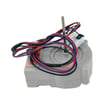
| Warm fridge, poor airflow, fan noise | Lg refrigerator evaporator fan motor 4681JB1027C | Circulates cold air through compartments |
| Puddles or water collecting | Refrigerator drain tube 5251JA3003D | Routes defrost water to the drain pan |
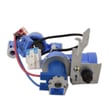
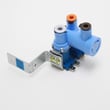
| No water to ice maker/dispenser | Lg refrigerator water inlet valve AJU72992601 | Opens to supply water to the unit |
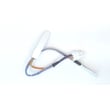
| Frost buildup, temperature swings | Refrigerator defrost sensor assembly 6615JB2005N | Helps control defrost operation |
Quick checks we recommend before replacing parts
- Confirm the temperature settings and allow 24 hours after changes
- Make sure air vents inside the refrigerator are not blocked by food packages
- Clean dust from the condenser area and ensure good airflow around the cabinet
- Check door closing and gasket contact all the way around
- If you see heavy frost on the rear freezer panel, suspect a defrost or airflow issue
Why it matters
Cooling, ice making, and leak problems often share the same root causes: restricted airflow, a drain path that cannot carry defrost water away, or a control/feedback component (like a defrost sensor) that is not reading correctly. Addressing the cause prevents repeat failures and food temperature issues.
Helpful model-family troubleshooting
For display codes and symptom-based troubleshooting that commonly applies to Kenmore 795 bottom-freezer designs, use Kenmore 795 model bottom freezer refrigerator error codes. For model-specific operating and care details (including troubleshooting sections), use the owner's manual.
Last updated: February 2026
Why is my Kenmore Elite refrigerator leaking from the bottom?
Water leaking from the bottom of your Kenmore Elite refrigerator model 79571032110 is typically caused by a clogged or frozen defrost drain that overflows into the base, or a water supply leak feeding the ice maker or dispenser. Use the 79571032110 owner's manual for safe access and panel removal.
Quick checks to pinpoint the source
- Look for water under the crisper drawers (often defrost drain overflow).
- Check for a sheet of ice on the freezer floor (drain frozen or blocked).
- Inspect the water line connection at the back of the refrigerator.
- Watch for leaking only during ice maker fill or water dispensing.
- Confirm doors close and seal fully to reduce excess frost and defrost water.
Most common cause: defrost drain problem
During defrost, meltwater should flow through the drain to the drain pan. If the drain is blocked by ice or debris, water backs up and can leak out at the bottom.
What we recommend
- Unplug the refrigerator.
- Remove freezer bins and access the rear freezer panel.
- Thaw ice around the drain using warm air (no sharp tools).
- Flush the drain with hot water until it runs freely.
- If the tube is split or won’t clear, replace the refrigerator drain tube 5251JA3003D.
Water supply leaks (ice maker or dispenser)
If leaking happens only when the unit calls for water, focus on fittings and the inlet valve.
| Leak pattern | Most likely cause | First action |
|---|---|---|
| Only during dispensing | Loose/cracked tubing | Inspect tubing and connections |
| Random dripping, even unused | Inlet valve seepage | Check valve and fittings |
If the valve is leaking or not shutting off, replace the lg refrigerator water inlet valve AJU72992601.
Why it matters
Bottom leaks can damage flooring and also signal a drainage issue that can create ice buildup and unstable temperatures. Fixing the drain path or water supply leak early prevents repeat puddles.
Last updated: February 2026