Owner’s manual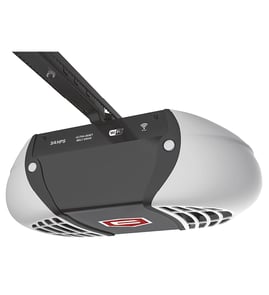


How do I know what model my garage door opener is?
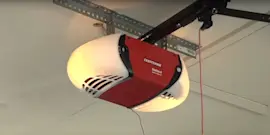
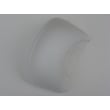
For your Craftsman garage door opener, the model number is printed on a label on the motor unit under a light lens. On many units, you can find it under the front light lens, or under the left light lens when you are facing the opener.
Check these common label locations on the motor head (the unit mounted to the ceiling):
- Under the front light lens
- Under the left light lens (when facing the garage door opener)
- On the side opposite the antenna
- On the motor unit housing near the learn button area (often close to the wiring terminals)
If you remove a light lens, restore it securely before operating the door.
Most Craftsman openers list several identifiers. Use the model number for parts and manual lookups.
| Label item | What it’s used for | Example you might see |
|---|---|---|
| Model number | Finding the correct manual and parts | 13953915DM |
| Serial number | Identifying production run | Varies |
| Electrical rating | Verifying power requirements | Varies |
Using the exact model number helps us match the right documentation and troubleshooting steps for your opener’s features (for example, Security+ remote programming, safety reversing sensors, and wall control behavior).
Once you find the model number, use the 13953915DM owner's manual to confirm programming steps and operating features. If you’re troubleshooting flashing lights or diagnostic patterns, use Craftsman error codes to narrow down the cause.
Last updated: February 2026
Can you get a universal remote for an old garage door opener?
Yes. For a Craftsman garage door opener like model 13953915DM, you can typically use a compatible “universal” remote as long as it supports the opener’s radio type and frequency. This model’s manual describes Security+ 315 MHz remotes and shows how to program them using the Learn button. See the owner's manual for the exact programming steps.
A universal remote works when it matches the opener’s frequency and coding type (rolling code vs fixed code). For 13953915DM, the manual references Security+ rolling code operation and 315 MHz remotes.
- Check the opener’s Learn button area on the motor unit (often color-coded) and any label showing frequency.
- Choose a universal remote that explicitly supports Security+ and 315 MHz.
- If you have multiple doors, confirm the remote can store multiple opener profiles.
- Avoid fixed-code-only remotes; they often will not pair correctly with rolling-code openers.
- If you also want keypad entry, look for a compatible keyless entry accessory (programmed through Learn mode).
Most compatible remotes pair in under a minute.
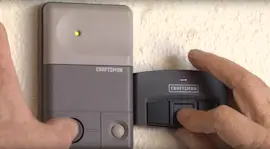
- Press and release the Learn button on the motor unit (the indicator light stays on briefly).
- Within the pairing window, press and hold the button on the remote you want to use.
- When the opener lights blink (or you hear clicks), the remote is learned.
If you’re replacing lost remotes, erase old codes first, then reprogram only the remotes you want.
| What to match | What to look for | Why it matters |
|---|---|---|
| Frequency | 315 MHz support | The remote must transmit on the same band |
| Code type | Security+ rolling code | Prevents code copying and enables pairing |
| Capacity | Multi-button or multi-opener | Lets one remote run more than one door |
Using the right remote keeps your Craftsman opener reliable and secure, and it helps prevent “won’t program” issues that are really compatibility problems. If the door won’t close and the opener lights flash, also check the safety reversing sensors and alignment described in the owner's manual.
For troubleshooting flashing lights or diagnostic patterns, use Craftsman error codes.
Last updated: February 2026
What are the common problems with Craftsman garage door openers?
Common problems on the Craftsman 13953915DM garage door opener include safety reversing sensor issues (misalignment or obstruction that prevents closing and makes the opener lights flash), remote or wall control problems (lock mode, programming, battery), and drive or motor wear that causes grinding, slipping, or no movement. See the troubleshooting and safety tests in the 13953915DM owner's manual.
- Door will not close; opener lights flash: safety reversing sensors are blocked, misaligned, or not connected.
- Remote will not activate the door: lock mode is on, remote needs reprogramming, or the remote battery is weak.
- Door reverses unexpectedly or stops: force or travel settings need adjustment, or the door is binding.
- Grinding noise or motor runs but door does not move: worn drive components (common on chain drive units).
- Intermittent operation: wiring connections at the terminal block or control wiring can be loose.
- Clear the door path and make sure the door moves freely by hand (with the opener disconnected).
- Inspect the safety sensors: confirm both indicator lights are on and the lenses are clean.
- Check wall control lock mode (some consoles blink when locked); turn lock mode off.
- Reprogram the remote/keypad using the programming steps in the manual.
- Watch the diagnostic LED flashes on the motor unit and match them to the diagnostic chart.
The manual calls out two key monthly checks:
| Test | What you do | Pass result |
|---|---|---|
| Safety reversal test | Close the door onto a 1-1/2 in. (3.8 cm) object (or a 2x4 laid flat) | Door reverses on contact |
| Protector System test | Block the sensor beam and try to close with the remote | Door stops quickly; lights flash |
Most “won’t close” complaints on Craftsman openers trace back to the safety reversing sensors. Fixing alignment and obstructions first saves time and helps keep the door’s safety reversal system working as designed.
For code-based troubleshooting, we also use the Craftsman error codes guide to interpret diagnostic flashes.
Last updated: February 2026
Is it worth repairing a 20 year old garage door opener?
Replacing a 20-year-old Craftsman garage door opener is usually the better long-term choice because garage door openers last 10 to 15 years. Repair is worth it only when the fix is small and the opener still passes the required safety reversal and sensor checks.
Repair your Craftsman 13953915DM when the issue is minor and the door system is operating safely.
- Travel or force needs a simple adjustment
- Remote or keypad needs reprogramming
- Door is properly balanced and moves smoothly by hand
- Safety sensors are aligned and the door closes consistently
- Safety reversal test passes after any adjustment
Use the step-by-step procedures in the 13953915DM owner's manual.
Replacement is the smarter choice when the opener has core failures or cannot operate safely and consistently.
- Door will not reliably open or close
- Motor runs or hums but the door does not move (common drive/gear symptom)
- Opener reverses unexpectedly or will not reverse when it should
- Safety sensor lights blink or closing is intermittent
- Problems keep returning after adjustments
For troubleshooting patterns, compare symptoms to Craftsman error codes.
The manual requires testing after adjustments and monthly safety reversal testing using a 1-1/2 inch object (or a 2x4 laid flat).
- Disconnect power before removing covers
- Test safety reversal after any force or travel adjustment
- Test safety reversal monthly
- Confirm the door is balanced (an unbalanced door may not reverse)
| Factor | Repair (20-year-old opener) | Replace |
|---|---|---|
| Cost | Lower for small fixes | Higher upfront |
| Reliability | Often declines with age | Typically higher |
| Safety compliance | Must pass every time | Easier to maintain |
| Features | Limited | Newer security and convenience |
A garage door opener is a safety device. If an older unit cannot consistently pass the safety reversal and sensor checks, replacement reduces injury risk and nuisance breakdowns.
Last updated: February 2026
Why is my garage door not responding to remotes and/or keypad?
On your Craftsman 13953915DM garage door opener, this usually happens when Lock mode is turned on at the wall control, the remote/keypad needs to be reprogrammed using the Learn button, or the safety reversing sensors are misaligned or blocked (the opener can refuse to close from a remote when the sensor beam is interrupted). Use the 13953915DM owner's manual for the exact programming and diagnostic steps.
- Confirm the opener has power; the opener lights should respond when you press the wall control.
- Try the wall button: if it works but remotes do not, focus on Lock mode and programming.
- Replace batteries in the remote and keypad.
- Verify the opener antenna wire is hanging down and not damaged.
- Check safety reversing sensors at the bottom of the door tracks; clear obstructions and align until both indicator lights are on.
- Check the motor unit diagnostic LED for flash codes and match them to the chart in the manual.
- Press and release Learn on the motor unit (indicator stays on about 30 seconds).
- Within 30 seconds, press and hold the remote button you want to use.
- Release when the motor unit lights blink (or you hear clicks if bulbs are not installed).
| Symptom | Likely cause | What to do |
|---|---|---|
| Won’t close from remote/keypad | Sensor beam blocked or sensors misaligned | Clear obstruction; realign sensors; confirm indicator lights |
| Opener lights flash on close attempt | Safety system preventing close | Fix sensors; then retest |
| Wall control closes only while held | Sensors not seeing each other | Align sensors; secure brackets/wiring |
On the 13953915DM, the safety reversal system can intentionally block remote/keypad closing when sensors are misaligned. Fixing sensor alignment first prevents repeated “no response” and flashing-light symptoms.
Last updated: February 2026