Installation guide
 Owner’s manual
 Error Codes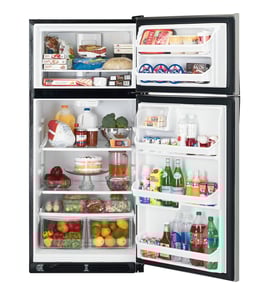


What is the upper part of a fridge called?
On the Kenmore 25378972801 top-mount refrigerator, the upper section is the freezer compartment. It’s the coldest area of the appliance and is designed to keep foods frozen solid and store frozen items long-term; some models also support an automatic ice maker.
What you’ll find in the upper (freezer) compartment
- Freezer shelves or door bins for frozen food storage
- Cold air circulation from the evaporator system (you may hear the evaporator fan)
- Space intended for proper airflow between packages (overloading slows freezing)
- On some setups, an automatic ice maker and ice bin
Freezer vs. refrigerator section (quick comparison)
| Section | Typical temperature range | Main purpose | Common issues when overloaded |
|---|---|---|---|
| Freezer (upper) | 0°F to 5°F | Freeze and store frozen foods | Slow freezing, warmer temps, frost buildup |
| Fresh food (lower) | 34°F to 40°F | Keep foods cold (not frozen) | Warm spots, blocked vents, spoilage |
Tips for using the freezer effectively
- Leave space between packages so cold air can circulate freely.
- Avoid putting too much warm food in at once; it raises freezer temperature and slows freezing.
- Store temperature-sensitive items (like ice cream) toward the interior, not on the door.
- Use the temperature control settings recommended in the 25378972801 owner's manual.
Why it matters
Calling the upper section the freezer is more than terminology; it helps with troubleshooting. For example, if the freezer is cold but the refrigerator section is warm, we focus on airflow issues (vents, evaporator fan) rather than the compressor.
Last updated: January 2026
How do I know which Kenmore refrigerator filter to buy?
For Kenmore model 25378972801, the right water filter is the one that matches your exact model’s filtration system (location, shape, and connection style). The quickest way to confirm the correct filter is to check the filter listing in your 25378972801 owner's manual and match it to the part number you’re ordering.
How we recommend confirming the correct filter
- Find the model and serial plate inside the fresh food compartment and confirm the model is 25378972801.
- Check the manual’s “care and cleaning” or “features” sections for the water filter part reference.
- Look for the filter’s mounting style (twist-in cartridge vs. inline filter) and its location (inside compartment, grille area, or behind unit).
- If your refrigerator has an ice maker water line but no internal filter housing, you may use an inline filter instead of a cartridge.
- Match the filter’s part number exactly before ordering.
Quick identification checklist
Use this checklist before you buy:
| What you see | What it usually means | What to do next |
|---|---|---|
| A round cartridge that twists/locks into a housing | Cartridge-style water filter | Match the cartridge part number from the manual |
| No cartridge housing inside, but a 1/4-inch water line feeding the ice maker | Often an inline filter setup | Confirm whether an inline filter is installed on the supply line |
| Slow ice production or odd-tasting ice | Filter may be restricted or overdue | Replace the filter and flush water through the system |
Why it matters
Using the correct Kenmore refrigerator water filter protects water flow to the ice maker, helps reduce taste and odor issues, and prevents leaks caused by a mismatched seal or connection.
Related DIY help
If you want step-by-step guidance on filter types and replacement, use how to replace the water filter in a Kenmore refrigerator.
Last updated: January 2026
What are the common problems with Kenmore Elite refrigerators?
Common issues we see on Kenmore top-mount refrigerators like model 25378972801 are warm temperatures (often airflow or condenser-related), frost buildup from a defrost or door-seal problem, water puddles from a clogged drain, and unusual fan or compressor noises. Use the 25378972801 owner's manual troubleshooting and care steps first.
Most common symptoms and what usually causes them
- Not cooling or weak cooling: blocked air vents, dirty condenser area, evaporator fan not moving air, or a sealed-system issue
- Excessive frost or ice buildup: door not sealing, frequent door openings, or a defrost system problem
- Water on the floor or inside the fridge: defrost drain restriction or water pan overflow conditions
- Lights not working: burned-out bulb or loose socket connection (always unplug before servicing)
- No ice or slow ice production (if equipped): first-day startup delay, air in new water lines, or ice maker component failure
Quick checks we recommend (safe, high-impact)
- Confirm controls are not set to OFF; many models use an “0” (OFF) position.
- Give temperatures time to stabilize after any adjustment; allow about 24 hours.
- Do not block cold air vents with food packages; airflow problems mimic “not cooling.”
- Level the refrigerator so doors close tightly; poor closing leads to frost and warm temps.
- Clean for efficiency: periodic condenser-area cleaning helps performance (some models have a “NeverClean” condenser that needs cleaning only in dusty or greasy homes).
Parts that commonly relate to these problems
| Symptom | Common part area | Example part for this model |
|---|---|---|
| Warm fridge/freezer, noisy airflow | Evaporator fan | Refrigerator evaporator fan motor 241854301 |
| Frost buildup, warm temps after defrost | Defrost sensing | Refrigerator defrost bi-metal thermostat 5303918202 |
| Door not sealing, moisture/frost | Door gasket | Refrigerator gasket 242193213 |
Why it matters
Catching airflow restrictions, door-seal gaps, and basic control settings early prevents long run times, temperature swings, and moisture buildup that can lead to food spoilage and heavier frost.
Last updated: January 2026