Error Codes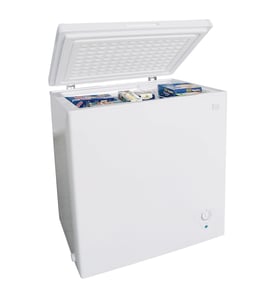



How much can you fit in a 3.5 cu ft chest freezer?
A 3.5 cu ft chest freezer typically holds about 120 to 130 pounds of food when packed efficiently. For your Gibson GFC09M3AD0 chest freezer, actual usable space depends on food shape, packaging, and whether you use a storage basket like the basket 216848200.
What “3.5 cu ft” means in real storage
Cubic feet measures interior volume, not weight capacity. Weight varies a lot by food type and how tightly it packs.
- Meat (dense, boxed or wrapped): higher pounds per cubic foot
- Bread, pizza boxes, bulky packaging: lower pounds per cubic foot
- Odd shapes (whole turkeys, large roasts): reduce usable space
- Air gaps and frost buildup: reduce usable space over time
Quick capacity estimates (typical)
| Food type | Typical fit in 3.5 cu ft | Notes |
|---|---|---|
| Mixed groceries (bags, boxes, containers) | 90 to 120 lb | Packaging wastes space |
| Mostly meat (well wrapped, stacked) | 120 to 140 lb | Densest packing |
| Bulk items (large boxes, awkward shapes) | 70 to 100 lb | More air gaps |
How to fit more without losing track of food
Using organization accessories and consistent packing makes a bigger difference than the raw cubic feet.
- Use a top basket to keep small items accessible (example: basket 216848200)
- Group foods by type (meat, vegetables, prepared meals)
- Freeze flat in bags first, then stack like files
- Label and date packages to avoid “mystery” items
- Keep a simple inventory list on the lid
Why it matters
Overpacking can block cold air circulation and make temperature recovery slower after opening the lid. Better organization helps your freezer stay colder, reduces freezer burn, and makes food easier to find.
Last updated: January 2026
What size freezer for 400 lbs of meat?
For about 400 lbs of meat, we recommend planning on 10 to 16 cubic feet of freezer capacity. A 12 to 14 cu ft chest freezer is the most practical target because it gives you room for air circulation and easier stacking, not just “it fits.”
Quick sizing rule (easy to remember)
Most packaged meat needs about 1 cu ft per 30 to 40 lbs.
- 400 lbs at 30 lbs per cu ft: about 13.3 cu ft
- 400 lbs at 40 lbs per cu ft: about 10 cu ft
- Best real-world target: 12 to 14 cu ft
What changes the size you need
These factors push you toward the higher end (14 to 16 cu ft):
- Bone-in cuts (bulkier, more air gaps)
- Large roasts or whole primals
- Lots of irregular packages (butcher paper bundles)
- You want space for other frozen foods
- You want faster access without unstacking everything
Chest vs upright: which holds 400 lbs better?
| Freezer type | Best for | Typical “real usable” space | Notes |
|---|---|---|---|
| Chest freezer | Bulk meat storage | Higher | Most efficient use of space; fewer door-loss temperature swings |
| Upright freezer | Organization and access | Lower | Shelves reduce usable volume; easier to find items |
Tips to make 400 lbs easier to store and find
- Freeze flat packages first, then stack like “files”
- Group by type (ground, steaks, roasts) and label dates
- Leave a small open zone for airflow and quick adds
- Use a hanging basket for frequently used items; the basket 216848200 is the style used on this Gibson chest freezer model
- Keep temperature steady; if temps swing or the freezer runs warm, check the control system (the chest freezer temperature control 5304496560 is a common fix when a unit will not regulate temperature)
Why it matters
Choosing a freezer that is slightly larger than the minimum helps food freeze faster, reduces temperature swings when you open the lid, and prevents crushed packaging and freezer burn from overstuffing.
Last updated: January 2026
Which is better chest freezer or deep freezer?
A “deep freezer” usually means a standalone freezer for long-term storage; a chest freezer is one type of deep freezer. For most homes, a chest freezer like the Gibson GFC09M3AD0 is better for bulk storage, efficiency, and outage protection, while an upright is better for everyday organization.
Quick comparison: chest vs upright (both are “deep freezers”)
| Feature | Chest freezer | Upright freezer |
|---|---|---|
| Energy use | Typically lower | Typically higher |
| Organization | Stacking, baskets | Shelves, bins, easier sorting |
| Floor space | More floor space | Less floor space |
| Power outage hold time | Typically longer | Typically shorter |
| Best for | Bulk meat, large items | Frequent access, meal prep |
Choose a chest freezer when you want
- Lower operating cost and strong temperature stability
- More usable space for bulky items (turkeys, large boxes)
- Better cold retention during a power outage
- Fewer frost and warm-air losses when the lid is opened
- Simple storage upgrades like adding an extra basket (when available)
Choose an upright freezer when you want
- Faster access and better visibility (less digging)
- Built-in shelves and door bins for smaller packages
- A smaller footprint in tight laundry rooms or kitchens
- Easier “first in, first out” rotation to reduce freezer burn
Why it matters
The “better” freezer depends on how you use it. If you buy in bulk and want maximum capacity and efficiency, a chest freezer is the practical pick. If you open the freezer daily and want quick organization, an upright usually fits better.
If you are improving organization in a chest freezer, a replacement or extra basket 216848200 can make it easier to separate frequently used items.
Last updated: January 2026