Owner’s manual
 View engine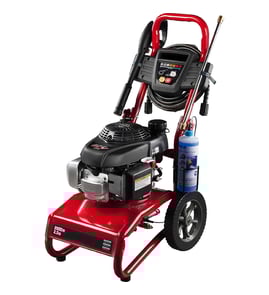



Can you put 87 gas in a pressure washer?
Yes. For the Craftsman 580752070 gas pressure washer, we recommend clean, fresh regular unleaded gasoline with a minimum 87 octane (87 AKI), which covers typical “87 gas” at the pump. Follow the fuel guidance in the 580752070 operator’s manual.
Use gasoline that meets these basics:
- Clean, fresh, unleaded gasoline
- Minimum 87 octane / 87 AKI
- Up to 10% ethanol (often labeled E10) is acceptable
- Up to 15% MTBE is acceptable
- Do not use unapproved fuels such as E85
| Fuel at the pump | OK for Craftsman 580752070? | Notes |
|---|---|---|
| 87 octane regular unleaded | Yes | Minimum recommended octane for normal use |
| Higher octane (89, 91, 93) | Yes | Typically fine, but not required for performance |
| E10 (up to 10% ethanol) | Yes | Acceptable per fuel requirements |
| E85 | No | Can cause running issues and fuel-system damage |
Using the correct gasoline helps your small engine start easier, run smoother under load, and reduces carburetor and fuel-system problems during storage.
- Buy fuel in small quantities so it stays fresh
- If the unit will sit 30 days or longer, treat the fuel with stabilizer or drain the tank for storage
- Fill outdoors and leave room for fuel expansion
- If performance changes after refueling, switch fuel brands or use fresh fuel
Last updated: January 2026
What PSI should my pressure washer be?
Your Craftsman pressure washer model 580752070 is rated for up to 3,000 PSI max; in normal use, the PSI you actually apply depends on the spray nozzle you install and how close you hold the tip to the surface. For safe, effective cleaning, match PSI to the job and start with a gentler setting.
This model uses quick-connect ProjectPro nozzles that change pressure and spray pattern. We recommend using the lowest pressure that still cleans well.
- Yellow (40°) Delicate: lower pressure, wider fan for vehicles and patio furniture
- Orange (15°) General: medium pressure for siding, decks, driveways
- Red (0°) Max: highest pressure for tough stains and paint removal (use carefully)
- Keep the nozzle 8 to 24 inches from the surface for most cleaning
- Do not get closer than 6 inches when cleaning tires
| Nozzle color | Spray angle | Typical use | Approx. pressure on this model |
|---|---|---|---|
| Yellow | 40° | Delicate rinse, vehicles | ~2350 PSI |
| Orange | 15° | General cleaning | ~2675 PSI |
| Red | 0° | Maximum rinsing, stubborn buildup | ~3000 PSI |
For the full nozzle chart and operating steps, follow the 580752070 operator’s manual.
- Cars, boats, outdoor furniture: start with yellow 40°
- Wood decks and fences: use orange 15°, keep distance to avoid gouging
- Concrete and heavy grime: step up carefully; test a small area first
- Paint removal: use red 0° only if you are prepared for surface damage risk
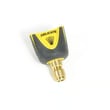
If your spray pattern is uneven or the washer “pulses,” a clogged tip can make pressure act wrong; replacing a worn tip can restore performance. A compatible replacement is the pressure washer spray nozzle 195983XGS.
Using more PSI than needed can etch concrete, shred wood fibers, strip paint unintentionally, and increase kickback at the spray gun. Using too little PSI wastes time and detergent.
Last updated: January 2026
How to tell if your pressure washer pump is bad?
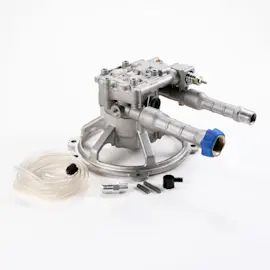
On the Craftsman 580752070 gas pressure washer, a bad pump usually shows up as weak or surging pressure, water leaking from the pump area, or the unit only making pressure with the trigger partly pulled. Before condemning the pump, we verify water supply, purge air, and rule out a clogged nozzle.
Use the startup and maintenance steps in the 580752070 operator's manual to confirm correct setup before troubleshooting.
- Confirm the garden hose is supplying steady flow; use cold water only.
- Purge air: turn water on, hold the spray gun open until flow is smooth.
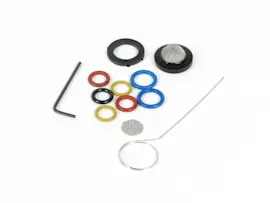
- Inspect the inlet screen for debris; clean or replace if damaged.
- Try a different spray tip; a restricted tip can cause pulsing.
- Check for hose kinks, loose fittings, or a damaged high-pressure hose.
If you suspect the tip is the issue, swapping to a known-good quick-connect tip like the pressure washer spray nozzle 195983XGS is a fast way to rule out a clog or worn orifice.
These symptoms point more strongly to internal pump wear or damage:
- Pressure stays low across multiple nozzles and with good water supply.
- Pressure pulses even after purging air and cleaning the nozzle.
- Water leaks from the pump body (not just a fitting or O-ring connection).
- The pump gets unusually hot quickly; thermal relief may dump warm water.
- The engine runs normally but cleaning power is consistently poor.
| What you observe | Most likely cause | What to do next |
|---|---|---|
| Pulsing only with one nozzle | Clogged or worn nozzle | Clean tip; try another nozzle |
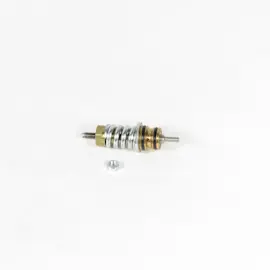
| Weak spray on all nozzles | Pump valves or seals, unloader issue, or water supply problem | Verify supply and inlet screen; then inspect pump/unloader |
| Leak at connection | O-ring or fitting issue | Replace O-rings or tighten fittings |
| Leak from pump housing | Internal seal failure or freeze damage | Pump service or replacement |
Running the Craftsman 580752070 with a failing pump can quickly worsen seal and valve damage, and running the pump without water can destroy it. Catching a nozzle or inlet restriction early can save a pump replacement.
Last updated: January 2026