Owner’s manual
 Error Codes



How to tell if an LG compressor is bad?
On the LG LFXC24726D, a bad compressor usually shows up as poor or no cooling even though the refrigerator has power; you may also hear repeated clicking from the lower rear area, or notice the compressor is silent when it should be running. Confirming failure typically requires electrical tests.
Quick symptoms to watch for
- Refrigerator and freezer temperatures keep rising (food softening, ice melting).
- Repeated clicking every few minutes from the back bottom area (start attempt then shutoff).
- Compressor is unusually hot to the touch (use caution) and still not cooling.
- Compressor is quiet while interior lights and display work.
- Unit runs “all the time” but never reaches set temperature.
What to check first (before blaming the compressor)
We recommend ruling out common airflow and control issues that can mimic compressor failure:
- Make sure the condenser area is not packed with dust and lint.
- Listen for the condenser fan and evaporator fan; failed fans can cause warm temps.
- Verify doors seal and close properly; warm air leaks can overwhelm cooling.
- Check for error codes and follow the troubleshooting steps.
Helpful references for this model
- Use the troubleshooting section in the LFXC24726D owner’s manual.
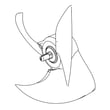
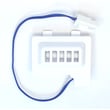
- If you suspect the sealed system is the issue, the compatible replacement is the refrigerator compressor TCA38091801.
Basic “listen and feel” check (safe, no tools)
| What you observe | What it often means |
|---|---|
| Clicks every few minutes, little cooling | Start device/overload issue or compressor locked |
| Compressor runs, but still warm | Airflow problem, low refrigerant, or sealed-system issue |
| No compressor sound at all | Control/start circuit issue or compressor not starting |
Why it matters
A compressor is the heart of the sealed system; if it cannot start or cannot pump refrigerant, the LG LFXC24726D will not maintain safe food temperatures. Catching the signs early helps prevent food spoilage and avoids unnecessary parts replacement.
Last updated: January 2026
How to reset LG lower ice maker?
To reset the ice maker on your LG LFXC24726D, turn the icemaker off at the control panel, remove and reseat the ice bin, then turn the icemaker back on and allow time for a harvest cycle. Control-panel details are in the LFXC24726D owner’s manual.
Reset steps (LFXC24726D)
- Make sure the freezer is cold; LG notes the icemaker won’t operate until it reaches about 15°F (-9°C) or below.
- Press and hold Ice On/Off for 3 seconds to turn the icemaker OFF.
- Remove the ice bin; empty it if ice is clumped or “bridged.”
- Reinstall the bin fully so it sits squarely in the guides.
- Press and hold Ice On/Off for 3 seconds to turn the icemaker ON.
- Wait; first ice after a reset can take time (new installs can take 12 to 24 hours to start, up to 72 hours for full production).
If it still won’t make ice after the reset
These model-appropriate checks solve most “no ice” complaints:
- Confirm the household water shutoff valve is fully open and the supply line isn’t kinked.
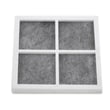
- If water flow is weak, replace the filter; use LG kenmore refrigerator water filter ADQ36006101.
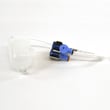
- If you suspect a fill problem (no fill, slow fill, intermittent fill), the inlet valve assembly may be the cause; check refrigerator water inlet valve assembly AJU74532703.
- If the icemaker won’t harvest or is physically damaged, consider replacing the icemaker; see LG refrigerator ice maker AEQ73130004.
What to expect after a reset
| Situation | What you’ll notice | What to do |
|---|---|---|
| Bin was misaligned or jammed | Ice production resumes after reseating | Empty bin, reinstall correctly |
| Low water flow | Small or hollow cubes | Replace filter, verify supply |
| Icemaker turned off | No ice at all | Turn on using Ice On/Off |
Why it matters
On the LFXC24726D, most “reset” issues come down to the Ice On/Off setting and the ice bin seating. If the bin is not installed correctly, the icemaker can stop producing or behave inconsistently.
Last updated: January 2026
Why is my LG refrigerator leaking from the bottom?
On LG model LFXC24726D (a French door refrigerator with a bottom freezer), leaking from the bottom is most often caused by a clogged or frozen defrost drain overflowing into the base, or a slow leak in the ice maker or water supply line. Use the LFXC24726D owner's manual for model-specific access and safety steps.
Quick checks we recommend first
- Look for ice or standing water on the freezer floor (common with a blocked defrost drain).
- Check for drips under the water filter area and after dispensing water.
- Inspect the ice maker compartment for frost, water trails, or a partially frozen fill area.
- Pull the refrigerator forward and look for water around the drain pan area.
- Confirm the cabinet is level; poor leveling can let water run toward the front.
Most common causes (and what to do)
| What you notice | Most likely cause | What to do next |
|---|---|---|
| Water under crisper drawers or near the front | Defrost drain clogged or frozen | Thaw any ice, then flush the drain with warm water. If the external drain path is loose, cracked, or not draining, inspect/replace the refrigerator drain tube 5251JA3003D. |
| Leak happens during ice making or shortly after | Water inlet valve seeping or a loose connection | Check tubing connections for slow drips. If the valve body seeps, replace the refrigerator water inlet valve assembly AJU74532703. |
| Water appears after humid days or frequent door openings | Condensation or door not sealing fully | Check door gaskets for gaps, make sure doors close completely, and avoid overloading door bins. |
Why it matters
Water collecting in the base can damage flooring and can also lead to ice buildup and airflow problems that reduce cooling performance.
When to stop and get service
- Water is actively spraying from a line or fitting.
- You cannot safely access the freezer floor or rear lower area.
- Cooling performance drops while the leak is happening.
Last updated: January 2026