



Do you use 40 1 or 50 1 gas in a chainsaw?
For the Craftsman gas chainsaw model 358356080, use the fuel-to-oil ratio specified for your exact engine; in practice, most 2-cycle chainsaws are set up for 50:1 with quality 2-cycle oil, while 40:1 adds more oil for extra lubrication but can increase smoke and carbon buildup.
Quick answer: 40:1 vs 50:1
- 50:1 (leaner on oil) is common on many newer 2-cycle chainsaws when using modern 2-cycle oil.
- 40:1 (more oil) can provide a little more lubrication under heavy cutting, but it can also foul the spark plug and clog the muffler spark arrestor faster.
- If you are unsure which your 358356080 was designed for, default to 50:1 with a high-quality 2-cycle oil and keep the carburetor tuned correctly.
Mix amounts (per 1 gallon of gas)
| Ratio | 2-cycle oil per 1 gallon gas | Notes |
|---|---|---|
| 50:1 | 2.6 oz (about 77 ml) | Common target for many chainsaws |
| 40:1 | 3.2 oz (about 95 ml) | More oil; more smoke and deposits |
Best practices for reliable starting and long engine life
- Use fresh, ethanol-free gas when possible (or the lowest ethanol available).
- Use 2-cycle oil rated for air-cooled engines; avoid generic “2-stroke” oils meant for water-cooled applications.
- Mix in an approved fuel can; shake before each refill.
- If it smokes heavily, loads up at idle, or loses power, check the spark plug, air filter, and muffler spark arrestor screen.
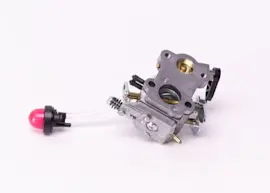
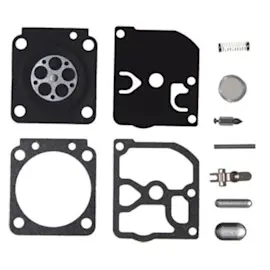
- If it runs hot, surges, or dies when you throttle up, check for lean fuel delivery (clogged fuel filter, cracked fuel line, dirty carburetor).
Why it matters
The wrong mix ratio changes lubrication and combustion temperature. Too little oil accelerates piston and cylinder wear; too much oil increases carbon deposits that can reduce power and cause hard starting.
For help confirming you have the correct model identification before ordering maintenance items, use how to find your appliance model number (and what it means for parts).
Last updated: January 2026
What model number is a Craftsman 16 36cc chainsaw?
A Craftsman 16-inch, 36cc gas chainsaw is commonly identified by a 358-series model number; for example, many 16-inch 36cc units are labeled 358.360360. For parts accuracy, we match by the exact model number printed on your saw’s data tag, not by bar length or engine size.
How to confirm the exact model number on your saw
Look for the ID tag or label on the Craftsman chainsaw and copy the model number exactly as shown (including dots, if present).
- Check the starter housing area near the recoil cover
- Check the rear handle or fuel tank area
- Look for a label that also lists serial number and engine family
- Write the model number exactly (example formats:
358.XXXXXXor358XXXXXX) - Use that exact model number when ordering parts for the best fit
358356080 vs. “358.360360”: what the difference means
Your Sears PartsDirect model page is for Craftsman 358356080, which is a specific gas chainsaw model. A “16-inch 36cc” description can apply to multiple Craftsman models, so the model number on the tag is the deciding factor.
| What you have | What it tells us | What to do next |
|---|---|---|
| “16-inch bar” | Bar length only; bars can be swapped | Confirm model number on the tag |
| “36cc engine” | Engine size only; shared across models | Confirm model number on the tag |
| Model number (example: 358356080) | Exact parts match | Use that model number for parts lookup |
Why it matters
Small differences between close Craftsman models can change fit for key items like the carburetor, ignition module, fuel lines, chain brake parts, and bar and chain compatibility. Matching the exact model number prevents wrong-part returns and downtime.
Helpful reference
Last updated: January 2026
Where is the model number on a chainsaw?
On the Craftsman gas chainsaw model 358356080, the model number is typically on the product identification label or ID tag on the saw body. Common spots include the starter housing, rear handle area, or near the oil and fuel caps.
Where to look first (fast checks)
- Check the starter/recoil housing (the side with the pull cord)
- Look on the rear handle or the handle base near the trigger
- Inspect the area near the bar mount (where the guide bar bolts on)
- Check around the fuel and bar oil cap area
- Look on the underside of the saw body (near the crankcase)
What the label can look like
Most chainsaws use one of these identification styles:
| What you see | What it means | What to do |
|---|---|---|
| Printed sticker/label | Most common model/serial tag | Clean gently and read under good light |
| Stamped metal tag | More durable ID plate | Copy the full model and serial numbers |
| Molded or stamped plastic | Less common | Look for a longer number string |
If the label is dirty, faded, or missing
- Wipe with a damp rag and mild soap; avoid harsh solvents that can erase printing
- Use a flashlight at an angle to make faint text easier to read
- Take a close-up photo and zoom in to confirm characters
- Match the model number exactly before ordering parts (for example, 358356080)
Why it matters
Craftsman chainsaws often have similar-looking versions that use different carburetor settings, ignition parts, fuel lines, and bar and chain setups. Using the exact model number helps us match the correct parts and diagrams.
For help confirming the correct number format before ordering, use how to find your appliance model number (and what it means for parts).
Last updated: January 2026