Owner’s manual
 Error Codes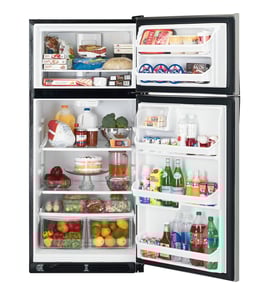


What is the upper part of a fridge called?
In a Whirlpool W8RXNGMWS01 top-mount refrigerator, the upper compartment is the freezer. It is the section designed to keep food frozen, and it also supplies cold air that circulates down into the fresh food (refrigerator) section.
What you will typically find in the upper (freezer) section
Most top-mount freezers include features like these:
- Freezer shelf (for organizing frozen foods)
- Freezer vents (where cold air moves through the freezer)
- Ice maker area (if your model is equipped or can be equipped)
- Door bins or rails (for smaller frozen items)
- Temperature airflow passages that help cool the refrigerator section
Why the freezer name matters for troubleshooting
Because air circulates between the freezer and refrigerator sections, many cooling complaints start in the freezer. If freezer airflow is blocked, temperatures and moisture problems can show up in both compartments.
Quick airflow checks we recommend
- Do not block freezer vents with food packages
- Keep items from pressing against the back wall or vent openings
- Make sure the freezer door closes fully and seals all the way around
- If you have an ice maker, leave room for the water line at the back
Freezer vs. refrigerator: simple comparison
| Compartment | Common name | Main job | Typical temperature target |
|---|---|---|---|
| Upper section | Freezer | Keeps food frozen; drives cooling airflow | 0°F |
| Lower section | Fresh food section (refrigerator) | Keeps food cold (not frozen) | 37°F to 40°F |
Where to confirm features for your exact configuration
Your W8RXNGMWS01 may have optional features (like an ice maker) and specific shelf and vent locations. We recommend checking the diagrams and feature descriptions in the owner's manual.
Last updated: February 2026
How to put the shelves in a whirlpool fridge?
To reinstall shelves in your Whirlpool W8RXNGMWS01 refrigerator, set the shelf supports at the height you want, angle the shelf so the rear edge seats first, then lower the front until it sits level and feels locked in. Use extra care with glass shelves because they’re heavy.
Steps to install or move refrigerator shelves
- Remove food and bins that block access.
- If the shelf is glass, handle it with two hands and avoid bumping the edges.
- Position the shelf at a slight angle so the back edge goes in first.
- Set the rear of the shelf onto the side supports or into the rear slots.
- Lower the front edge until the shelf sits flat and stable.
- Gently push the shelf fully into place and confirm it does not rock.
Door bins and rails (common Whirlpool setup)
Many Whirlpool top-mount models use door bins that hook into the liner:
- Lift the bin straight up to unhook it.
- Align the bin tabs with the door liner slots.
- Lower the bin until it drops into the slots and sits firmly.
Quick troubleshooting if a shelf won’t sit right
| Symptom | Most common cause | What to do |
|---|---|---|
| Shelf tilts or rocks | One side not seated in the support | Re-seat the rear edge, then lower the front evenly |
| Shelf won’t slide in | Shelf installed backwards or on mismatched supports | Flip orientation; confirm both sides are at the same height |
| Glass shelf feels stuck | Shelf frame catching on liner | Lift slightly, center it, then lower again |
Why it matters
A shelf that is not fully seated can crack glass, spill food, and block airflow. Proper shelf placement helps the W8RXNGMWS01 cool evenly and keeps items from shifting when you open and close the doors.
For model-specific shelf and bin placement details and safety notes for glass shelves, follow the W8RXNGMWS01 owner's manual.
Last updated: February 2026
What are the advantages of a top mount fridge?
A top-mount refrigerator like the Whirlpool W8RXNGMWS01 gives you a classic layout with the freezer on top and fresh food below. It typically delivers strong freezer access at eye level, straightforward airflow between sections, and a design that is easy to live with and service.
Key advantages you will notice day to day
- Easy freezer access: frozen foods sit higher, so you bend less to reach them.
- Simple, familiar organization: shelves, door bins, and crispers are laid out in a traditional way.
- Good airflow between sections: these designs rely on clear vents between freezer and refrigerator; keeping vents unblocked helps temperatures stay steady.
- Often easier installation fit: many top-mounts work well in standard kitchen cutouts.
- Straightforward maintenance: common care tasks (cleaning, light bulb changes, door alignment) are well documented in the owner's manual.
Installation and clearance benefits (common for this style)
Top-mount refrigerators are usually forgiving in tighter kitchens because the doors and cabinet depth are conventional. For this model family, typical guidance includes leaving clearance at the sides, top, back, and hinge side so doors can swing and the unit can ventilate properly.
| What you are planning | Why it matters | What to do |
|---|---|---|
| Tight cabinet opening | Prevents heat buildup and poor cooling | Follow the clearance guidance in the manual |
| Ice maker hookup | Avoids kinks and leaks | Leave extra room behind for the water line |
| Door swing near a wall | Prevents door from hitting the wall | Allow hinge-side clearance |
Why it matters
A top-mount layout supports consistent cooling when airflow vents stay clear; blocking vents can lead to temperature swings and moisture issues. It also keeps freezer items more accessible, which many households prefer for everyday use.
Last updated: February 2026
What is the most common problem with whirlpool refrigerators?
The most common Whirlpool refrigerator problem is a cooling complaint (too warm, not cooling evenly, or running longer than expected). On the Whirlpool W8RXNGMWS01 top-mount refrigerator, the most frequent root causes are blocked airflow, doors not sealing/closing fully, and ice maker or water-supply issues; all are covered in the troubleshooting steps in the owner's manual.
Most common symptoms and what usually causes them
- Refrigerator or freezer too warm: air vents blocked, doors opened often, controls not set for conditions
- Ice maker not making ice or not enough ice: freezer not cold enough, shutoff arm in OFF position, new install needs time
- Moisture buildup inside: frequent door openings, humid room air, blocked vents, packaging issues
- Noisy operation: normal operating sounds, longer run times with high-efficiency motors
- Doors hard to open or won’t close: dirty/sticky gaskets, food packages blocking closure, bin out of position
Quick checks we recommend first (fast, no tools)
- Confirm airflow: keep items from blocking vents between freezer and fresh-food sections.
- Check door closure: push doors firmly shut; rearrange items that prevent full closure.
- Verify control settings: adjust temperature controls for current room conditions.
- Reduce warm-air load: limit door openings and avoid loading large amounts of warm food at once.
- If it’s an ice issue: allow proper cool-down time; after installation, full ice production can take up to 72 hours.
Common problem-to-fix map
| Problem you notice | Most likely cause | What to do next |
|---|---|---|
| Fresh food warm, freezer OK | Blocked vents or poor circulation | Clear vents; reorganize shelves for airflow |
| Ice maker slow/no ice | Freezer not cold enough or shutoff arm OFF | Set freezer colder; lower shutoff arm; wait 24 to 72 hours |
| Moisture on walls/shelves | Humidity from frequent openings | Open doors less; wrap food tightly |
| Doors won’t seal/close | Packages in the way; gasket dirty/sticky | Reposition food; clean gasket and mating surface |
Why it matters
Cooling and ice maker problems often come from airflow and door-seal issues. Fixing those first prevents food spoilage, reduces compressor run time, and helps the refrigerator maintain stable temperatures.
Last updated: February 2026