Owner’s manual
 Error Codes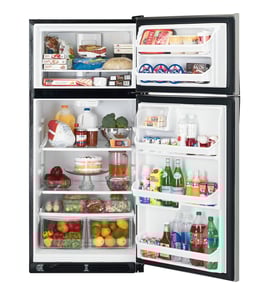




What is the average lifespan of a Kenmore 10671209100 refrigerator?
A Kenmore 10671209100 top-mount refrigerator typically lasts 13 years. With steady maintenance (clean condenser coils, good door seals, correct temperatures), many units reach 15 years before major sealed-system or compressor repairs become the deciding factor. See the 10671209100 owner's manual for care and operating guidance.
Most refrigerators of this design age based on heat management, door sealing, and how hard the compressor has to work.
- Condenser coil cleanliness (dirty coils raise compressor run time)
- Door gasket condition (air leaks cause frost and warm temps)
- Room temperature and ventilation (tight cabinets trap heat)
- Ice maker and water system health (leaks and clogs create secondary problems)
- Defrost performance (heavy frost reduces airflow and cooling)
| Item | Target / typical range | Why it matters |
|---|---|---|
| Expected service life | 13 years | Common replacement window for top-mount units |
| Often achievable with good upkeep | 15 years | Lower stress on compressor and fans |
| Refrigerator temperature | 37°F to 40°F | Food safety and stable cycling |
| Freezer temperature | 0°F to 5°F | Ice quality and defrost balance |
These steps reduce wear on the compressor, fans, and defrost system.
- Vacuum and brush condenser coils every 6 to 12 months
- Keep doors closing tightly; clean and condition gaskets
- Avoid overpacking; maintain airflow in both compartments
- Set temps gradually; avoid the coldest setting unless needed
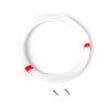
- If you have an ice maker, keep the fill system leak-free (a failing refrigerator inlet valve WPW10498990 can cause slow fills or leaks)
Refrigerators usually get replaced when cooling becomes inconsistent or when a major repair (often in the sealed refrigeration system) costs close to the value of the appliance. Preventive maintenance keeps temperatures stable and reduces expensive component stress.
Last updated: February 2026
What are the disadvantages of a top mount fridge?
Top-mount refrigerators like Kenmore 10671209100 put the freezer on top and the fresh-food section below; the main disadvantages are less convenient access to everyday items, fewer organization features than some newer layouts, and fewer built-in dispenser options on many models. For model-specific features and setup details, use the owner's manual.
- More bending for fresh food: the refrigerator compartment is lower, so you reach down more often.
- Freezer-first layout: frozen items are easiest to access, but many households use fresh food more frequently.
- Organization can be simpler: fewer specialty drawers, adjustable bins, or wide pantry-style storage compared with many bottom-freezer designs.
- Fewer exterior features on many units: water and ice dispensers are less common on basic top-mount configurations.
- Airflow can be easier to disrupt: overpacking can block vents and cause warm spots or moisture issues.
Top-mount models work best when airflow and door sealing are kept in good shape.
- Keep packages clear of air vents so cold air can circulate between freezer and refrigerator sections.
- Use the mid-setting as a starting point, then adjust temperatures in small steps and wait about 24 hours between changes.
- If doors do not close cleanly, inspect and clean the gasket sealing surfaces; replace worn seals such as the refrigerator door gasket 2159061 when needed.
- Avoid pushing the cabinet tight to walls; leave space for ventilation and door swing.
- If you have ice maker or water features, keep the water system maintained; issues can trace back to the refrigerator inlet valve WPW10498990 or the ice maker assembly.
| Feature | Top-mount (like 10671209100) | Bottom-freezer (typical) |
|---|---|---|
| Fresh-food access | Lower, more bending | Higher, easier reach |
| Freezer access | Eye-level | Lower drawer/basket |
| Built-in dispensers | Less common | More common |
| Storage/organization | Often simpler | Often more flexible |
Most “top-mount frustrations” come from ergonomics and storage, not cooling performance. When vents stay unblocked and temperatures are set correctly, a top-mount refrigerator can cool evenly and run efficiently.
Last updated: February 2026
What are the common problems with Kenmore 10671209100 refrigerators?
Common problems on the Kenmore 10671209100 top-mount refrigerator include warm temperatures from airflow or control settings, longer run times from dirty condenser coils or frequent door openings, ice maker not producing enough ice, dispenser dripping or slow water flow, and interior moisture build-up. Many issues are corrected with cleaning, proper temperature adjustments, and water system flushing as outlined in the owner's manual.
- Not cooling well or temperatures drifting: make sure air vents are not blocked; avoid overpacking.
- Runs a lot (seems to never shut off): clean condenser coils; reduce door openings; confirm controls are set correctly.
- Ice maker slow or not making ice: allow up to 72 hours after install for full production; verify freezer is cold enough.
- Water dripping from dispenser: hold the glass under the dispenser 2 to 3 seconds after releasing the lever.
- Slow water flow at dispenser: remove the filter and test flow; if flow improves, replace the filter.
- Gray or dark ice: flush the water system by dispensing and discarding 2 to 3 gallons (about 6 to 7 minutes) and discard discolored ice.
| Symptom | Common cause | What we recommend |
|---|---|---|
| Refrigerator section too warm | Doors opened often, warm room, controls set too warm | Adjust refrigerator control one setting colder; wait 24 hours and recheck |
| Freezer too warm or ice not made fast enough | Door openings, heavy ice use, control setting | Adjust freezer control one setting colder; wait 24 hours |
| Water leaks or drips at dispenser | Air in lines, not holding glass long enough | Flush system; hold glass under spout after dispensing |
| Moisture build-up inside | Humid room, frequent openings, blocked vents | Improve airflow, organize food, limit openings |
If troubleshooting points to a failed component, these model-matched parts are commonly involved:
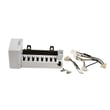
- Ice production issues: ice maker assembly - refrigerator ice maker by whirlpool 4317943
- Dispenser not responding: refrigerator dispenser switch WP2162361
- Water supply problems: refrigerator inlet valve WPW10498990
- Door not sealing (warm temps, moisture): refrigerator door gasket 2159061
- Defrost-related cooling issues (frost buildup, warm fridge): refrigerator defrost bi-metal WP4387503 or refrigerator defrost timer WP2304099
Small issues like dirty coils, blocked vents, or a poor door seal can make the compressor run longer, raise food temperatures, and reduce ice production. Addressing the basics first prevents unnecessary part replacement and helps the refrigerator recover to normal temperatures faster.
Last updated: February 2026