Installation guide
 Owner’s manual


How to reset error code on KitchenAid dishwasher?
On KitchenAid model KDTE254EWH1, the most reliable way to clear an error condition is to cancel the current cycle and let the dishwasher drain; this resets the active cycle and many control selections so you can restart cleanly. See the exact button sequence in the KDTE254EWH1 owner’s manual.
Quick reset steps (works for most “stuck” errors)
- Open the door slightly to pause the cycle; wait for spraying to stop.
- Press and hold CANCEL/DRAIN once.
- Close the door to start the drain.
- Wait about 2 minutes for draining to finish and the Cancel/Drain light to turn off.
- Select your cycle and options again.
- Press START/RESUME, then push the door firmly closed within 3 seconds (top-control models).
If the dishwasher still will not start after the reset
These checks fix the most common “error won’t clear” situations:
- Make sure the door is fully latched; a loose latch can prevent a restart.
- Confirm you are closing the door within the Start/Resume countdown.
- If the tub has standing water, let the full drain complete before restarting.
- If you see a repeating code pattern, match it to the right family of codes.
Error-code help for this KitchenAid series
| What you see | What to do next |
|---|---|
| Code or blinking pattern returns right away | Use an error-code chart to identify the failure area |
| No code, but cycle will not run | Focus on door latch, drain, and fill basics |
For code lookups, use KitchenAid he dishwasher error codes or KitchenAid microclean he dishwasher error codes.
Why it matters
Cancel/Drain is not just “stop”; it forces a controlled drain and clears the current cycle state. That prevents partial fills, leftover water, and false restarts that can make a dishwasher seem like it is still in an error condition.
Last updated: February 2026
What is the most common problem with KitchenAid dishwashers?
For the KitchenAid KDTE254EWH1 dishwasher, the most common issues we see are poor cleaning (dishes still dirty) and drainage problems (water left in the tub). These are usually tied to loading, water temperature, detergent use, or a restriction in the wash or drain system; the troubleshooting steps in the KDTE254EWH1 owner's manual help pinpoint the cause.
Most common symptoms and what they usually mean
- Dishes come out dirty: spray arm blockage, filter area buildup, or items blocking water flow.
- Cycle won’t start: door not fully closed and latched, or Start/Resume not completed after closing.
- Standing water after the cycle: drain path restriction (hose, air gap, disposer inlet, or drain pump).
- Too many suds: wrong soap type (hand dish soap) or too much detergent; can stop filling and washing.
- Not drying well: rinse aid issues, interrupted heated portions of the cycle, or low incoming water temperature.
Quick checks we recommend first (KDTE254EWH1)
- Confirm the door is fully closed and latched, then press START/RESUME; if the Start/Resume light is blinking, closing the door and pressing Start/Resume is the first fix.
- Verify hot water temperature at the sink nearest the dishwasher; this model’s guidance targets at least 120°F (49°C) for best cleaning.
- Use the correct detergent (automatic dishwasher detergent only) and avoid overfilling.
- Load to keep spray arms clear; large pans can interfere with the wash system.
- If you have a code or blinking lights, use the KitchenAid he dishwasher error codes reference to narrow it down.
Common “problem to part” mapping
| Symptom | Most likely area | Part that often gets checked/replaced |
|---|---|---|
| Not draining | Drain path or drain pump | Dishwasher drain pump WPW10531320 |
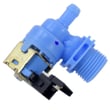
| Not filling | Water supply or inlet valve | Dishwasher water inlet valve W11175771 |
| Poor drying or weak heating | Heater circuit | Element assembly W10703867 |
| Door won’t latch or won’t start | Latch mechanism | Dishwasher door latch WPW10653840 |
Why it matters
Cleaning and draining problems are often caused by setup and conditions (water temp, detergent, loading). Fixing those first prevents repeat issues and helps you avoid replacing parts that are still good.
Last updated: February 2026
What is the average lifespan of a KitchenAid dishwasher?
Most KitchenAid dishwashers, including the KitchenAid KDTE254EWH1, typically last 10 to 14 years with normal household use. Consistent cleaning, correct detergent and rinse aid use, and fixing small issues early are what most often push lifespan toward the high end.
What affects lifespan the most
- Water quality: hard water speeds up mineral buildup on the heating system and internal parts.
- Maintenance habits: cleaning the filter area and spray arms helps prevent wash and drain strain.
- Loading and cycle choices: overloading and heavy cycles every load increase wear on the pump and motor.
- Drying setup: this model family is designed to use rinse aid for best drying and to reduce deposits.
- Early leak or drain problems: addressing them quickly prevents secondary damage.
Typical lifespan expectations (what we see most often)
| Dishwasher type | Typical lifespan | Notes |
|---|---|---|
| Standard built-in dishwasher (KitchenAid class) | 10 to 14 years | Best results with routine care |
| Heavy-use household (multiple loads daily) | 7 to 10 years | More wear on pump, seals, and racks |
| Light-use household (few loads weekly) | 12 to 16 years | Maintenance still matters |
Maintenance steps that extend life
- Use rinse aid as recommended in the KDTE254EWH1 owner’s manual.
- Run hot water at the sink before starting a cycle so the dishwasher fills with hotter water sooner.
- Keep the bottom area clear of labels, glass, and food scraps that can block the drain path.
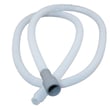
- If you notice slow draining, check the drain hose routing and consider inspecting the dishwasher drain hose 8269144A for kinks or restrictions.
- Expect longer cycles (often 2 to 3 hours, and sometimes longer with options); longer run time is normal for energy-efficient cleaning.
Why it matters
A dishwasher that is maintained and operating normally protects expensive components like the pump and motor assembly, heating element, and electronic controls. Small habits (rinse aid, proper loading, and quick fixes) reduce stress on those parts and help the KDTE254EWH1 reach its full service life.
Last updated: February 2026
How much to replace control panel on KitchenAid dishwasher?
For the KitchenAid KDTE254EWH1 dishwasher, replacing the control panel typically costs about $200 to $450 total: roughly $200 to $250 for the control panel part plus $150 to $200 for labor (common service range). Exact pricing depends on which panel version your model uses and whether any wiring or console pieces are also needed.
What makes up the total cost?
Most control panel replacements break down into these items:
- Control panel or console assembly part (varies by color and configuration)
- Service call and labor time (often 1 to 2 hours)
- Any related parts found damaged during disassembly (clips, harness, latch)
- Taxes and shipping (if you are ordering the part)
| Cost item | Typical range | Notes |
|---|---|---|
| Control panel part | $200 to $250 | Model-specific; match by model number and panel color |
| Labor | $150 to $200 | Depends on local rates and access |
| Total | $200 to $450 | DIY can reduce total if you only buy the part |
Quick checks before you buy a control panel
A “dead” or unresponsive panel is not always a bad control panel. We recommend these checks first:
- Confirm the dishwasher has power at the breaker and the outlet or junction box
- Make sure the door is fully closed and latching correctly (a latch issue can mimic a bad panel)
- Look for stuck keys, moisture intrusion, or a loose ribbon/connector behind the panel
- If your unit shows a fault code, use the error code guide to narrow the failure
If you need wiring access steps and panel removal guidance, follow the KDTE254EWH1 installation guide.
Related parts that can affect “panel” symptoms
If the dishwasher will not start or stops mid-cycle, these parts can be involved:
- Dishwasher door latch WPW10653840 (door not sensed as closed)
- Dishwasher wire harness (loose or damaged connections)
- Electronic control (main control board) issues
Why it matters
The control panel is the user interface for cycle selection and start commands. Pricing it correctly helps you decide whether a DIY repair makes sense, and checking the latch and power path first prevents buying an expensive part that does not fix the real problem.
Last updated: February 2026
How to fix rubber seal on KitchenAid dishwasher?
On the KitchenAid KDTE254EWH1 dishwasher, fixing the rubber door seal usually means reseating the gasket evenly in the door channel so it seals all the way around. Press it in section-by-section, then keep the door closed for several hours so the seal “sets” in place (see the KDTE254EWH1 owner’s manual).
Safety first
- Turn off power at the breaker before working around the door and inner panel.
- Let the heating element cool completely before reaching into the tub.
- Do not operate the dishwasher with panels removed.
- Keep sharp utensils from contacting the seal; they can nick the gasket.
Reseat the door seal (most common fix)
- Open the door and inspect the gasket for twists, gaps, or sections pulled out of the channel.
- Starting at the top center, press the seal into the channel using your fingers; work evenly down both sides.
- Make sure the corners are fully seated and not bunched.
- Close and latch the door; keep it closed for several hours (overnight is ideal).
Quick checks while you’re there
- Wipe the channel clean (soap film and grit can prevent a tight fit).
- Look for tears, flattening, or hardened rubber; those mean replacement is the real fix.
- Confirm racks or tall items are not preventing the door from closing squarely.
If the door won’t stay balanced, correct the tension
A door that drops open or slams shut can pull on the seal and cause leaks. The installation instructions for KDTE254EWH1 describe adjusting spring tension by moving the tensioner screw to different numbered holes on both sides (see the KDTE254EWH1 installation guide).
| Door behavior when unlatched | What to adjust | Result |
|---|---|---|
| Door falls closed by itself | Move tensioner to a lower-numbered hole | Less spring tension |
| Door opens by itself | Move tensioner to a higher-numbered hole | More spring tension |
When to replace parts
If reseating does not stop leaks, focus on common leak sources:
- Door not latching firmly: consider the dishwasher door latch WPW10653840
- Water leaking at the bottom edge: inspect the lower door seal area (often debris-related)
- Overfilling or slow fill issues: check the dishwasher water inlet valve W11175771
Why it matters
A properly seated door gasket prevents leaks that can damage flooring and cabinets, and it helps the dishwasher maintain correct wash pressure for better cleaning and drying.
Last updated: February 2026