Installation guide
 Owner’s manual
 Error Codes




Is JennAir considered high end?
Yes. Jenn-Air is widely considered a high-end (luxury) appliance brand, and the Jenn-Air JF42NXFXDE00 built-in bottom-mount refrigerator fits that premium category with built-in design, specialized installation requirements, and higher-end components.
What “high end” means for a built-in refrigerator
High-end built-in refrigerators typically focus on integrated installation, fit-and-finish, and serviceable premium components.
Common high-end traits include:
- Built-in installation with precise cabinet and clearance requirements
- Premium exterior styling and panel or handle kit options
- Quieter operation and tighter temperature management expectations
- Higher-cost service parts (controls, lighting, sealed-system components)
- More detailed setup steps for leveling, door alignment, and water system prep
For model-specific installation details, use the installation guide.
What to expect for parts and maintenance
Even on luxury models, routine maintenance parts still matter for performance and odor control.
Here are examples of common maintenance and repair parts available for JF42NXFXDE00:
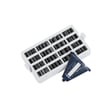
- Refrigerator air filter W10311524 (odor control)
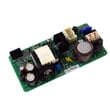
- Refrigerator thermistor W11724692 (temperature sensing)
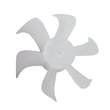
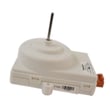
- Refrigerator evaporator fan motor W11396715 (air circulation)
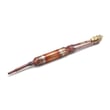
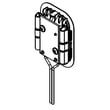
- Single led 2 W11683242 (interior lighting)
Quick comparison: built-in vs standard freestanding
| Feature | Built-in (like JF42NXFXDE00) | Freestanding refrigerator |
|---|---|---|
| Installation | Cabinet-integrated, more precise | More flexible placement |
| Service access | Often tighter, more planning | Usually easier |
| Typical part cost | Higher on average | Lower on average |
| Fit and finish | Premium, integrated look | Standard exterior |
Why it matters
Knowing Jenn-Air is high end helps set expectations for installation precision, door alignment, and part pricing. It also helps you choose the right OEM replacement parts so cooling performance, airflow, and fit stay correct.
Last updated: February 2026
What are the disadvantages of a bottom freezer refrigerator?
A bottom-freezer refrigerator like the Jenn-Air JF42NXFXDE00 makes fresh-food access convenient, but the tradeoff is that you reach down for frozen items and often lift heavier foods from a lower drawer. Bottom-freezer designs also tend to cost more upfront than basic top-freezer models.
Common disadvantages you may notice
- You bend more to see and grab frozen foods in the lower drawer.
- Heavy items (bulk meat, frozen pizzas, ice bags) are harder to lift from a low position.
- The freezer drawer can feel “deep”; smaller items can get buried without good organization.
- If the unit is not level, door and drawer alignment can be more noticeable (especially on built-in installations).
- Upfront purchase price is often higher for premium bottom-mount and built-in styles.
What helps reduce the downsides
- Use bins or dividers in the freezer drawer to separate categories (meat, vegetables, snacks).
- Keep frequently used frozen items near the top of the drawer.
- Avoid overloading the drawer; it reduces access and can stress slides over time.
- Make sure the refrigerator is properly leveled and aligned with cabinetry during installation; see the leveling and door adjustment steps in the installation guide.
Quick comparison: bottom freezer vs. top freezer
| Feature | Bottom freezer | Top freezer |
|---|---|---|
| Fresh-food access | Easier (eye level) | Requires more bending |
| Frozen-food access | More bending | Easier reach |
| Handling heavy frozen items | Harder lift | Easier lift |
| Typical price | Higher | Lower |
Why it matters
If you use frozen foods daily or store heavy frozen items, the lower drawer can be a real ergonomic drawback. If you mostly use fresh foods, the bottom-freezer layout usually feels more convenient day to day.
Last updated: February 2026
What is the life expectancy of a Jenn Air refrigerator?
A Jenn-Air refrigerator typically lasts 15 years. For your Jenn-Air JF42NXFXDE00 bottom-mount built-in, consistent cleaning, correct installation clearances, and quick repair of cooling or ice maker issues help you reach that normal service life; see the installation guide for model-specific setup details.
Typical life expectancy (what to expect)
Most built-in refrigerators like the Jenn-Air JF42NXFXDE00 run in this range:
| Appliance type | Typical life expectancy |
|---|---|
| Built-in refrigerator (bottom-mount / French door styles) | 15 years |
| Standard freestanding refrigerator | 13 years |
What shortens refrigerator life fastest
These are the most common causes of early failure in premium refrigerators:
- Poor airflow or incorrect installation fit, which makes the compressor and condenser work harder
- Dirty condenser area, leading to higher operating temperatures
- Door seal leaks or misalignment, causing long run times and frost issues
- Evaporator fan problems, which reduce cooling in the fresh food section
- Temperature sensor (thermistor) drift, which can cause warm temps or freezing
Maintenance that helps you hit the 15-year mark
We recommend these practical habits:
- Keep doors closed as much as possible and avoid overpacking shelves (airflow matters)
- Clean spills quickly to prevent odors and airflow blockage
- Replace the air filter on schedule; a clogged filter can contribute to odors and poor circulation (see refrigerator air filter W10311524)
- If you hear unusual fan noise or see warm spots, address it early (the refrigerator evaporator fan motor W11396715 is a common cooling component)
- Verify the refrigerator is level and doors close on their own
Why it matters
A refrigerator that runs longer than it should (from warm air leaks, restricted airflow, or a struggling fan) puts extra load on sealed-system components like the compressor. Fixing small issues early usually prevents expensive cooling failures later.
Last updated: February 2026
Can I replace fridge parts myself?
Yes, on your Jenn-Air JF42NXFXDE00 bottom-mount refrigerator, we can usually replace many common parts ourselves (filters, door switch, ice maker assembly, some fan and light modules) using basic tools and careful safety steps. For sealed-system and refrigerant work, use a qualified technician.
Good DIY repairs for this model
These are typical homeowner-friendly replacements and checks:
- Replace the refrigerator air filter W10311524 to help reduce odors.
- Replace a failed door light/door-closed sensor such as the refrigerator switch W11289496.
- Troubleshoot and replace an airflow part like the refrigerator evaporator fan motor W11396715 if the freezer is cold but the fresh-food section is warm.
- Replace an ice maker component such as the refrigerator ice maker assembly W11397192 when ice production stops.
- Use the installation guide steps for door alignment and height adjustments if doors are uneven.
Repairs to leave to a technician
Some repairs require specialized tools, training, and safety procedures:
- Compressor, refrigerant leaks, or any sealed-system repair (refrigerant handling)
- Electrical diagnosis beyond basic checks (control boards, inverter diagnostics)
- Water line modifications inside walls or cabinetry
Safety and prep checklist
Before we start any repair:
- Unplug the refrigerator or switch power OFF before removing panels or wiring.
- Keep doors taped closed and use two or more people when moving a built-in unit (tip-over risk).
- Protect floors and cabinetry; built-in refrigerators are heavy and top-heavy.
- Take photos of wire connections and screw locations as we disassemble.
- Confirm the exact procedure and access points in the installation guide.
Quick “DIY or pro?” decision table
| Symptom or task | Usually DIY? | Common next step |
|---|---|---|
| Bad odors | Yes | Replace air filter, clean interior |
| Light not working when door opens | Yes | Check/replace door switch or LED module |
| Warm fridge, cold freezer | Often | Check evaporator fan, airflow, frost buildup |
| No ice | Often | Check ice maker, water supply, fill issues |
| Compressor not running or sealed-system issue | No | Schedule sealed-system service |
Why it matters
Choosing the right repair level prevents damage to wiring, cabinetry, and the cooling system. On built-in models like the JF42NXFXDE00, safe handling and correct door alignment also help prevent air leaks, temperature swings, and moisture problems.
Last updated: February 2026
What are common problems with Jenn Air refrigerators?
Common problems we see on Jenn-Air refrigerators like model JF42NXFXDE00 include not cooling well, water leaks or puddles, ice maker or dispenser issues, doors that do not seal or align, and unusual fan noise. Many of these symptoms trace back to airflow, temperature sensing, or door sealing and leveling adjustments in the installation guide.
Most common symptoms and what they usually point to
- Not cooling or warm temperatures: evaporator fan issue, dirty condenser area, or a temperature sensor problem
- Water leaking or puddles: clogged/iced drain, door left ajar, or defrost-related drainage issues
- Ice maker not working: water supply restriction, frozen fill path, or ice maker control/thermostat issue
- Water dispenser not working: air in the line, supply valve issue, or filter-related flow restriction
- Door not closing or poor seal: cabinet not level, door swing/stop set incorrectly, or gasket not sealing
- Noisy operation: evaporator fan, condenser fan, or vibration from installation/leveling
Model-specific checks that solve a lot of “mystery” problems
Your JF42NXFXDE00 is a built-in, bottom-mount design; installation details matter because door alignment and airflow clearances affect cooling and sealing.
Start with these checks:
- Confirm the refrigerator is level and stable; adjust leveling legs in small increments
- Verify the door swing/door stop position so the door opens freely and closes fully
- Make sure the top and trim are not being forced out of position by over-adjustment
- Keep vents inside the fresh food section and freezer unblocked
Quick reference: symptom to likely area
| Symptom | Most likely area to check first | Example part that can be involved |
|---|---|---|
| Warm fridge/freezer | Airflow and evaporator fan | Refrigerator evaporator fan motor W11396715 |
| Temps swing up/down | Temperature sensing | Refrigerator thermistor W11724692 |
| Bad odors | Air filtration and food spills | Refrigerator air filter W10311524 |
| Door pops open or won’t seal | Leveling, door stop, alignment | Installation adjustments |
Why it matters
Cooling, ice production, and leak prevention all depend on steady airflow and tight door sealing. On built-in units, even small leveling or door-stop issues can cause bigger performance problems over time.
Helpful DIY guidance
- Use our how to fix your evaporator cooling fan walkthrough if you hear fan noise or have warm spots.
- Use our how to get rid of refrigerator puddles steps if you see water under or inside the refrigerator.
Last updated: February 2026