Owner’s manual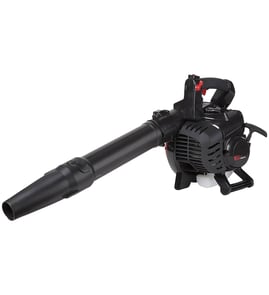






How long does a gas leaf blower last?
A gas leaf blower like the Craftsman 316791601 typically lasts about 8 to 10 years with normal homeowner use and routine maintenance. Consistent upkeep (clean air filter, fresh fuel, good spark plug) is what most directly determines whether it reaches the high end of that range.
What most affects lifespan
- Air filter care: clean and re-oil about every 10 hours of run time
- Spark plug condition: check about every 25 hours; replace if fouled or cracked
- Fuel freshness: do not use fuel stored more than 30 days
- Storage routine: run the engine until it stalls to drain the carburetor before long storage
- Fastener checks: tighten loose screws, nuts, and bolts to prevent vibration damage
Maintenance schedule at a glance (316791601)
| Task | When to do it | Why it matters |
|---|---|---|
| Clean and re-oil air filter | Every 10 hours | Prevents lean running and premature engine wear |
| Check spark plug and gap | Every 25 hours | Helps starting, power, and fuel efficiency |
| Replace dirty air filter (if needed) | As needed | Restores airflow and performance |
Parts that commonly extend service life
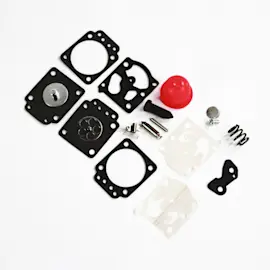
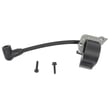
If performance drops (hard starting, stalling, low power), these are common wear items to inspect and replace as needed:
Why it matters
A blower that is maintained on schedule runs cooler, starts easier, and avoids fuel system varnish and engine wear. That is what turns a short-lived gas blower into one that delivers close to a decade of reliable service.
For model-specific procedures and intervals, follow the 316791601 owner’s manual.
Last updated: February 2026
How to find Craftsman leaf blower model number?
On the Craftsman gas leaf blower model 316791601, the model number is printed on the product identification label, typically on the engine/motor housing. Check the sides of the motor casing first, then the back and underside; match what you see to the format shown in the 316791601 operator’s manual.
Where to look on the blower
Check these common label locations in order:
- Side of the engine/motor casing (most common)
- Back of the housing near the handle
- Bottom of the unit near the base
- Near the blower outlet or tube connection area
- Around the fuel tank area (on some versions)
What the model number should look like
In the manual, the model is shown as 316.79160* (the last digit can vary by version). That means your label may show a very close number, and the final digit is the key detail to copy exactly.
| What you see on the label | What it means | What to do |
|---|---|---|
| 316.79160* | Model family | Record the full number including the last digit |
| 316791601 | Full model number (no dot) | Use this to look up parts and diagrams |
| Other codes/strings | Serial, date, or manufacturing codes | Do not use these for parts matching |
Tips to avoid ordering the wrong parts
- Write the model number exactly as printed (include the last digit)
- Take a clear photo of the label before it wears or gets dirty
- Use the model number (not the engine size or marketing name) when searching parts
- If the label is dirty, wipe it with a damp cloth and mild soap; avoid harsh solvents
Why it matters
Craftsman handheld 2-cycle blowers often share similar housings, but parts like the carburetor, ignition coil, and blower tube can vary by the last digit of the model number. Using the exact model number keeps your parts match accurate.
Last updated: February 2026
Who makes the best gas-powered leaf blowers?
“Best” depends on what you value most (raw power, weight, noise, price, or service support). For many homeowners and pros, brands like Stihl, Husqvarna, Echo, and Craftsman are consistently strong choices; for a lightweight handheld option, the Craftsman 316791601 is a 25 cc 2-cycle blower designed for everyday yard cleanup (40:1 fuel mix). See the 316791601 operator’s manual for the exact specs and operating guidance.
How we recommend choosing the “best” gas leaf blower
Use these factors to match the blower to your yard size and how you work:
- Type: handheld (lighter) vs backpack (more power, less arm fatigue)
- Engine size (cc): higher cc usually means more airflow and faster cleanup
- Air volume (CFM): higher CFM moves more leaves at once
- Weight: lighter is easier for longer sessions
- Parts and service availability: easier maintenance, faster repairs
Craftsman 316791601 quick spec snapshot
These are model-specific specs pulled from the manual.
| Spec | Craftsman 316791601 (handheld) |
|---|---|
| Engine type | Air-cooled, 2-cycle |
| Displacement | 25 cc |
| Fuel/oil ratio | 40:1 |
| Fuel tank capacity | 14 oz (414 ml) |
| Approx. weight (no fuel) | 9 to 10 lb |
| Air volume (CFM) | Up to 430 CFM (tube-dependent) |
What “best” means for common buyer goals
| If you want… | Prioritize… | Typical best fit |
|---|---|---|
| Fastest cleanup | Higher CFM and strong throttle response | Backpack blower |
| Less fatigue | Lower weight, good balance | Handheld blower |
| Easy ownership | Common parts, simple maintenance | Major brands with wide support |
| Reliable starting | Fresh fuel mix, clean air filter, good ignition | Any brand with good upkeep |
Why it matters
A blower that is “best” on paper can feel wrong in real use. Matching CFM, weight, and blower type to your yard and comfort helps you finish faster and reduces strain, while also making routine maintenance (air filter, fuel system, ignition) simpler.
Last updated: February 2026
How to start a Craftsman gas leaf blower?
To start your Craftsman gas leaf blower model 316791601, mix fresh 2-cycle fuel, prime the engine, set the cruise control to LO, set the choke to START, then pull the starter rope until it fires. Keep the throttle trigger released until the manual’s later start steps.
Quick start steps (316791601)
- Mix gasoline with 2-cycle oil (use the ratio listed in the 316791601 operator’s manual).
- Fill the fuel tank outdoors; tighten the fuel cap.
- Press and release the primer bulb 10 times.
- Move the cruise control to LO (slow).
- Do not squeeze the throttle trigger.
- Flip the choke lever clockwise until it clicks into START.
- Get into a stable starting position and pull the starter rope until the engine starts.
What to do if it will not start
These checks fix most no-start complaints on 2-cycle handheld blowers:
- Old fuel: Drain and replace fuel that is more than 30 days old.
- Flooded engine: Let it sit a few minutes, then retry with the throttle released.
- Airflow restriction: Clean or replace the air filter if it is dirty.
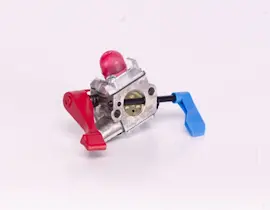
- Fuel delivery issue: If it primes but will not keep running, the carburetor may need service.
- Spark issue: Inspect the spark plug condition and gap per the manual.
Common symptom guide
| Symptom | Most likely cause | Best next step |
|---|---|---|
| Starts, then dies | Stale fuel, dirty carburetor, clogged filter | Replace fuel; inspect air filter; consider mtd line trimmer carburetor 753-06288 if fuel system service is needed |
| Hard to start cold | Not enough priming, choke not set | Prime 10 times; confirm choke is in START |
| Runs only with choke | Lean fuel condition, air leak, dirty carburetor | Check gaskets/lines; clean carburetor |
Why it matters
Following the exact prime, choke, and cruise-control sequence prevents flooding and reduces pull effort (this model uses an Incredi-Pull style starting system). Starting outdoors also protects you from dangerous exhaust fumes.
Last updated: February 2026
Who makes Craftsman leaf blowers?
Craftsman is the brand name on model 316791601; the actual manufacturer can vary by product line and production run. For this 2-cycle handheld blower family (316.79160*), the operator documentation is issued under Sears Brands, LLC/Sears Brands Management Corporation, which is the best indicator of who supported the product at the time it was sold (see the 316791601 operator’s manual).
How to identify the maker for your exact unit
The most reliable way is to match the identification on your blower to the documentation and parts list.
- Check the model tag for 316.791601 (or the 316.79160* family noted in the manual).
- Compare the engine specs in the manual (25 cc, air-cooled 2-cycle) to your unit.
- Use the parts breakdown to see which supplier-style part numbers are used.
- If you are ordering parts, match by model number first, then confirm by part number.
What the manual tells us about this model family
The manual for the 316.79160* series is branded Craftsman and published under Sears Brands, which typically means Sears managed the product documentation, support, and specifications for that run.
| What you’re checking | Where to look | What it confirms |
|---|---|---|
| Model family | Manual cover (316.79160*) | Which documentation applies |
| Engine type | Specifications section | 2-cycle handheld blower platform |
| Displacement | Specifications section | 25 cc engine class |
Why it matters when buying parts
Different manufacturers can use different carburetors, ignition systems, and fuel components even when the tool looks similar. Matching the correct maker and model family helps you avoid wrong-fit parts and hard-start issues.
If you are troubleshooting a no-start or poor-running condition on this Craftsman blower, the most commonly replaced maintenance and fuel/air parts include the air filter assembly and carburetor; for example, the mtd leaf blower air filter assembly 753-08507 and the carburetor listed for this model.
Last updated: February 2026
What is better, cfm or mph for a leaf blower?
Neither CFM nor MPH is “better” by itself; the best leaf blower performance comes from the right balance for your job. On the Craftsman 316791601, you can see how different tubes change both airflow (CFM) and airspeed (MPH), so matching the tube and technique to the debris matters most (see the 316791601 operator’s manual).
What CFM and MPH actually do
- CFM (cubic feet per minute): how much air the blower moves; best for moving large volumes of dry leaves across open areas.
- MPH (miles per hour): how fast the air stream is; best for stuck, wet, or heavier debris and for “breaking loose” material.
- Real-world rule: higher CFM helps you “carry” debris; higher MPH helps you “start” debris moving.
Model-specific performance (Craftsman 316791601)
Your blower’s output varies by tube setup. Here are the specs listed in the manual:
| Tube setup | Air volume (CFM) | Peak air speed (MPH) | Best use |
|---|---|---|---|
| Upper tube | 430 | 90 | Moving lots of light, dry debris in open areas |
| General use tube | 320 | 145 | Most driveway, patio, and yard cleanup |
| Special use tube | 75 | 200 | Concentrated blast for stubborn debris in tight spots |
How to choose what to prioritize
- Big yard, lots of dry leaves: prioritize higher CFM and a wider airflow pattern.
- Wet leaves, gravelly edges, stuck debris: prioritize higher MPH to break it loose.
- Mixed cleanup (most homeowners): a balanced setup (like the general use tube) usually works best.
Why it matters
Choosing based on only one number can lead to frustration: high MPH with low CFM can scatter debris without moving piles efficiently, while high CFM with low MPH can struggle to dislodge wet leaves. Using the right tube setup helps you clean faster with less throttle and less fatigue.
Last updated: February 2026
Why does my Craftsman leaf blower keep dying?
If your Craftsman gas leaf blower model 316791601 keeps dying, the most common causes are stale 2-cycle fuel, restricted airflow, or a carburetor fuel-delivery problem that makes the engine run lean and stall. Start with fresh fuel mix, then follow the starting and maintenance steps in the 316791601 owner's manual.
Quick checks that fix most stalling
- Drain old fuel and refill with fresh, properly mixed 2-cycle fuel (mix and fuel only outdoors, away from sparks or flames).
- Confirm the fuel cap is installed tightly.
- Clean or replace a dirty air filter; restricted airflow can cause poor running and stalling.
- Prime correctly before starting; this model’s procedure is to press the primer bulb 10 times, fully and slowly.
- Use the choke correctly: start on START choke, then move to RUN once it fires and warms briefly.
Parts that commonly cause “starts then dies”
| Symptom | Most likely area | What to do next |
|---|---|---|
| Starts, runs a few seconds, then stalls | Fuel delivery | Clean carburetor, check fuel pickup and lines |
| Runs only with choke partly on | Lean condition | Inspect for air leaks, service carburetor |
| Surges, won’t idle | Dirty carburetor | Clean carburetor, verify air filter is clean |
If you’re seeing fuel or airflow symptoms, these parts are often involved:
- Mtd line trimmer carburetor 753-06288 (metering and fuel delivery)
- Lawn and garden equipment engine carburetor mount gasket 753-06253 (seals the carb mounting area to prevent air leaks)
- Mtd leaf blower air filter assembly 753-08507 (restores proper airflow)
Why it matters
A 2-cycle engine that is starved for fuel or pulling extra air through a leaking carb mount gasket can overheat, lose power, and stall repeatedly. Correct fuel, clean airflow, and good sealing restore stable idle and throttle response.
Safety notes before troubleshooting
- Operate and fuel only in a well-ventilated outdoor area.
- Stop the engine and disconnect the spark plug before maintenance.
- Let the muffler and cylinder cool before touching nearby parts.
Last updated: February 2026