Installation guide
 Owner’s manual



How many cubic feet is a Kenmore washer 110 series?
Most Kenmore 110-series top-load washers are about 3.2 cu. ft. of capacity; for the most accurate capacity for model 11021302011, confirm the exact spec in the 11021302011 owner's manual.
How to confirm the capacity for your exact model
Capacity can vary within the Kenmore 110 family by platform and year. The most reliable way is to check the model-specific specifications section.
- Look for “capacity”, “basket volume”, or “tub capacity” in the specs
- Match the model number exactly: 11021302011
- If you see multiple capacities listed, use the one tied to your configuration (sometimes options are grouped)
- If you are comparing to another washer, compare cu. ft. (not “large/extra-large” marketing terms)
Typical Kenmore 110 capacity ranges (for context)
Here is what we commonly see across Kenmore 110 top-load designs:
| Washer type (common in Kenmore 110 family) | Typical capacity range |
|---|---|
| Standard top-load (traditional) | ~2.9 to 3.5 cu. ft. |
| High-efficiency top-load (impeller/washplate) | ~3.5 to 4.8 cu. ft. |
Why it matters
Capacity affects how much laundry you can wash per load and how well the washer can circulate water and detergent. Overloading a smaller-capacity tub can lead to poor cleaning, out-of-balance spinning, and extra wear on suspension and drive components.
Last updated: January 2026
What is the average lifespan of a Kenmore washer?
A Kenmore washer like model 11021302011 typically lasts 10 to 15 years with normal household use. Lifespan depends most on load size, installation (leveling and drainage), and how quickly you address issues such as vibration, draining problems, or lid-lock faults; see the 11021302011 installation guide for setup basics.
What affects washer lifespan most
- Overloading (stresses the drive system, tub, and suspension)
- Out-of-level installation (increases vibration and wear)
- Drain and fill issues (pump strain, long cycle times)
- Detergent misuse (excess suds can cause poor rinsing and extra mechanical load)
- Ignoring early symptoms (small noises and minor leaks often become major repairs)
Quick ways to extend the life of your 11021302011
- Keep loads balanced; wash bulky items in smaller batches.
- Confirm the washer sits on a solid, level floor; re-level if it starts walking.
- Use the right amount of detergent; reduce if you see excess suds.
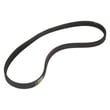
- Check hoses periodically for wear and secure routing.
- Fix draining problems quickly to avoid overheating the pump.
Common “wear” parts that can shorten lifespan if failing
| Symptom | Likely area | Example part for this model |
|---|---|---|
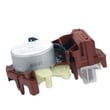
| Won’t spin or slips under load | Drive system | Washer drive belt WPW10006384 |
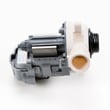
| Won’t drain or drains slowly | Drain system | Washer drain pump assembly WPW10276397 |
| Loud banging, tub off-balance | Suspension | Suspension W10780051 |
Why it matters
A washer that is installed correctly and kept level runs quieter, drains more reliably, and puts less strain on the motor, belt, and gear case. That reduces breakdowns and helps you get the full 10 to 15 years from your Kenmore washer.
Last updated: January 2026
How to unclog drain hose on Kenmore washer?
On Kenmore washer model 11021302011, most drain-hose clogs clear by safely disconnecting the hose at the washer and the home drain, then flushing the hose and checking the pump inlet for debris before reinstalling the hose with the correct standpipe depth from the 11021302011 installation guide.
Safety first
- Unplug the washer before servicing.
- Turn off both water faucets.
- Keep towels and a shallow pan ready for water in the hose.
- If the washer is full of water, use a drain/spin option if it will run; otherwise plan for manual draining.
Steps to unclog the drain hose
- Pull the washer forward and locate the drain hose connection at the back.
- Disconnect the drain hose from the home standpipe or laundry tub first.
- Disconnect the hose from the washer drain port; squeeze the clamp with pliers and slide it back.
- Check the hose for a kink, crushed section, or a sock or lint plug near the elbow.
- Flush the hose in a tub with hot water; for buildup, soak the clogged end in hot water plus vinegar for 20 to 30 minutes, then flush again.
- Inspect the washer drain path: if you find debris at the pump inlet area, the drain pump may need cleaning or replacement.
Reinstall correctly (prevents repeat clogs)
The installation instructions for this model call out key drain-hose setup details:
- Use the drain hose form and route the hose without sharp bends.
- Keep about 4.5 in. (113 mm) of hose inside the standpipe.
- Do not force excess hose into the standpipe or lay the hose on the bottom of a laundry tub.
| What you see | Most likely cause | What to do |
|---|---|---|
| Slow drain, gurgling | Partial hose restriction or standpipe issue | Flush hose; verify standpipe is clear |
| Won’t drain, pump hums | Pump jam or blockage at pump inlet | Check for debris; consider washer drain pump assembly WPW10276397 |
| Drains sometimes, sometimes not | Kinked hose or improper standpipe depth | Re-route hose; set correct insertion depth |
Why it matters
A restricted drain hose can trigger long drain symptoms, leave water in the tub, and strain the drain pump. Correct hose routing and standpipe depth help the washer drain consistently and reduce repeat clogs.
Last updated: January 2026
How to hard reset Kenmore washer?
To hard reset your Kenmore washer model 11021302011, unplug it (or turn off the breaker) for 3 to 5 minutes, then restore power and run a quick test cycle. This clears many temporary control glitches, including some lid-lock and motor-control related faults.
Hard reset steps (power cycle)
- Press Power/Cancel to stop the cycle.
- Unplug the washer from the grounded outlet (or switch the washer circuit breaker OFF).
- Wait 3 to 5 minutes.
- Plug back in (or turn breaker ON).
- Select a Rinse/Spin or Drain/Spin and start it to confirm the washer responds normally.
What a reset can fix (and what it will not)
A hard reset helps when the electronic control board gets “stuck” after a power flicker, paused cycle, or overload. It will not fix a failed part or a mechanical jam.
Common symptoms a reset can help:
- Washer will not start but has power
- Cycle won’t advance
- Control panel acts erratic
- Lid lock behavior seems inconsistent
Symptoms that usually need troubleshooting/parts:
- Won’t drain (often points to the drain system)
- Won’t spin or agitates weakly (often points to the drive system)
- Repeated lid lock errors
Quick checks before you reset
- Confirm the washer is plugged into a grounded 3-prong outlet (no extension cord). See the 11021302011 installation guide.
- Make sure the lid is fully closed and nothing is pinched in the lid area.
- If the washer is shaking or “walking,” level it; leveling reduces vibration-related interruptions. The 11021302011 installation guide shows how to adjust the leveling feet.
If it still will not run after the reset
Use this table to match the symptom to the most common next step.
| What you see | Most likely next step |
|---|---|
| Won’t lock or unlock lid | Inspect/replace the washer lid lock assembly W10404050 |
| Hums but won’t drain | Check for clogs; inspect/replace the washer drain pump assembly WPW10276397 |
| Won’t spin, belt looks loose/worn | Inspect/replace the washer drive belt WPW10006384 |
Why it matters
A proper hard reset is the fastest way to rule out a temporary control issue before you spend time on deeper diagnostics or replace parts like the lid lock, drain pump, or drive belt.
Last updated: January 2026