Owner’s manual
 Error Codes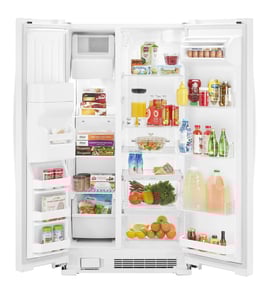



What is the most common problem with a GE refrigerator?
The most common problem we see on a GE refrigerator like model GSS25SGRESS is a cooling complaint (fresh food warm, freezer warm, or temperatures swinging). In many cases, the root cause is restricted airflow or a component in the cooling or defrost system that is not doing its job.
Most common causes behind “not cooling”
Start with the simple airflow and temperature-control checks, then move to the parts that commonly fail.
- Dirty condenser area reducing heat removal (often causes warm temps and long run times)
- Vents blocked by overpacked food, preventing air circulation between sections
- Doors not sealing or not closing fully (warm air leaks in, frost builds up)
- Evaporator fan not moving cold air through the refrigerator
- Defrost system problem causing frost buildup on the evaporator
Quick symptom-to-cause guide
| Symptom | Most likely area to check first | Common next step |
|---|---|---|
| Freezer cold, fresh food warm | Airflow/evaporator fan | Check for frost buildup (defrost issue) |
| Both sections warm | Condenser area, compressor run | Clean coils, verify fans running |
| Ice maker makes small or hollow cubes | Water filter or water supply | Replace filter, confirm water line is on |
| Door not closing well | Door gasket alignment/seal | Inspect gasket, correct sealing issues |
Model-specific checks that matter on GSS25SGRESS
The manual calls out several common, real-world causes tied to cooling and ice production:
- Give the refrigerator 24 hours to fully cool after startup or major temperature changes.
- If ice cubes are small or hollow, a clogged filter is a leading cause; replacing the refrigerator water filter MWFP is a standard fix.
- If the refrigerator is installed where ambient temperature drops below 60°F (16°C), it may not run often enough to maintain proper temperatures.
- Maintain installation clearances for airflow (typical guidance includes small side clearance and more space at the top and back); confirm the exact requirements in the GSS25SGRESS owner's manual.
Why it matters
Cooling problems can snowball into food spoilage, heavy frost, and extra wear on the compressor and fans. Catching airflow issues early often prevents a bigger repair later.
Last updated: February 2026
What is the average lifespan of a GE refrigerator?
Most GE refrigerators, including the GE GSS25SGRESS side-by-side, typically last 12 to 15 years with normal household use. Regular maintenance (especially keeping airflow and temperatures stable) helps the sealed system and compressor run longer and reduces costly breakdowns.
Typical lifespan ranges (what to expect)
- Average: 12 to 15 years
- Common real-world range: 10 to 15 years
- Often achievable with strong maintenance: 15 to 20 years
| Condition | What you’ll usually see | Why |
|---|---|---|
| Clean, well-ventilated, doors seal tightly | Longer lifespan | Less compressor run time and heat stress |
| Dirty condenser area, warm kitchen, frequent door opening | Shorter lifespan | Higher run time and wear |
| Water/ice system neglected (filter, valve, tubing) | More service calls | Leaks, clogs, and dispenser issues |
Maintenance that extends refrigerator life
We recommend these high-impact steps for a GE side-by-side like model GSS25SGRESS:
- Keep the condenser area clean and ensure good airflow around the cabinet.
- Confirm the doors close and seal fully; warm air leaks force longer run times.
- Set stable temperatures (avoid frequent adjustments).
- Replace the water filter on schedule to protect water flow and taste; use the refrigerator water filter MWFP.
- If you move the refrigerator, protect the water line and use proper materials and routing described in the GSS25SGRESS owner's manual.
Why it matters
A refrigerator’s most expensive components are in the sealed system (compressor, condenser, evaporator). When the unit runs hotter or longer than necessary, those parts wear faster. Simple upkeep reduces run time, improves cooling consistency, and helps you reach the upper end of the typical lifespan.
Last updated: February 2026
Why is my GE side-by-side freezer freezing up?
On the GE GSS25SGRESS side-by-side refrigerator, freezer frost or ice buildup almost always happens when warm, moist air gets into the freezer or when airflow is restricted. Start by checking door closing and gasket sealing, then look for ice blocking vents or a defrost system issue; see the GSS25SGRESS owner's manual.
Quick checks that fix most frost buildup
- Make sure the freezer door fully closes and is not held open by food packages.
- Inspect the door gasket for gaps, tears, or areas that are folded over.
- Clean the gasket and the cabinet sealing surface; sticky spots can prevent a tight seal.
- Confirm shelves and bins are pushed all the way back so the door closes squarely.
- Avoid frequent, long door openings (humidity loads the freezer with moisture).
Most common causes (and what to do)
| What you notice | Likely cause | What we recommend |
|---|---|---|
| Frost mainly near the door edge | Door not sealing | Inspect gasket, clean it, and confirm the door closes without resistance |
| Heavy frost on back wall, weak cooling | Defrost system problem | Check for a solid ice sheet on the rear panel; plan a defrost-system diagnosis |
| Frost plus warm spots or poor circulation | Airflow blocked | Rearrange items so vents are not covered; do not overpack |
Parts that are often involved
If the gasket is damaged or the freezer is icing up behind the rear panel, these model-matched parts are commonly checked during diagnosis:
- Gasket WR24X23250 (door seal that keeps humid air out)
- Refrigerator defrost heater WR51X10055 (melts frost off the evaporator during defrost)
- Refrigerator defrost thermostat WR50X10068 (helps control defrost heater operation)
- Refrigerator temperature sensor WR55X10025 (feeds temperature info to the control)
Why it matters
Frost buildup reduces airflow across the evaporator coil, which makes the freezer run longer, warms the fresh food section, and can lead to ice clumps or poor ice production. Fixing the air leak or defrost issue restores normal temperatures and efficiency.
Last updated: February 2026
How to read GE refrigerator model numbers?
GE refrigerator model numbers identify the refrigerator’s platform and key configuration details (style, size class, and feature package) so you can match the correct parts and specifications for your exact unit. For GE model GSS25SGRESS, the most reliable approach is to confirm the full model and serial from the ID label, then use that exact model when selecting parts.
Where to find the model and serial number (GSS25SGRESS)
The model and serial tag is inside the fresh food compartment; it’s located at the top right side behind the controls. Confirming this label prevents ordering the wrong GE water filter, ice maker, or temperature sensor.
- Open the refrigerator (fresh food) door
- Look at the top right area behind the control housing
- Write down the full model number and serial number exactly as shown
- Use the full model number (including all letters) when searching parts
Reference: GSS25SGRESS owner's manual
How GE model numbers are typically structured
GE model numbers are usually read left to right; letters identify the product family and style, numbers indicate the size class, and trailing letters often indicate feature and finish codes.
- Leading letters: product family and configuration (for example, side-by-side series)
- Numbers: size class (commonly tied to cubic-foot class)
- Trailing letters: feature package and exterior finish
Quick example using your model
| Segment | Example from GSS25SGRESS | What it generally tells you |
|---|---|---|
| Prefix letters | GSS | Side-by-side platform/family |
| Number group | 25 | Size class (commonly 25 cu. ft. class) |
| Suffix letters | SGRESS | Feature and finish identifiers |
Why it matters when ordering parts
Even small model-number differences can change the correct replacement part for the dispenser, icemaker, or water system.
Common model-specific parts customers match by model number:
- Refrigerator water filter MWFP (filter cartridge used for the water/ice system)
- Refrigerator temperature sensor WR55X10025 (helps regulate cooling)
- Refrigerator water valve WR57X33326 (controls water flow to dispenser and icemaker)
Tips to avoid mix-ups
- Match the full model number from the label, not just the first few characters
- If your unit has a dispenser or icemaker, confirm those features before ordering water-system parts
- When replacing electrical parts, unplug the refrigerator first and follow the wiring/part-location guidance in the manual
Why it matters
Using the exact model number (GSS25SGRESS) ensures the parts you buy fit correctly and restores proper cooling, ice production, and water dispensing without repeat repairs.
Last updated: February 2026