Owner’s manual
 Error Codes


How to remove bottom grille on GE refrigerator?
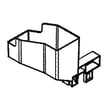
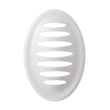
On the GE GNE27JMMKFES bottom-mount refrigerator, the bottom grille (base grille) typically comes off by releasing its retaining tabs or removing a couple of screws (model variations exist). Once it is free, pull the grille straight out to avoid cracking the plastic or bending the mounting points; see the owner's manual for the exact release points.
- Unplug the refrigerator or switch off power at the breaker (safer when working near wiring and fans).
- Open both fresh food doors for better access.
- Look along the top edge of the grille for screws; remove them with a Phillips screwdriver if present.
- If there are no screws, press in on the grille near the clip locations and pull the top edge toward you to release the tabs.
- Pull the grille straight out and set it aside.
- Reinstall by lining it up with the slots and pushing straight in until it snaps in; reinstall screws if your grille uses them.
The manual guidance for moving this refrigerator is to pull it straight out and push it straight back in to protect flooring and the water line.
- Raise the front leveling legs before moving the unit
- Pull straight out (do not “walk” it sideways)
- Watch the power cord and water supply line when pushing back
- Lower the leveling legs when the refrigerator is back in place
| What you find at the grille | What to do | Why it matters |
|---|---|---|
| 2 screws at the top edge | Remove screws, then pull grille out | Prevents broken screw bosses and cracked grille |
| Snap clips/tabs only | Release tabs, then pull straight out | Avoids breaking the retaining clips |
| Grille feels stuck | Check for hidden screws and release points | Forcing it can damage the grille and frame |
The bottom grille protects and directs airflow around the condenser area. Removing it the right way helps you avoid broken clips, air leaks, and rattles after reassembly.
Last updated: February 2026
What is the average lifespan of a GE refrigerator?
GE refrigerators typically last 12 to 15 years. For your GE GNE27JMMKFES bottom-mount refrigerator, regular maintenance (clean airflow, good door sealing, and stable temperatures) is what most often determines whether you land closer to 12 years or push beyond 15.
Most modern refrigerators fail early due to heat stress, poor airflow, or chronic icing issues. These factors have the biggest impact:
- Dirty condenser area causing the compressor to run hot and long
- Door gasket leaks that create constant moisture and frost
- Overpacked shelves blocking vents and reducing airflow
- Ice maker and water system issues (leaks, clogs, low flow)
- Power surges or repeated breaker trips affecting electronics
A simple routine helps the sealed system and fans run cooler and longer.
| Task | How often | What it helps prevent |
|---|---|---|
| Clean condenser area and ensure airflow | Every 6 to 12 months | Overheating, poor cooling |
| Check door seal for gaps and tearing | Every 3 to 6 months | Frost, warm temps, high run time |
| Replace water filter (if used) | About every 6 months | Low water flow, ice maker issues |
| Keep vents clear inside compartments | Ongoing | Warm spots, freezing in fresh food |
For model-specific care and control settings, follow the owner's manual.
These symptoms usually mean a major component is wearing out or the unit is running inefficiently:
- Temperatures drift even after adjusting controls
- Compressor runs almost constantly
- Repeated heavy frost buildup in the freezer
- Loud fan noise or intermittent fan operation
- Water dispenser or ice maker performance steadily declines
If you are troubleshooting temperature swings, a failed sensor is a common, fixable cause; the GE profile refrigerator temperature sensor WR55X10025 is one of the model-matched parts we list for this refrigerator.
A refrigerator that is running hot or leaking air can still “work,” but it uses more energy and puts extra wear on the compressor, fans, and control board. Keeping airflow clear and temperatures stable is the most reliable way to reach the full 12 to 15 year lifespan.
Last updated: February 2026
What is the most common problem with a GE refrigerator?
The most common GE refrigerator issue is not cooling properly, usually caused by airflow problems, a failing evaporator fan, a bad temperature sensor, or frost buildup in the evaporator area. For your GE GNE27JMMKFES bottom-mount refrigerator, we use the troubleshooting steps in the owner's manual to narrow it down fast.
- Fresh food warm, freezer OK: airflow restriction or a stuck air damper (cold air not moving into the refrigerator section)
- Both sections warm: evaporator fan not running, control issue, or sealed system/compressor problem
- Food freezing in the refrigerator: items too close to the rear air vent or temperature set too cold (adjust one step warmer)
- Strange noises: fan blade hitting ice, failing fan motor, or condenser fan noise
- Water dripping after dispensing: air in the water line or not holding the glass under the dispenser long enough
- Confirm settings: If “Turbo Cool” is on, cooling behavior can change; check the Controls section in the manual.
- Check airflow: Keep packages away from the rear air vent to prevent freezing and uneven temps.
- Listen for the evaporator fan: A steady fan sound from the freezer area is normal; silence can indicate a fan problem.
- Look for frost buildup: Heavy frost on the back freezer panel often points to a defrost issue.
- Rule out dispenser drip: Hold the glass under the dispenser 2 to 3 seconds after releasing; then dispense water for at least 2 minutes to purge air.
| What’s failing | What you may notice | Example part on this page |
|---|---|---|
| Temperature sensing | Temps swing, food too warm or too cold | Refrigerator temperature sensor WR55X10025 |
| Airflow control | Fridge warm, freezer cold | Refrigerator air damper WR60X27396 |
| Defrost protection | Frost buildup, weak airflow | Refrigerator defrost bi-metal thermostat WR50X10069 |
| Evaporator fan system | Warm temps, odd fan noise | Motor dc evap fan asm WR60X32614 |
A “not cooling” complaint is often an airflow issue, not a lack of refrigerant. Fixing airflow (vents, damper, fan, defrost) restores stable temperatures and prevents food spoilage and freezing in the fresh food section.
Last updated: February 2026