Installation guide
 Owner’s manual
 Error Codes


What are the advantages of bottom mount refrigerators?
Bottom-mount refrigerators like the Frigidaire LGHB2869LF3 keep fresh-food shelves at eye and waist level, so everyday items are easier to reach with less bending. They also support wide French-door storage up top and a separate bottom freezer for bulk frozen foods.
Key benefits you notice day to day
- Better access to fresh food: produce, drinks, and leftovers sit higher where you use them most.
- More organized freezer storage: the bottom freezer typically uses baskets or drawers to separate items.
- Improved visibility: you can scan refrigerator shelves quickly without crouching.
- Good fit for busy kitchens: French doors reduce the swing space needed compared to a single wide door.
- Easier meal prep flow: fresh ingredients stay front-and-center.
Installation and kitchen-fit advantages
A bottom-mount design often works well in standard kitchen layouts, but it still needs proper clearance and a level floor for best performance. For this Frigidaire platform, plan for minimum clearances and full door swing so drawers and freezer baskets can open completely; see the installation guide.
| What you’re planning | Why it matters | Practical tip |
|---|---|---|
| Door swing and drawer access | Prevents drawers/baskets from hitting cabinets | Leave enough space for doors to fully open |
| Air circulation clearance | Helps cooling performance and reliability | Keep typical clearances around sides/top and rear |
| Water supply access (if equipped) | Supports ice maker and dispenser operation | Use a proper shutoff valve and correct tubing |
Why it matters
Most households use the refrigerator section more than the freezer. A bottom-mount layout puts the most-used space where it is easiest on your back and fastest to access, while keeping frozen storage separated and contained.
Helpful related DIY content
Last updated: January 2026
What is the bottom part of the fridge called?
On the Frigidaire LGHB2869LF3 bottom-mount refrigerator, the “bottom part” is most commonly the machine compartment (the area that houses the compressor and other cooling-system components) and, underneath, the drain pan area. For diagrams and exact terminology, use the LGHB2869LF3 owner's manual.
What you might be pointing to
Depending on what you see or hear at the bottom, people mean different parts:
- Machine compartment: the enclosed area where the compressor and condenser-related parts live
- Toe grille (kick plate): the front lower cover that lets air flow and hides wiring and tubing
- Drain pan: the pan underneath that catches defrost water so it can evaporate
- Condenser fan area (on many models): moves air across condenser components to remove heat
- Bottom freezer drawer section: the lower storage compartment on a bottom-mount design
Quick ID guide (symptom to area)
| What you notice | Bottom area usually involved | What to check first |
|---|---|---|
| Warm air blowing near the floor | Toe grille or machine compartment airflow | Clear dust, confirm vents are not blocked |
| Water on the floor | Drain pan or defrost drain path | Look for a shifted pan, clogged drain, or ice buildup |
| Rattling or buzzing | Fan area or loose cover/screws | Check for vibration, loose fasteners, or debris |
| Musty odors | Drain pan or interior air circulation | Clean pan area and replace the air filter if equipped |
Why it matters
Knowing the correct name helps you find the right diagram, instructions, and replacement parts. For example, odor issues often relate to airflow and filtration; on this model, the refrigerator door air filter EAFCBF is a common maintenance item.
Helpful next steps
- Review the parts diagram and terminology in the LGHB2869LF3 owner's manual
- If you mean the lower front cover, remove and reinstall it carefully so airflow is not restricted
- If you have odors, follow how to get rid of refrigerator smells and replace the air filter on schedule
- If you have water puddles, follow how to get rid of refrigerator puddles and inspect the drain pan area
Last updated: January 2026
What is the most common problem with Frigidaire refrigerators?
The most common Frigidaire refrigerator problem is a cooling complaint: the fresh food section gets warm, temperatures swing, or the freezer cools but the refrigerator does not. On the Frigidaire LGHB2869LF3 bottom-mount, this often ties back to airflow, door sealing, or fan-related issues that prevent cold air from circulating correctly (see the LGHB2869LF3 installation guide).
What to check first (fast, high-impact)
- Confirm doors close and seal on all sides; a poor seal causes warm temps and frost.
- Make sure the cabinet is level and slightly tilted 1/4 inch front-to-back so doors self-close.
- Listen for the evaporator fan; weak airflow usually means poor cooling in the refrigerator section.
- Check for heavy frost on the back wall inside the freezer; it points to a defrost problem.
- If ice maker or dispenser performance is also poor, verify the water supply is fully on and not leaking.
Common symptoms and the most likely causes
| Symptom | Most likely cause | What we usually do next |
|---|---|---|
| Refrigerator warm, freezer OK | Airflow problem (fan, blocked vents) | Inspect fan area and vents; test fan operation |
| Frost buildup, weak airflow | Defrost system issue | Check defrost pattern; inspect heater and wiring |
| Doors pop open or don’t seal | Leveling or gasket issue | Level cabinet; warm and reshape gasket if needed |
| Ice maker slow or no ice | Water supply or valve issue | Check shutoff valve; test inlet valve |
Parts that commonly relate to these problems
If troubleshooting points to a specific failure, these are common repair paths for this model:
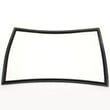
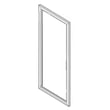
- Door not sealing: consider the refrigerator door gasket 5304537408.
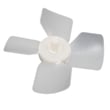
- Weak or noisy airflow: inspect the refrigerator evaporator fan blade 5308000010 (and the fan motor if applicable).
- Ice maker or dispenser water issues: test the refrigerator water inlet valve 242253002.
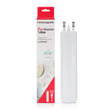
- Bad taste or slow water flow: replace the refrigerator water filter ULTRAWF.
Why it matters
Cooling and airflow problems can quickly lead to food spoilage, excess frost, and longer compressor run times. Fixing door sealing and airflow early is one of the best ways to restore stable temperatures and reduce strain on the refrigerator.
Last updated: January 2026