Installation guide
 Owner’s manual
 Error Codes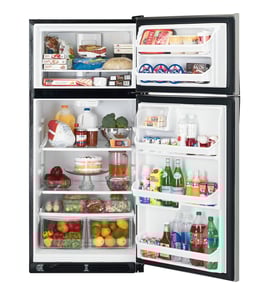



Is a top mount fridge better than a bottom mount?
A top-mount refrigerator like Kenmore 2536880901E is “better” when you want lower cost, simpler design, and easy access to frozen foods; a bottom-mount is “better” when you want the fresh-food section at eye level for everyday use. Your best choice depends on how you shop and cook.
Quick comparison
| Feature | Top-mount (freezer on top) | Bottom-mount (freezer on bottom) |
|---|---|---|
| Most-used items (fresh food) | Lower, more bending | Higher, less bending |
| Freezer access | Easier, at eye level | Often requires bending or pull-out drawer |
| Typical price and complexity | Usually lower and simpler | Often higher and more complex |
| Best for | Frozen-food heavy households | Fresh-food heavy households |
When a top-mount is the better fit
- You use the freezer frequently (frozen meals, bulk meat, ice trays).
- You want a straightforward layout with fewer moving parts.
- You prefer a lighter door and simpler storage setup.
- You want easier access to freezer shelves without crouching.
- You are replacing an older top-mount and want a similar footprint and feel.
When a bottom-mount is the better fit
- You cook often and reach into the refrigerator section many times per day.
- You want produce, dairy, and leftovers closer to eye level.
- You prefer a pull-out freezer basket for organizing frozen foods.
- You want less bending for fresh-food access (common comfort upgrade).
Why it matters
The “best” refrigerator style is the one that matches your daily reach pattern. Most households open the fresh-food door more than the freezer, so bottom-mount designs can feel more convenient; top-mount designs can feel more efficient if you rely heavily on frozen storage.
Model-specific tip for 2536880901E owners
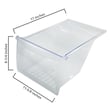
If you are deciding based on usability rather than layout alone, check the storage features and setup guidance in the 2536880901E owner's manual. For example, many top-mount models include crispers for produce storage and adjustable racks that can change how convenient the refrigerator section feels day to day.
Last updated: January 2026
Are all refrigerators 70 inches high?
No. Refrigerators are not all 70 inches high; height varies by style and capacity. For a Kenmore top-mount like model 2536880901E, many units land in the mid-60s to around 70 inches, but you should confirm the exact height and required clearances in the 2536880901E installation guide.
Typical refrigerator height ranges (what most shoppers see)
Refrigerator height depends on the configuration (top-mount, side-by-side, French door) and whether it has tall hinges or adjustable feet.
- Top-mount (top freezer): commonly about 60 to 69 inches tall
- Side-by-side: commonly about 65 to 71 inches tall
- French door: commonly about 67 to 70+ inches tall
- Compact/apartment: commonly about 32 to 60 inches tall
Installation clearances matter as much as height
Even if the cabinet height fits, you still need space for airflow and door swing. For this Kenmore 2536880901E installation, the guide calls out these minimum clearances:
- Sides and top: 3/8 inch
- Rear: 1 inch
- Keep the toe grille unblocked for airflow
- Place it near a grounded outlet (no extension cord or adapter)
| What to measure | Where to measure | Why it matters |
|---|---|---|
| Overall height | Floor to top of cabinet/hinge cover | Ensures it fits under cabinets/soffits |
| Width | Widest point with doors closed | Prevents rubbing on cabinets/walls |
| Depth | Front to back (include handles if needed) | Confirms walkway and door clearance |
| Clearance space | Around the cabinet | Protects cooling performance |
Why it matters
A refrigerator that is “about 70 inches” can still be a bad fit if the hinges sit higher than the cabinet, the floor is uneven, or there is not enough ventilation space. Correct sizing also helps the compressor cool properly.
Last updated: January 2026
What are the disadvantages of a top mount fridge?
Top-mount refrigerators like Kenmore model 2536880901E typically cost less and are simple to service, but the main disadvantages are less convenient fresh-food access (you bend more), fewer organization features than many bottom-freezer designs, and fewer built-in dispenser options.
Common disadvantages you will notice day to day
- Fresh food is lower: you reach down more often for produce, drinks, and leftovers.
- Freezer is at eye level: convenient for frozen items, but it pushes the refrigerator section down.
- Less premium storage: many top-mount designs have fewer adjustable bins, deli drawers, and wide pantry-style drawers.
- Fewer dispenser configurations: many top-mount models do not include an external water or ice dispenser.
- Door swing clearance matters: if the hinge side is against a wall, you may need extra space to open the door wider (important for removing shelves and drawers).
Installation and space tradeoffs (often overlooked)
Your installation setup can amplify the downsides. For this style of refrigerator, we follow the clearance and temperature guidance in the 2536880901E installation guide.
| Factor | What it affects | What to plan for |
|---|---|---|
| Side and top clearance | Airflow and easier install | Leave about 3/8 inch |
| Rear clearance | Airflow and cord/water routing | Leave about 1 inch |
| Room temperature | Cooling performance | Avoid spaces below 55°F or above 110°F |
Why it matters
If you access fresh food far more than frozen food (most households do), a top-mount layout can feel less ergonomic over time. Planning door swing space, leveling, and airflow helps the refrigerator cool consistently and keeps doors sealing properly.
Quick tips to reduce the downsides
- Store everyday items (milk, snacks) on the most reachable refrigerator shelves.
- Keep heavier frozen foods in the lower freezer basket area to reduce lifting.
- Make sure the cabinet is level so doors close easily and seal evenly.
- Avoid overpacking drawers; it reduces airflow and makes drawers harder to slide.
- Use the organization features you have (door racks, crisper humidity controls) as outlined in the 2536880901E owner’s manual.
Last updated: January 2026
Do you need space on top of the fridge?
Yes. For Kenmore top-mount refrigerator model 2536880901E, you need clearance above the cabinet for proper airflow and easier installation. The installation guidance for this model calls for 3/8 inch at the top (and sides), with 1 inch at the back; some setups need more.
Recommended clearances for model 2536880901E
Use these minimum clearances unless your cabinetry or condenser style requires extra space:
- Top: 3/8 inch
- Sides: 3/8 inch
- Back: 1 inch
- Hinge-side near a wall: allow extra space so the door can open wider
- If you see exposed coils/tubing on the back: leave 3 inches at the top
For the exact installation notes and any cabinet cutout guidance, follow the 2536880901E installation guide.
Quick reference table
| Location around refrigerator | Minimum clearance | What it helps with |
|---|---|---|
| Top | 3/8 in | Air circulation, easier fit |
| Sides | 3/8 in | Air circulation, easier fit |
| Back | 1 in | Air circulation, electrical and plumbing access |
| Top (if exposed rear coils) | 3 in | Heat dissipation for air-cooled condenser |
Why top clearance matters
Top clearance helps warm air move away from the refrigerator cabinet so the compressor and condenser can reject heat efficiently. Too little space can lead to longer run times, warmer temperatures, and higher energy use.
Tips if your refrigerator is tight in a cabinet opening
- Confirm the cabinet opening is square and the floor is level.
- Keep the back clearance so the power cord and (if equipped) water line are not pinched.
- Clean dust from the condenser area periodically to maintain airflow.
- Avoid placing the refrigerator in direct sunlight or next to heat sources.
Last updated: January 2026