 Installation guide
 Owner’s manual




What is the average life expectancy of a GE dishwasher?
A GE dishwasher typically lasts 10 to 12 years. For your GE GDF510PSJ4SS, consistent care (cleaning, preventing clogs, and addressing leaks early) helps you reach that range, while heavy daily use and hard-water buildup can shorten it. See the GDF510PSJ4SS owner’s manual for model-specific care guidance.
What affects dishwasher lifespan most
- Water quality: Hard water speeds up mineral buildup on the heating system and internal passages.
- Cleaning routine: Regular interior cleaning reduces odor, film, and deposits.
- Loading habits: Overloading can reduce wash performance and strain the circulation system.
- Leak prevention: Small door or tub seal leaks can lead to bigger failures if ignored.
- Heat and drying performance: Poor drying can signal a heating issue that should be corrected early.
Typical lifespan ranges (what we see most often)
| Usage pattern | Typical life expectancy |
|---|---|
| Light use (a few loads/week) | 12 to 15 years |
| Average use (1 load/day) | 10 to 12 years |
| Heavy use (2+ loads/day) | 8 to 10 years |
Maintenance that helps you hit 10 to 12 years
GE’s care guidance includes cleaning and de-odorizing the interior using citric acid or a dishwasher cleaner. Use these habits to reduce wear on key components like the circulation pump and heating system.
- Clean and de-odorize the tub periodically (especially with hard water)
- Keep spray paths clear; remove debris that can block wash action
- Use the right detergent and rinse aid for your water conditions
- Check the door seal area for residue that can cause drips
- Fix draining issues quickly so the pump is not working against a blockage
Why it matters
Knowing the expected lifespan helps you decide when maintenance is worth it versus when a major repair (like a pump or control) may not be cost-effective. Preventive cleaning is usually the simplest way to extend service life.
Last updated: January 2026
What is the most common problem with GE dishwashers?
The most common issues we see with GE dishwashers like model GDF510PSJ4SS are draining problems (water left in the tub), the dishwasher not starting, and poor cleaning from restricted water flow. These problems are often caused by clogs, loading issues, or a door that is not fully latched.
Most common problems (and what usually causes them)
- Not draining: food debris in the sump area, a kinked/blocked drain hose, or a restriction at the disposer connection.
- Won’t start or stops: a tripped breaker, a wall switch turned off, or a door that is not latching.
- Poor cleaning: spray arm ports clogged, items blocking the detergent cup, or heavy soil buildup.
- Suds/foam in the tub: using the wrong detergent (hand dish soap) or spilled rinse aid.
- Hard water film and odors: mineral deposits and residue inside the tub.
Quick checks we recommend first
Use these steps before replacing parts:
- Confirm the breaker is on and any nearby wall switch supplying dishwasher power is on.
- Close the door firmly and start a cycle; a weak latch can prevent operation.
- Make sure tall utensils are not blocking the detergent dispenser.
- Use only automatic dishwasher detergent (tablets, packets, powder, gel); never use hand dish soap.
- Clean and de-odorize the interior periodically (citric acid or dishwasher cleaner) to reduce film and smells.
Parts that commonly relate to these symptoms
If the basic checks do not fix the issue, these model-matched parts are common suspects:
| Symptom | Common part to inspect | Example model-matched part |
|---|---|---|
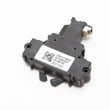
| Won’t start / won’t run | Door latch and strike alignment | GE dishwasher door latch lock WD21X10490 |
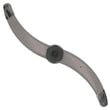
| Poor cleaning (lower rack) | Lower spray arm clogged or damaged | Dishwasher spray arm, lower WD22X33499 |
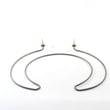
| Not drying / water not heating | Heating circuit issue | Dishwasher heating element WD05X30818 |
Why it matters
Drain, start, and wash-performance problems usually get worse over time. Catching a clog, loading issue, or failing latch early helps prevent repeat cycle failures, standing water, and poor wash results.
For model-specific operating and troubleshooting steps, follow the GDF510PSJ4SS owner’s manual. You can also match any displayed fault to the GE electronic dishwasher error codes guide.
Last updated: January 2026
Can a clogged drain cause an FTD error?
Yes. On the GE GDF510PSJ4SS dishwasher, an FTD (fail to drain) error commonly happens when water cannot leave the tub because the drain path is restricted, such as a clogged air gap, disposer connection, filter area, or a kinked/blocked drain hose.
What to check first (fast, common fixes)
- Turn power off to the dishwasher at the breaker before inspecting under the sink.
- If the dishwasher drains into a garbage disposer, confirm the disposer inlet drain plug was removed; if it is still in place, the dishwasher will not drain.
- Check the sink drain: if the kitchen sink drains slowly, the dishwasher may also fail to drain.
- Clean the air gap (if you have one); a clogged air gap can stop draining.
- Clean the ultra-fine filter area in the bottom of the tub (food debris here can restrict flow).
- Inspect the drain hose for kinks, crushing, or sagging loops that trap water.
Drain hose installation details that affect FTD
A drain hose that is too long, routed incorrectly, or installed too high can reduce drain performance.
| Item to verify | What “good” looks like | Why it matters |
|---|---|---|
| Disposer connection | Drain plug removed | A plugged inlet blocks all draining |
| Drain hose routing | No kinks or crushed sections | Restrictions prevent the pump from moving water |
| Connection height | Drain connection height not over 72 inches above the bottom of the dishwasher | Excess height can cause poor drain operation |
| Total hose length | Total drain hose length not over 12 feet | Too much length can reduce pump-out performance |
For the exact routing and connection steps, follow the installation guide.
When a clog is not the only cause
If the drain path is clear but the unit still shows FTD, the issue can be in the drain components (for example, a damaged hose or an internal restriction).
- If the hose is split, soft, or permanently kinked, replace it with the correct part for this model.
- If you see standing water returning after draining, re-check the air gap or high drain loop setup.
Model-matched replacement option: dishwasher drain hose WD24X10062.
Why it matters
FTD is a protection signal that the dishwasher cannot pump water out as expected. Clearing the drain path prevents odors, standing water, and repeat drain errors.
Last updated: January 2026
What is GE's best dishwasher?
GE’s “best” dishwasher depends on what you value most (quietness, drying, price, or premium finishes). For most homes, GE Profile is the best overall choice because it typically combines strong wash performance, quieter operation, and upgraded drying features compared to entry-level GE models; confirm feature sets in the GDF510PSJ4SS owner’s manual.
How we recommend choosing the best GE dishwasher
Focus on the features that change day-to-day results (cleaning, drying, noise) and the options you will actually use.
- Cleaning system: look for strong wash action and effective filtration/food handling
- Drying performance: heated dry and enhanced drying options reduce water left on plastics
- Noise level: lower dBA is better for open kitchens
- Rack flexibility: adjustable upper rack, fold-down tines, and bottle jets (on some models)
- Reliability and serviceability: common parts like pumps, heaters, and latches should be readily available
GE lineup comparison (quick guide)
| GE line | Best for | Typical strengths | Typical tradeoffs |
|---|---|---|---|
| GE (standard) | Value and basics | Solid cleaning, practical cycles | Louder and fewer premium features on many models |
| GE Profile | Best overall | Quieter, better drying, more options | Higher price than standard GE |
| GE Café | Premium kitchens | Design-forward finishes, very quiet on many models | Highest cost; features vary by model |
What “best” means for your current model
If you already own GE model GDF510PSJ4SS, “best” often means getting the best performance from the dishwasher you have. These upgrades and fixes commonly make the biggest difference:
- Replace a worn or clogged lower spray arm if wash coverage is weak: dishwasher spray arm, lower WD22X33499
- Address poor drying by checking heater-related issues and cycle options: dishwasher heating element WD05X30818
- Fix starting problems by inspecting the latch system: GE dishwasher door latch lock WD21X10490
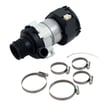
- Improve wash pressure and circulation if dishes come out gritty: dishwasher circulation pump WD26X23258
Why it matters
Choosing the right GE dishwasher (or tuning up the one you own) directly affects cleaning results, drying time, and how noticeable the dishwasher is during dinner or TV time.
Last updated: January 2026





