Owner’s manual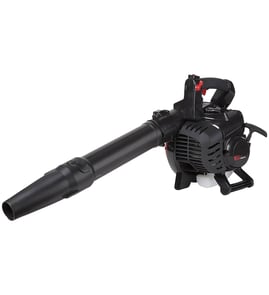

How to find Craftsman leaf blower model number?
Your Craftsman gas leaf blower’s model number is printed on a product ID label attached to the unit. For model 358794741, use that full number when ordering parts or checking the parts list in the 358794741 operator's manual.
Check these common label locations first (wipe dirt and oil off the housing so you can read it):
- On the side of the engine or motor housing
- Near the starter/recoil cover area
- On the rear handle area or frame
- Near the fuel tank
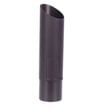
- Along the blower tube connection area
Model labels can include several numbers; we use the model number to match diagrams and parts.
- Look for wording like Model, M/N, or Model No.
- Write the number exactly as shown (for example, 358794741)
- Ignore patent numbers or emissions family codes for parts lookup
- If the label is faded, use a flashlight at an angle to make the print stand out
| What you see | What it’s used for | Use it to order parts? |
|---|---|---|
| Model number (example: 358794741) | Identifies the exact blower version | Yes |
| Part number (example: 530069216) | Identifies a specific replacement part | Yes (after you find the right part) |
| Serial number | Production tracking | No |
Craftsman blowers often share similar housings, but parts like the fuel system, tubes, and switch kit can vary by model. Using the correct model number helps ensure you get the right diagrams and the right replacement parts the first time.
Last updated: January 2026
Are gas leaf blowers being phased out?
Yes. Gas leaf blowers like the Craftsman 358794741 are increasingly restricted in some cities and states due to noise and emissions concerns, so many homeowners are switching to battery models. Your blower is still serviceable and legal in many areas; local rules determine what you can use.
Most areas are not banning ownership; they are limiting where/when you can operate gas-powered outdoor equipment.
Common restriction types include:
- City ordinances that limit hours or days for leaf blower use
- Noise limits (decibel caps) that effectively restrict gas blowers
- State or local rules that restrict certain small off-road engines
- Commercial landscaping rules that differ from homeowner rules
- Park, HOA, or campus policies that prohibit gas equipment on-site
If you want to keep using your Craftsman 358794741, focus on safe operation, good maintenance, and reducing nuisance factors.
Recommended steps:
- Check your city and county rules first; then check any HOA or property rules
- Keep the muffler and spark screen in good condition to control noise and exhaust
- Avoid running at full throttle near windows, vehicles, or bystanders
- Use the correct fuel mix and store fuel properly to reduce smoke and hard starting
- Follow the operating and safety guidance in the 358794741 operator’s manual
If the blower smokes, surges, or is hard to start, fuel delivery and priming are frequent causes.
| Symptom | Common area to check | Example part for this model |
|---|---|---|
| Hard starting after sitting | Fuel lines, primer bulb | Ayp leaf blower primer bulb 530035497 |
| Starts then dies or won’t stay running | Fuel pickup/lines, carburetor | Ayp lawn & garden equipment fuel line, large 530069216 |
| Poor performance under load | Carburetor, gaskets, air leaks | (Inspect carb adapter and gasket surfaces) |
Restrictions can change what equipment is practical to own. Keeping your Craftsman gas blower tuned reduces smoke, improves reliability, and helps you stay within typical nuisance and noise expectations.
Last updated: January 2026
What is the best gas-powered leaf blower on the market?
There is no single “best” gas-powered leaf blower for everyone; the right choice depends on whether you need maximum airflow (CFM), higher airspeed (MPH), or all-day comfort. Your Craftsman model 358794741 is a 25cc 2-cycle unit rated at 430 CFM and 200 MPH, which is a strong baseline for typical home cleanup. See the 358794741 operator's manual for the exact performance ratings and intended uses.
Focus on the job you do most often, then match the blower type and specs.
- Light yard cleanup (driveways, patios): handheld gas blower is usually enough
- Heavy leaf volume or large lots: backpack blower reduces fatigue
- Wet, matted leaves: prioritize higher CFM and a good nozzle setup
- Tight areas (beds, corners): prioritize higher MPH and controllable throttle
- Vacuum/mulch use: choose a blower-vac and keep tubes and bag in good condition
| Spec | What it affects | What to prioritize |
|---|---|---|
| CFM (air volume) | How much debris you can move at once | Big piles, wet leaves, large areas |
| MPH (air speed) | How hard the air hits the debris | Stuck debris, cracks, corners |
| Engine size (cc) | Power potential and load handling | Longer runs, heavier debris |
| Weight/strap design | Comfort and control | Long sessions, backpack models |
This model is designed for common homeowner tasks like sweeping debris from hard surfaces and blowing leaves into piles; it also supports vacuum use for dry material when operated at high speed.
- Old fuel or incorrect 2-cycle mix ratio
- Cracked or soft fuel line (consider ayp lawn & garden equipment fuel line, large 530069216)
- Primer bulb not drawing fuel (consider ayp leaf blower primer bulb 530035497)
- Clogged muffler spark screen or restricted exhaust
- Vacuum door not sealing or tubes not seated (air leaks reduce output)
Buying by “best overall” often leads to a blower that is too heavy, too loud, or not powerful enough for your yard. Matching CFM, MPH, and blower style to your debris type and run time gets better results with less fatigue.
Last updated: January 2026
How long does a gas-powered leaf blower last?
A gas-powered leaf blower typically lasts about 10 years with normal homeowner use and routine maintenance. For the Craftsman 358794741, lifespan depends most on fuel quality, air filtration, and keeping the carburetor and fuel lines clean; our 358794741 operator’s manual outlines the maintenance schedule.
- Homeowner use (seasonal): ~8 to 12 years
- Heavy weekly use: ~5 to 8 years
- Neglected maintenance or old fuel: ~2 to 5 years
| Usage pattern | What shortens life fastest | What helps most |
|---|---|---|
| Occasional yard cleanup | Old fuel left in tank | Fresh fuel mix, proper storage |
| Regular weekly use | Dirty air filter, overheating | Clean filter, keep cooling areas clear |
| High-hour use | Fuel system wear, carb buildup | Replace fuel lines, tune fuel system |
- Use fresh, properly mixed 2-cycle fuel and avoid storing mixed fuel too long.
- Clean or replace the air cleaner on schedule.
- Keep the cooling air inlets and housing clear of debris.
- Inspect fuel lines for cracking or softness; replace as needed.
- If starting becomes difficult, check the primer bulb and fuel delivery.
Fuel system and starting components wear out first on many 2-cycle blowers. If you see fuel leaks, hard starting, or inconsistent running, these parts are common fixes:
- Ayp lawn & garden equipment fuel line, large 530069216
- Ayp leaf blower primer bulb 530035497
- Ayp lawn and garden equipment engine carburetor assembly 545081855
A blower that is maintained usually fails gradually (hard starting, surging, loss of power) rather than suddenly. Replacing small wear parts early helps protect the engine and keeps your Craftsman 358794741 running reliably for years.
Last updated: January 2026