Owner’s manual


How to hard reset kenmore washer?
To hard reset your Kenmore washer model 11020832990, we recommend a simple power reset: unplug the washer (or switch off the breaker) for 1 minute, then restore power and restart the cycle. This clears minor control glitches and stuck cycle behavior.
Quick hard reset steps (power reset)
- Press the timer knob in to stop the washer.
- Unplug the power cord from the outlet (or turn the breaker off).
- Wait 60 seconds.
- Plug the washer back in (or turn the breaker on).
- Select a cycle and pull the timer knob out to start.
For normal stop and restart operation on this model, use the timer knob method described in the 11020832990 owner's manual.
If the washer still will not start or advance
A “reset” will not fix a failed safety switch or a no-drain condition. Check these common causes next:
- Lid not closing fully; the lid switch is not engaging
- Washer drains slowly or not at all (water left in tub)
- Timer knob pushed in but not pulled out firmly to start
- Overloaded tub causing poor agitation or stalling
- Power supply issue (loose plug, tripped breaker, bad outlet)
Common parts tied to “won’t run” symptoms
| Symptom | Most common check | Related part for this model |
|---|---|---|
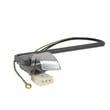
| Won’t start or stops when lid opens | Lid switch operation | Washer lid switch WP3949238 |
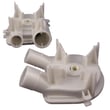
| Won’t drain, stalls before spin | Pump and drain path | Washer drain pump WP3363394 |
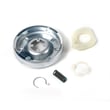
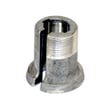
| Motor runs but washer won’t agitate/spin | Drive coupling | Coupling 285753A |
Why it matters
A hard reset clears temporary control interruptions, but repeated stalling usually points to a mechanical or safety-related issue (lid switch, drain pump, coupling). Fixing the root cause prevents mid-cycle stops and protects the drive system.
Last updated: February 2026
How to identify a Kenmore washer model?
Your Kenmore washer model number is printed on the model and serial number plate; for Kenmore model 11020832990, that plate is the official identifier we use to match the correct washer parts and diagrams. On most Kenmore top-load washers, you will find it under the lid or on the washer cabinet.
Where to look on a Kenmore washer
Check these common locations first:
- Under the washer lid, around the tub opening (top-load models)
- On the washer cabinet rim near the lid switch area
- On the back panel of the washer cabinet
- Near the control console area (sometimes behind or under the console)
- Inside the cabinet (visible when the lid is open)
For model-specific placement notes and how the plate is referenced, use the 11020832990 owner's manual.
What the model number looks like (and why it matters)
Kenmore washer model numbers are often a long numeric string (commonly starting with 110 on many Kenmore-built top-load designs). The exact model number is what we use to ensure parts like a lid switch, drain pump, or motor coupling fit correctly.
Quick ID checklist
- Write down the full model number exactly as shown (all digits)
- Record the serial number too (helps with production variations)
- Take a clear photo of the plate before ordering parts
Common parts that depend on the exact model number
Even small model differences can change the correct replacement part. Here are examples of parts that frequently require an exact match:
| Part type | What it affects | Example part for this model |
|---|---|---|
| Lid switch | Spin and agitation safety interlock | Washer lid switch WP3949238 |
| Drain pump | Draining and spin performance | Washer drain pump WP3363394 |
| Motor coupling | Agitation and spin drive | Coupling 285753A |
Why it matters
Using the exact Kenmore model number prevents ordering the wrong part, reduces return delays, and helps you follow the correct troubleshooting steps for your washer’s design.
Last updated: February 2026
Is it worth repairing a Kenmore washing machine?
Yes, repairing a Kenmore washer is usually worth it when the fix restores reliable washing and spinning for less than the cost of replacing the machine. For Kenmore model 11020832990, many common failures involve serviceable parts (lid switch, drain pump, motor coupling), so a targeted repair often makes financial sense.
Quick way to decide (repair vs. replace)
Use these checkpoints before you buy parts or schedule service:
- Get a clear symptom: no spin, no drain, won’t start, leaks, loud noise, burning smell.
- Estimate the repair scope: one part and basic labor vs. multiple major components.
- Compare cost: if the total repair is well under half the price of a comparable new washer, repair is the better value.
- Check for repeat issues: frequent breakdowns point to a larger wear problem (drive system, gear case, basket drive).
- Confirm safe operation: if the washer won’t stop filling, won’t drain, or trips the breaker, address that first.
Common repairs that are typically “worth it” on this style of Kenmore washer
These are frequent, straightforward fixes on many Kenmore 110 top-load designs:
| Symptom | Often involved | Example part for this model |
|---|---|---|
| Won’t spin or start | Lid safety circuit | Washer lid switch WP3949238 |
| Won’t drain | Pump or blockage | Washer drain pump WP3363394 |
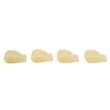
| Agitates poorly | Agitator drive dogs/cam | Agitator dog 80040 |
| Motor runs but won’t agitate/spin | Drive coupling | Coupling 285753A |
When replacement makes more sense
Replacement is the better call when you see one or more of these:
- Major drive train damage (gear case failure, severe oil leak, repeated clutch issues)
- Multiple expensive parts needed at once (motor plus gear case plus basket drive)
- Tub or basket damage that causes chronic leaks or imbalance
- Persistent vibration even after leveling and suspension checks
Why it matters
A washer repair is only a good value when it restores dependable performance. The 11020832990 owner’s manual emphasizes proper installation checks (leveling, tight front leg nuts, correct electrical and water supply), and those basics directly affect vibration, noise, and long-term wear.
Last updated: February 2026
What is the average lifespan of a Kenmore washer?
A Kenmore washer typically lasts 10 to 15 years. For the Kenmore 11020832990, steady care (leveling the cabinet, using correct loads, and following the maintenance steps in the 11020832990 owner's manual) helps you reach the high end of that range.
Typical lifespan and what affects it
Most washers fail early from avoidable stress: overloading, chronic out-of-balance spinning, and small leaks that go unchecked.
Common lifespan reducers include:
- Overloading or washing heavy items that strain the drive system
- Running unbalanced loads that increase vibration and wear
- Slow draining that overworks the pump and leaves water behind
- Lid switch problems that interrupt cycles and lead to repeated restarts
- Poor installation (not level, loose leg nuts) that causes constant shaking
Parts that commonly drive “repair vs. replace” decisions
On this Kenmore top-load design, these parts are frequent wear items. Replacing a lower-cost part often restores normal operation and extends service life.
| Symptom | Common suspect part | Example from this model |
|---|---|---|
| Won’t spin or stops mid-cycle | Lid switch | Washer lid switch WP3949238 |
| Won’t drain or drains slowly | Drain pump or drain hose | Washer drain pump WP3363394 |
| Agitator slips or doesn’t “ratchet” | Agitator dogs/cam | Agitator dog 80040 |
| Loud grinding, oil leak, poor agitation/spin | Gear case or clutch | Gear case, clutch |
Maintenance habits that add years
We recommend these practical habits for the 11020832990:
- Keep the washer level and tighten the front leg nuts after leveling
- Avoid chronic overloading; use smaller loads for bulky items
- Use the right amount of detergent; excess suds can affect draining and rinsing
- Check hoses and the drain path for kinks or restrictions
- Address new noises early (squeal, grinding, banging) before secondary damage occurs
Why it matters
A washer that is level, drains correctly, and runs balanced loads puts less stress on the motor, clutch, gear case, and suspension. That directly translates into fewer breakdowns and a longer usable lifespan.
Last updated: February 2026
What is the capacity of a Kenmore washer model 11020832990?
The Kenmore washer model 11020832990 has a 3.2 cu. ft. wash capacity, which is a common size for a traditional top-load washer with an agitator. For the best load size and water-level guidance, use the 11020832990 owner's manual.
What 3.2 cu. ft. means for everyday loads
A 3.2 cu. ft. Kenmore top-load washer is designed for regular household laundry, including mixed loads and medium bedding.
- Wash full-size bath towels in a single mixed load (avoid packing the basket tight)
- Wash jeans and heavier items best in smaller loads to keep agitation effective
- Wash bedding by balancing the load evenly around the agitator
- Leave space at the top so clothes can circulate and clean properly
Loading tips that protect cleaning performance
Overloading reduces agitation and can lead to poor rinsing or off-balance spinning.
| Load type | What to do | Why it helps |
|---|---|---|
| Mixed everyday laundry | Fill loosely; do not compress | Improves turnover and cleaning |
| Bulky items (blankets/jackets) | Wash 1-2 items; add a few small items to balance | Reduces vibration and off-balance |
| Heavy items (jeans/towels) | Keep the load medium; distribute evenly | Helps spin and drain performance |
Why it matters
Capacity affects how well the washer can agitate, rinse, and spin. Keeping loads sized correctly helps prevent vibration, reduces wear on drive components, and supports consistent draining and spinning.
Related parts that can show symptoms when loads are too heavy
If the washer struggles to spin or agitate after frequent overloading, these model-matched parts are commonly involved:
- Coupling 285753A (connects the motor to the drive system)
- Clutch 285785 (helps the basket reach proper spin speed)
- Washer lid switch WP3949238 (must sense lid closed for spin on many cycles)
Last updated: February 2026