Owner’s manual
 Error Codes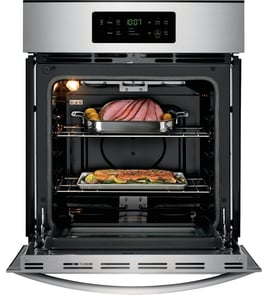





What is the life expectancy of a KitchenAid wall oven?
A KitchenAid electric wall oven like model KEBS208DSS9 typically lasts 10 to 15 years with normal home use. Consistent cleaning, avoiding overheating, and fixing small issues early (like temperature accuracy problems) are the biggest factors that help you reach the high end of that range.
What affects wall oven lifespan most
- Heat stress over time: frequent high-temp baking, broiling, and self-clean cycles accelerate wear.
- Temperature control accuracy: an oven that runs hot can overwork elements and insulation.
- Door seal and door alignment: heat leaks force longer run times and can stress components.
- Electrical supply quality: loose connections or heat-damaged wiring can shorten component life.
- Cleaning habits: grease buildup can cause odors, smoke, and overheating around vents.
Maintenance that helps you get the full 10 to 15 years
Use the care and cleaning guidance in the KEBS208DSS9 owner’s manual. Focus on these practical habits:
- Wipe spills after the oven cools; avoid baked-on residue.
- Keep the door closing firmly; do not slam the door.
- Use self-clean only when needed; allow full cool-down afterward.
- If baking results change, check temperature accuracy before replacing major parts.
- Replace failed wear items promptly (elements, sensors, light assemblies).
Common “end-of-life” symptoms and likely causes
| Symptom | What it often points to | Example part for KEBS208DSS9 |
|---|---|---|
| Oven temperature swings, undercooks/overcooks | Sensor drifting out of spec | Wall oven temperature sensor WPW10131825 |
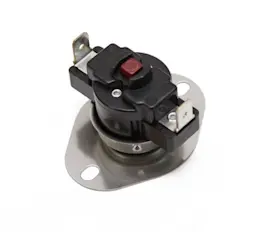
| Oven shuts down or overheats | Over-temp protection opening | Oven high-limit thermostat WP9759242 |
| No broil heat | Broil element failure | Broiler element WPW10207400 |
Why it matters
Knowing the typical lifespan helps you decide whether to invest in a repair. On a wall oven that is still heating evenly and has a solid door seal, replacing a single part (like a sensor or element) is often a practical way to extend service life.
Last updated: January 2026
Are KitchenAid wall ovens good?
KitchenAid wall ovens, including model KEBS208DSS9, are a solid choice for most kitchens because they are built for consistent baking performance and long-term home use when they’re installed correctly and maintained. Like any oven, day-to-day results depend most on calibration, door sealing, and healthy heating components.
What “good” usually means for a wall oven
A “good” electric built-in oven typically delivers even temperatures, reliable controls, and serviceable parts availability. For the KEBS208DSS9, the KEBS208DSS9 owner’s manual is the best reference for operating tips, troubleshooting, and service guidance.
Common strengths customers look for:
- Consistent bake temperatures once preheated
- Strong broil performance for browning and finishing
- Durable door and hinge design when used correctly
- Replaceable wear parts (elements, sensors, lights)
- Clear troubleshooting steps and service pathways
Quick checks that keep performance “good” over time
If baking seems uneven or temperatures drift, these are the first items we recommend checking because they directly affect cooking results.
- Verify the oven is fully preheating before loading food
- Keep the door seal area clean so the door closes tightly
- Use the center rack position for most baking
- Avoid covering racks or oven bottom with foil (it disrupts airflow and heat)
- If temps are off, test the sensor and recalibrate if your control supports it
Parts that commonly affect baking accuracy
| Symptom | Likely area | Example part for KEBS208DSS9 |
|---|---|---|
| Oven runs hot or cold | Temperature sensing | Wall oven temperature sensor WPW10131825 |
| Oven overheats or shuts down | Safety temperature limit | Oven high-limit thermostat WP9759242 |
| Weak broil or uneven top browning | Broil heating | Broiler element WPW10207400 |
Why it matters
A wall oven can seem “not good” when it’s simply out of calibration, not sealing well, or has a weakening element or sensor. Addressing those basics restores temperature stability, improves bake results, and helps prevent repeat service issues.
Last updated: January 2026
Why is my KitchenAid electric oven not working?
If your KitchenAid KEBS208DSS9 electric built-in oven won’t operate or won’t heat, the most common causes are a tripped breaker/blown fuse, Control Lock being enabled, an incorrect control setting (including Delay Start), or a failed heating or safety component. Start with the quick checks in the KEBS208DSS9 owner's manual.
Quick checks first (no tools)
- Verify the oven has proper household power (check for a tripped circuit breaker or blown fuse).
- Make sure you did not set a Delay Start; cancel it and reprogram the bake or broil cycle.
- Check Control Lock; if it’s on, press and hold CONTROL LOCK (Number Pad 3) for about 5 seconds to unlock.
- If the display is blank, restore the clock display by pressing and holding CLOCK SET/START for about 5 seconds.
- On double ovens, confirm you selected the correct cavity (press UPPER OVEN/LOWER OVEN).
If it has power but won’t heat
A no-heat condition usually points to a failed temperature sensing or heating circuit, or a safety device opening the circuit.
- Inspect for obvious damage (burn marks, broken element, loose wiring at the terminal block).
- If broil does not heat, the broil circuit may be involved; see broiler element WPW10207400.
- If bake does not heat, the bake circuit may be involved; see bake element 4451175.
- If temperatures are erratic or the oven shuts off early, the sensor circuit is a common suspect; see wall oven temperature sensor WPW10131825.
- If the oven overheats or shuts down for safety, the limit device can open; see oven high-limit thermostat WP9759242.
Common symptoms and likely checks
| Symptom | What to check next | Typical fix |
|---|---|---|
| Nothing operates | Breaker/fuse, wiring/voltage, control settings | Restore power, correct settings |
| Display works, no heat | Bake/broil element, sensor, limit thermostat | Test and replace failed part |
| Won’t start when programmed | Delay Start, wrong cavity selected | Cancel delay, select correct oven |
Why it matters
An electric wall oven needs correct line voltage and an intact heating circuit to operate safely. A simple setting (Control Lock or Delay Start) can mimic a failure, while a bad element, sensor, or high-limit thermostat can stop heating to prevent overheating.
Last updated: January 2026
How to reset a KitchenAid wall oven?
To reset your KitchenAid KEBS208DSS9 electric wall oven, we use a simple power reset: cancel the current cycle, then shut off power at the breaker for 1 minute and restore power. This reboots the electronic control and clears many temporary glitches.
Reset steps (power reset)
- Press CANCEL/OFF to stop any active cooking or self-clean cycle.
- Turn OFF the oven’s dedicated circuit breaker (or remove the fuse).
- Wait 60 seconds.
- Turn the breaker ON.
- Set the clock if needed, then test BAKE and BROIL.
If the display is blank
A blank display is usually a power supply issue or a display setting.
- Confirm the breaker is fully reset (switch it OFF, then ON).
- If your home uses fuses, check for a blown fuse.
- Restore the clock display setting using the clock control procedure in the KEBS208DSS9 owner’s manual.
If the oven still will not operate
These checks solve most “won’t start” complaints on KitchenAid built-in electric ovens.
- Make sure you are not in a timed or delayed cooking mode; clear the program with CANCEL/OFF, then set BAKE again.
- Verify the oven door is fully closed.
- If the oven overheated, it can shut down until it cools; allow 30 to 60 minutes, then retry.
- If heating is weak or uneven after a reset, test components such as the wall oven temperature sensor WPW10131825 and wiring.
What the results mean
| What you see after reset | What it points to | What we do next |
|---|---|---|
| Display returns and oven heats | Control reboot fixed a temporary issue | Reprogram cooking mode |
| Display returns but no heat | Heating circuit or sensor issue | Check sensor, elements, wiring |
| Display stays blank | Power supply or display setting | Reset breaker, follow manual clock/display steps |
Why it matters
A power reset clears temporary control errors without replacing parts. If the problem returns, it usually indicates a power supply problem, a control setting issue, or a failing heating or sensing component.
Last updated: January 2026