Installation guide
 Owner’s manual
 Error Codes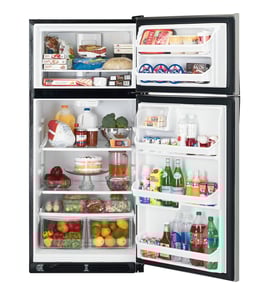


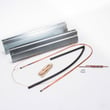

How to fix a Frigidaire refrigerator door alignment?
On the Frigidaire LFTR1821TF8 top-mount refrigerator, door alignment is corrected by leveling the cabinet first, then fine-tuning the front rollers and leveling screws so the unit tilts slightly back and both doors sit even and seal. Use the steps in the LFTR1821TF8 installation guide.
Step-by-step: level first, then align
- Remove the toe grille to access the front roller adjustments.
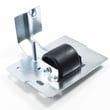
- Raise or lower the front rollers with a flat-blade screwdriver or a 3/8-inch socket wrench.
- Adjust the leveling screws with an adjustable wrench; turn clockwise to lower them until they contact the floor.
- Keep all four corners firmly on the floor; do not raise the cabinet more than 9/16 inch.
- Set the cabinet level front-to-back and side-to-side; then confirm the doors align with each other.
Target positioning (what “correct” looks like)
Your LFTR1821TF8 should be positioned so the doors close and seal on their own.
| Check | What to aim for | What it prevents |
|---|---|---|
| Cabinet support | All 4 corners firmly on the floor | Rocking, door twist |
| Front-to-back tilt | About 1/4 inch (6 mm) tilt back | Doors popping open, warm air leaks |
| Roller lift limit | Max 9/16 inch (14 mm) | Instability, poor sealing |
| Door alignment | Doors level and even with each other | Frost, moisture, uneven closing |
Quick troubleshooting if doors still look uneven
- Verify the refrigerator is not twisted; re-check all four corners are planted.
- Confirm the floor is solid and not compressing under one front corner.
- Make sure shelves and bins are not preventing the door from closing fully.
- Inspect the door gasket for folds, gaps, or areas not contacting the cabinet.
Why it matters
A slightly tilted-back, properly leveled cabinet helps the doors self-close and keeps the gasket sealed. That reduces frost buildup, temperature swings, and compressor run time.
Last updated: January 2026
What are the disadvantages of a top mount fridge?
A top-mount refrigerator like the Frigidaire LFTR1821TF8 is usually reliable and cost-effective, but its main disadvantages are convenience and layout: you bend more to reach fresh food, the freezer is at eye level (less ergonomic for many users), and premium features are less common. For model-specific features and setup details, use the LFTR1821TF8 owner's manual.
Common disadvantages (what most owners notice)
- Fresh-food access is lower: you typically bend more to reach produce, deli items, and everyday foods.
- Less flexible organization: many top-mount designs have fewer adjustable storage options than some bottom-freezer styles.
- Fewer “premium” options: through-the-door ice and water are less common on top-mount models.
- Freezer space can feel tighter: stacking and visibility can be harder, especially with bulky items.
- More temperature swings with frequent freezer use: opening the freezer often can affect overall airflow and temps.
Practical ways to reduce the downsides
- Put everyday items at mid-shelf height; store rarely used items lower.
- Use bins to group foods (snacks, lunch items, condiments) so you pull one bin instead of searching.
- Keep airflow paths clear; do not overpack shelves or block vents.
- Set temps to typical targets: 37°F for fresh food and 0°F for freezer.
- If odors build up faster due to tighter organization, follow how to get rid of refrigerator smells.
Top-mount vs. bottom-freezer: quick comparison
| Feature | Top-mount (LFTR1821TF8 style) | Bottom-freezer style |
|---|---|---|
| Fresh-food ergonomics | More bending | More eye-level access |
| Freezer access | Easier reach | More bending |
| Feature availability | Often simpler | Often more feature-rich |
| Typical cost | Often lower | Often higher |
Why it matters
If you shop the fresh-food section daily, the “bend-to-reach” layout is the biggest long-term comfort issue. If you use frozen foods more, a top-mount can feel more convenient because the freezer is higher.
Last updated: January 2026
What is the upper part of a fridge called?
On the Frigidaire LFTR1821TF8 top-mount refrigerator, the upper section is the freezer compartment. It’s the coldest area of the appliance, designed to keep foods frozen and to support ice-making (if your model is equipped with an ice maker).
What you’ll typically find in the upper (freezer) compartment
- Freezer shelves or a wire rack for organizing frozen foods
- An air outlet that sends cold air down to the fresh food section
- A temperature control or air damper setting that affects refrigerator cooling
- A door gasket that seals the freezer door to prevent frost and warm air leaks
- An ice maker area (on models equipped and connected to water)
Related refrigerator sections (quick reference)
| Section name | Where it is | Main purpose |
|---|---|---|
| Freezer compartment | Upper section (top-mount) | Freezes food, stores frozen items |
| Fresh food compartment | Lower section | Keeps food cold (not frozen) |
| Toe grille | Bottom front | Allows airflow for efficient operation |
Why it matters
Knowing the correct name helps when you’re troubleshooting temperature issues, ordering parts, or following setup steps. For example, proper airflow and door sealing help prevent frost buildup and keep temperatures stable.
Helpful setup and care tips for this model
We recommend these basics for LFTR1821TF8 installation and performance:
- Leave clearance for airflow: 3/8 inch at the sides and top, 1 inch at the rear
- Keep the refrigerator level and slightly tilted back so doors close and seal properly
- Avoid extension cords; use a grounded outlet
- Do not block the toe grille at the lower front
For model-specific operating and setup details, use the LFTR1821TF8 owner’s manual.
Last updated: January 2026
What is the difference between top mount and top freezer refrigerators?
A “top-mount” refrigerator and a “top-freezer” refrigerator are the same layout: the freezer compartment is on top and the fresh-food (refrigerator) compartment is below. For your Frigidaire LFTR1821TF8, you can treat these terms as interchangeable when shopping for parts and following setup steps in the LFTR1821TF8 owner's manual.
What you get with a top-freezer (top-mount) design
- Easier access to frozen foods without bending
- Typically more usable fresh-food shelf space than many bottom-freezer designs
- Simpler airflow and temperature control layout (freezer cools, then air is routed to fresh food)
- Often lower purchase and repair costs compared with more complex styles
How this affects installation and everyday performance
Even though the names differ, the setup basics are the same for this style. The installation guidance for top-mount units calls out clearances and leveling that help doors seal and temperatures stay stable.
Common setup targets for this style (including LFTR1821TF8):
| Setup item | Typical guidance for top-mount units | Why it matters |
|---|---|---|
| Clearance (sides/top) | About 3/8 inch | Helps airflow and efficiency |
| Clearance (rear) | About 1 inch | Protects coils, water line, and ventilation |
| Leveling | Slight tilt back (about 1/4 inch) | Helps doors close and seal |
For the exact steps and checklists (doors, seals, leveling, power), use the LFTR1821TF8 installation guide.
Why it matters when ordering parts
Because “top mount” and “top freezer” describe the same configuration, the key is matching the exact model number (LFTR1821TF8) and the exact part ID. For example, if you are replacing a broken produce bin, use the model-matched crisper drawer - refrigerator storage component by Frigidaire 240337103.
Quick part-matching checklist
- Confirm the model tag reads LFTR1821TF8
- Match the part by part ID, not just a description
- Compare color and finish (black, stainless, etc.) when applicable
- Verify left vs. right orientation on rails, hangers, and gaskets
Why it matters
Using the correct style terms prevents ordering the wrong parts and helps you follow the right leveling and clearance guidance, which directly impacts door sealing, frost control, and energy use.
Last updated: January 2026